
 Maggie
Few pieces of tack have inspired as much evolution—or as much misunderstanding—as the horse bit.
Small in scale but powerful in effect, the bit sits at a precise intersection between communication and control. Its history is not one of domination but of refinement: a gradual shaping of material and form in response to how horses move, learn, and respond.
Before Bits: Early Control and Guidance
The earliest riders likely controlled horses without metal bits at all. Rope, rawhide, and nose-based devices offered directional guidance rather than leverage. These early systems relied heavily on seat, leg, and voice, with minimal intervention at the mouth.
As horses began to carry riders into battle, across long distances, and through increasingly complex maneuvers, the need for more precise communication emerged. This did not immediately lead to harsher equipment. Instead, it prompted experimentation with placement, pressure, and release.
The First Metal Bits
Archaeological evidence places the earliest metal bits around the late Bronze Age. These early designs were simple, often rigid bars made of bronze or copper alloys. Their purpose was not subtlety, but consistency. Metal resisted wear, held shape, and allowed riders to communicate reliably over long periods.
Importantly, many early bits were thick and smooth. Softer metals encouraged salivation, and wider surfaces distributed pressure across the tongue and bars rather than concentrating it in one place. The foundations of modern bitting theory were present long before modern terminology existed.
Form Follows Use
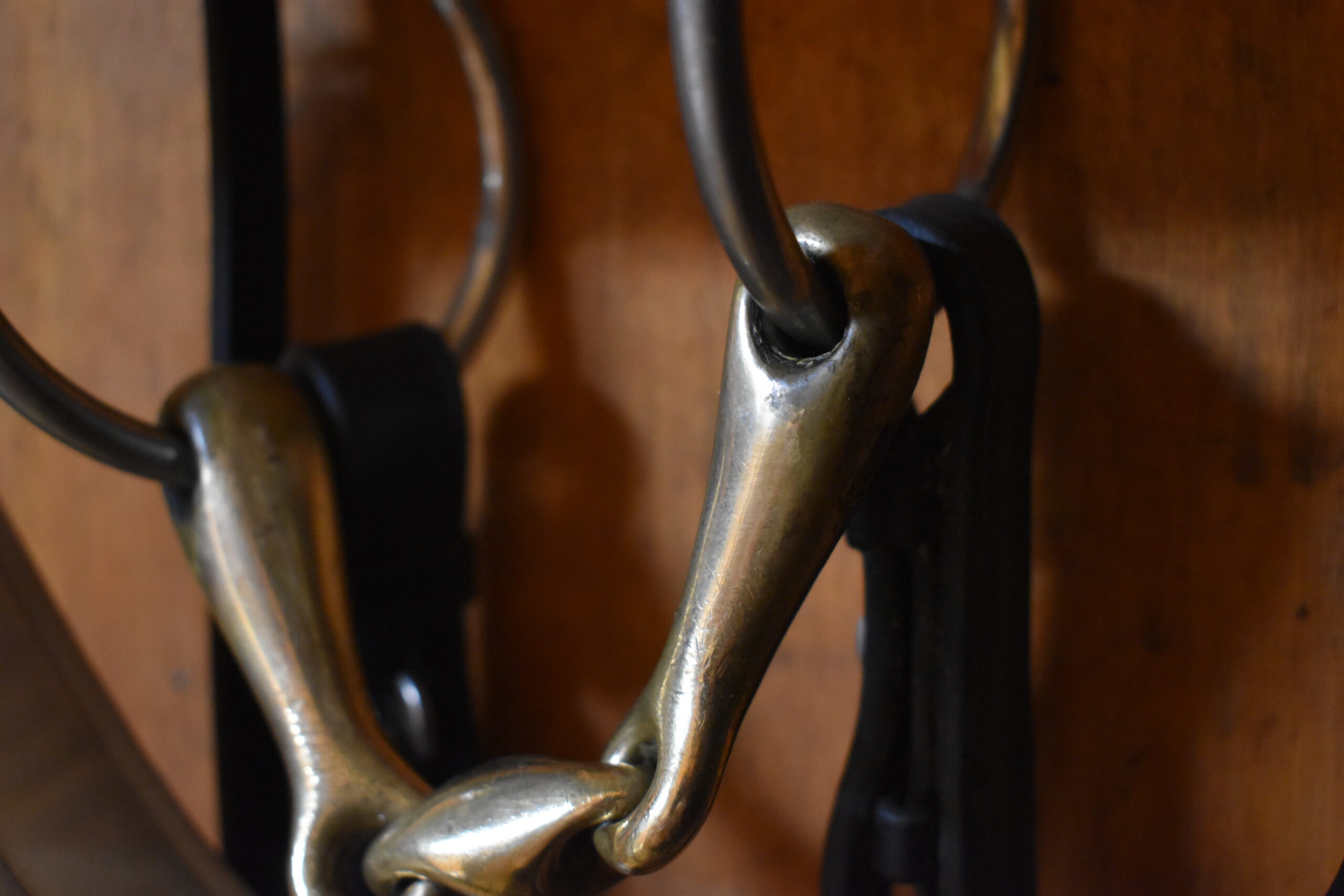
As riding disciplines diversified, so did bit design. The introduction of jointed mouthpieces allowed the bit to conform more naturally to the horse’s mouth. Shanks appeared alongside curb chains, creating leverage systems that amplified small hand movements for refined communication.
These changes were driven not by force, but by efficiency. In cavalry, a rider needed to control one-handed while carrying a weapon. In driving, long reins required clear signals over distance. Bits evolved to meet those functional demands.
Every component—the length of a shank, the curve of a mouthpiece, the placement of a port—served a purpose rooted in biomechanics and balance.
Materials and Meaning
Material choice has always mattered. Bronze, copper, and later sweet iron were favored for their taste and tendency to encourage a moist mouth, which improves comfort and responsiveness. Iron oxidized gently, producing a flavor horses accepted readily.
Modern stainless steel brought durability and cleanliness, while contemporary materials like titanium and synthetic composites aim to reduce weight and increase comfort. None are inherently better; each reflects a different balance of tradition, maintenance, and preference.
The lesson history offers is simple: the bit works best when the horse accepts it willingly.
From Control to Conversation
Over time, horsemanship philosophies shifted. As training emphasized balance, self-carriage, and lightness, bit design followed suit. Thicker mouthpieces, anatomical curves, and refined cheekpieces emerged to support clearer communication with less pressure.
The rise of bitless options in modern riding echoes earlier eras, reinforcing a recurring truth: the bit is not a requirement for good riding, but a tool that must suit both horse and rider.
What the History of Bits Teaches Us
Bits were never meant to override training. They were meant to clarify it. Across centuries, the most successful designs share common traits: simplicity, balance, and adaptability.
A well-chosen bit should disappear in use. The horse should move forward willingly, respond softly, and remain mentally present. When tension appears, history suggests looking not to stronger equipment, but to fit, hands, and understanding.
In that way, the bit is not a symbol of control but of dialogue—shaped by centuries of experimentation, guided by the horse’s response, and refined by riders willing to listen.