
 Jill Medinger
How Firmdale Hotels’ Willow Kemp channels her lifelong love of horses into creative discipline and inspired design.
Given the choice, I like to arrive at interviews looking put together—and, ideally, dry. But New York City had other plans, unleashing a torrential downpour of epic proportions the moment I stepped outside.
Yet, without sounding too much like a Pollyanna, the woes of my soggy shoes and limp linen pants miraculously disappeared as we entered the lobby of the Warren Street Hotel in the city’s TriBeCa neighborhood. The newest Firmdale property in the city, it’s the third to open in New York, joining The Crosby and The Whitby, and reflects the same imaginative storytelling and welcoming aesthetic as the company’s eight hotels in London.
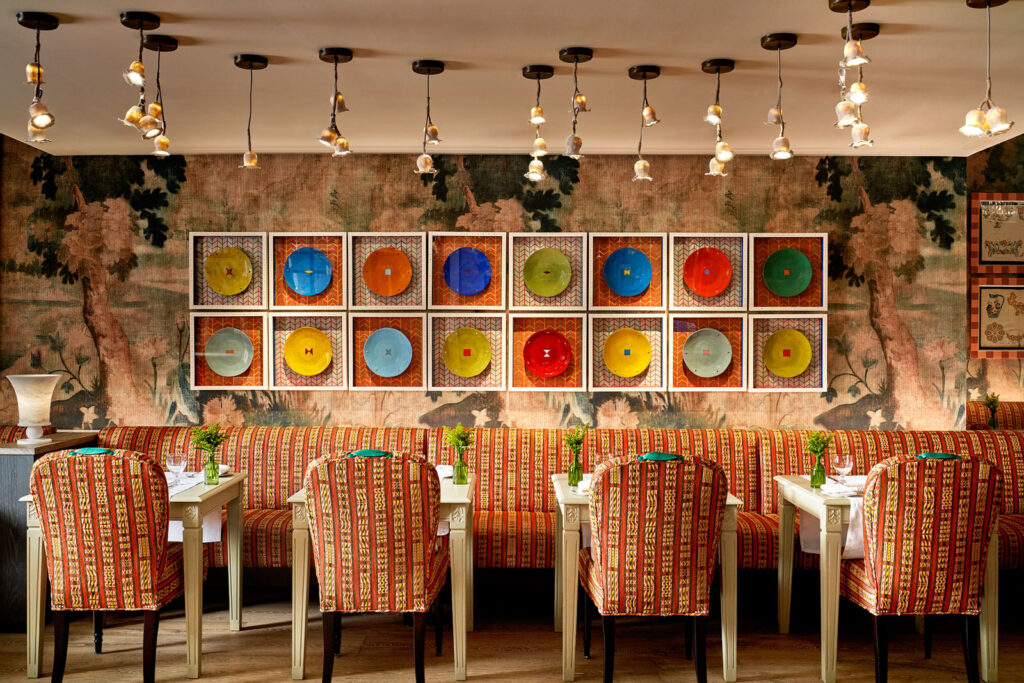
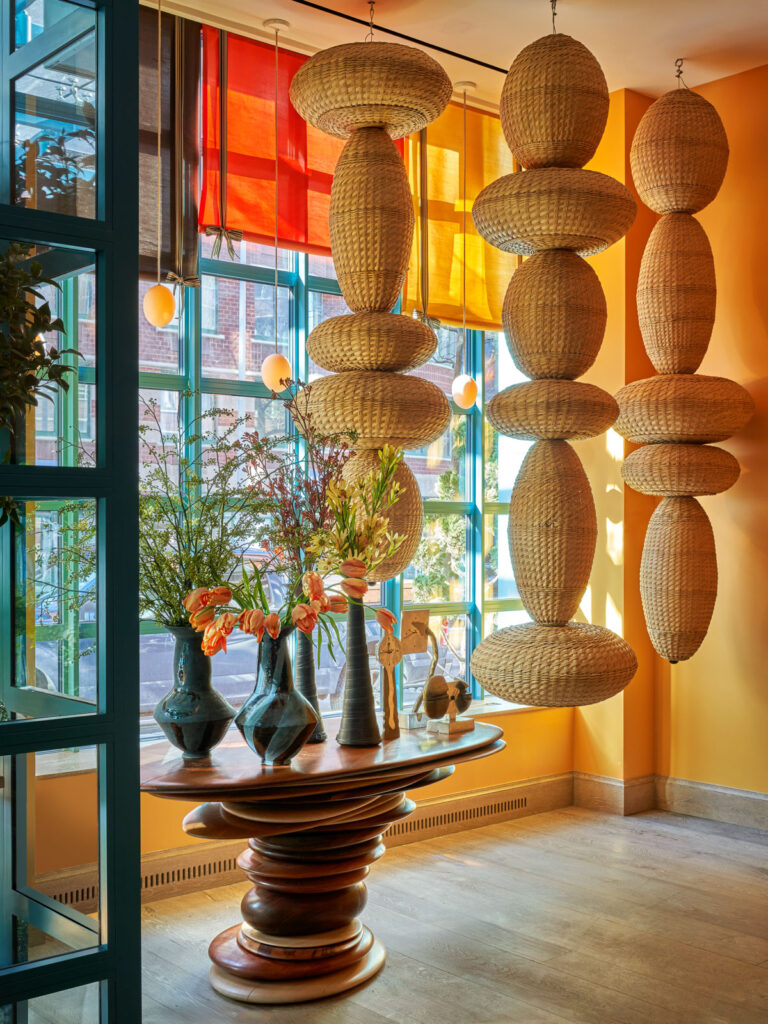
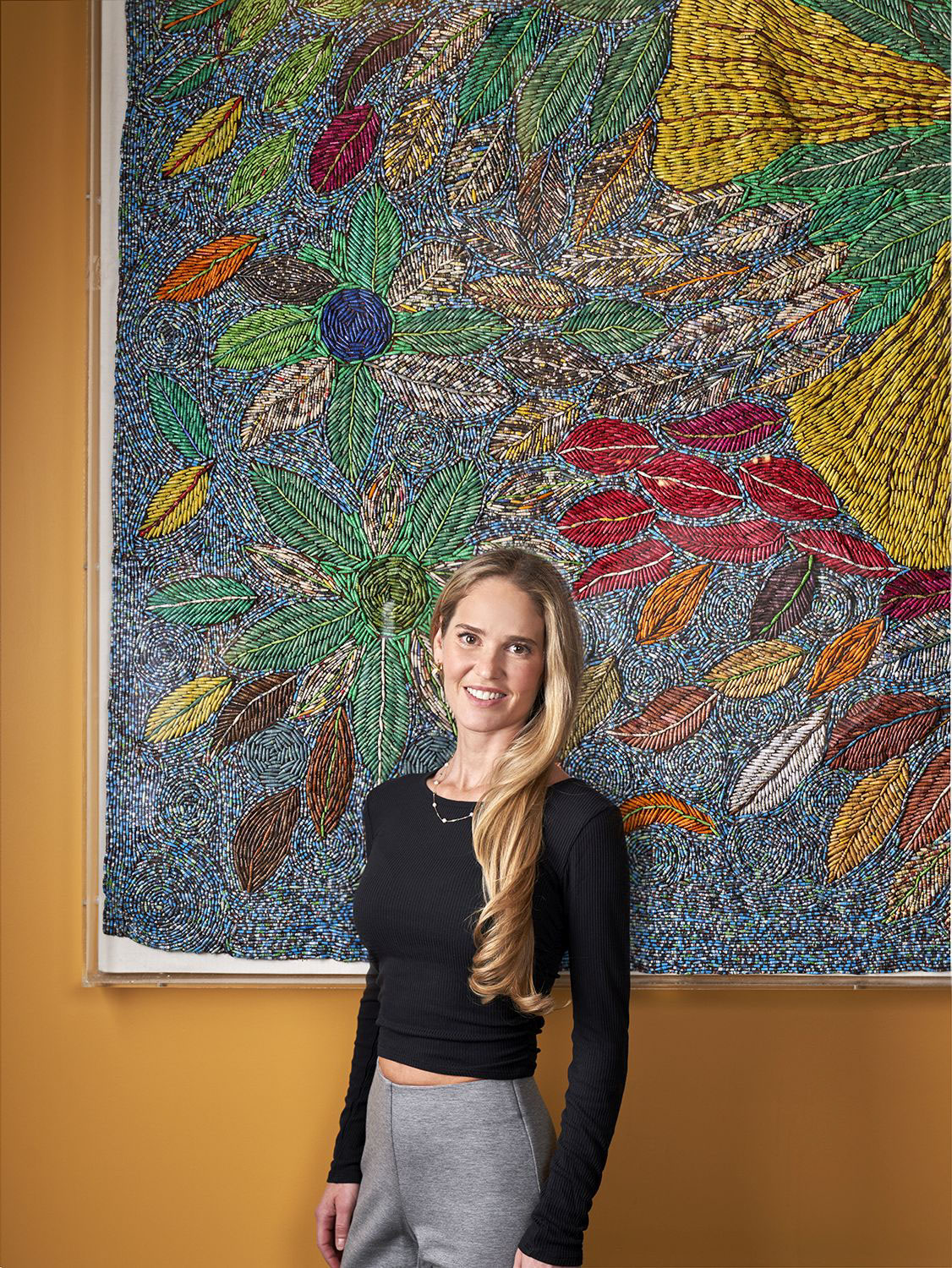
We were there to meet Willow Kemp, Firmdale Hotels Art Ambassador & Design Director for Kit Kemp Design Studio. The middle daughter of Firmdale’s founders, Tim and Kit Kemp, she is a key member of Kit Kemp Design Studio and instrumental in the architectural and interior design of the Warren Street Hotel, as well as sourcing the inspiring collection of original art displayed throughout the property.
But Willow wanted to talk about horses. And so did we.
She began riding in the New Forest, a national park on England’s south coast where wild ponies still roam freely. “I started riding from a very young age, 4 or 5 years old, on New Forest ponies. You can go for hours without seeing anyone. My two sisters and I used to bomb around on the ponies and jump the gorse bushes,” she laughs. “Eventually, we started with the New Forest Pony Club, and we did all disciplines, including eventing and show jumping. I also did tetrathlon, which involves running, swimming, shooting, and cross-country riding. So, it was a great opportunity for everyone of all ages to get together. It was a big informative part of my life, and I still have my best friends from tetrathlon.”


Willow went on to British eventing at the junior level and eventually found her way to dressage, which emphasizes the importance of foundation—much like in her creative work. “When you’re drawing or painting, your drawing is the foundation, and without that solid knowledge of the structure and the composition, your painting is not going to be any good,” she explains.
As much as she enjoyed eventing, dressage became her focus. While earning a degree in architecture at Cambridge University, she concentrated even more on the discipline and eventually went to Germany, drawn by the country’s dressage heritage and warmblood breeding. “I found a yard where I started working during the holidays, and I fell in love with this young, 3-year-old stallion called Dragon Heart,” Willow smiles. “He was a very chunky chestnut [Westfalian] stallion with a white face and four white socks. He’s a horse where you really sit in the horse, not on the horse. And he was fearless.”
Owning him was a dream come true. “We learned together,” Willow admits. “So, I’ve ridden him since he was 4 years old, and trained him up to grand prix in dressage. He’s 22, and it’s [been] my longest relationship. I’ve been all around Europe with him, in international 4* grand prix, competing for Great Britain. I used to drive myself in the horsebox, and it was just me and Dragon learning together. He really was my horse of a lifetime.”
Today, she has offspring from him, including his daughter, and breeds one foal a year. “I found a good bloodline and the young ones are coming through, which is exciting because Dragon’s enjoying his retirement. He hacks about a bit and enjoys time in the field. So that is my real balance,” notes Willow.
After university, Willow spent a year riding full-time, then rode when she could while earning a master’s in sculpture from Düsseldorf Kunstakademie in Germany. At the end of that year, she and Dragon Heart returned to England, where she began working at Kit Kemp Design Studio.
FINDING HER NICHE
Willow draws on both architecture and sculpture, and moves easily between two- and three-dimensional design at Kit Kemp Studio, creating new-build hotel logos, dinnerware, furniture, lighting, and rugs. “When working in a family business, you need to find your own niche, your own area,” she muses. “I’m one of three girls, in the middle, and you have to work to your strengths. I found my little niche in working on the collaborations we do. So, that’s fabric or the lighting collections we design, or furniture, or the tea services, and all those lovely projects. There is some sort of magic that happens in the spirit of collaboration because it’s in that partnership that something quite unexpected comes from it. So, I think that’s a rewarding process.
“I’m also very passionate about the art because I feel that’s what gives a building soul and character. We’re quite a small team, about 10 of us in a London townhouse, but we focus on every detail right down to the smallest thing.”
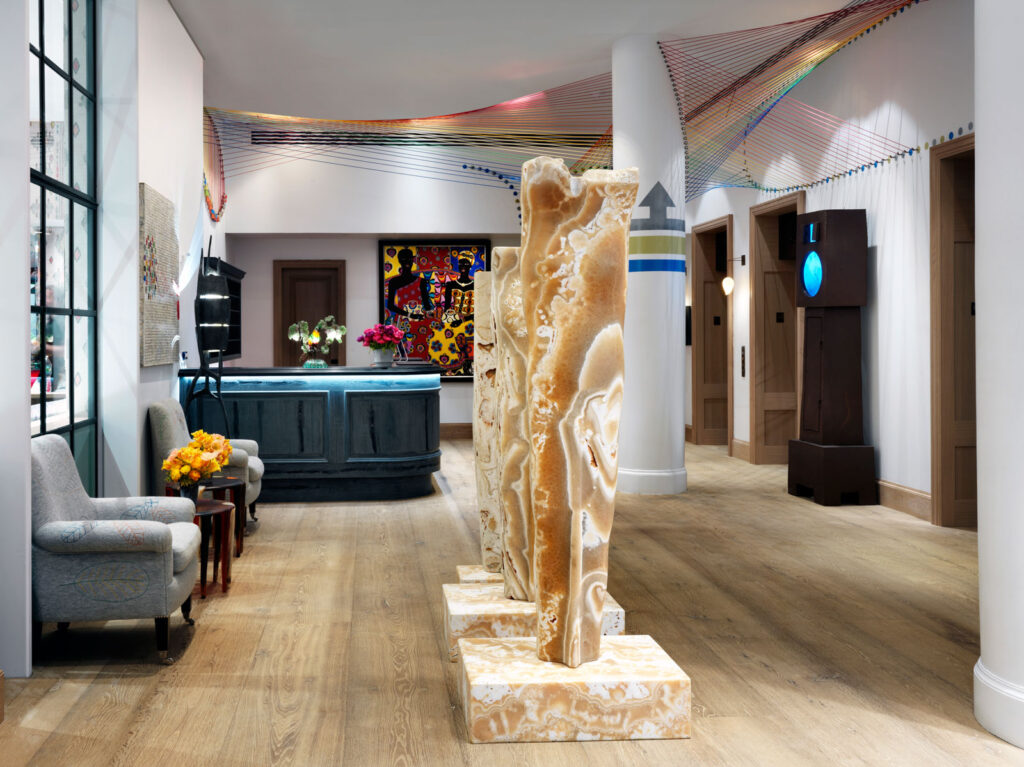

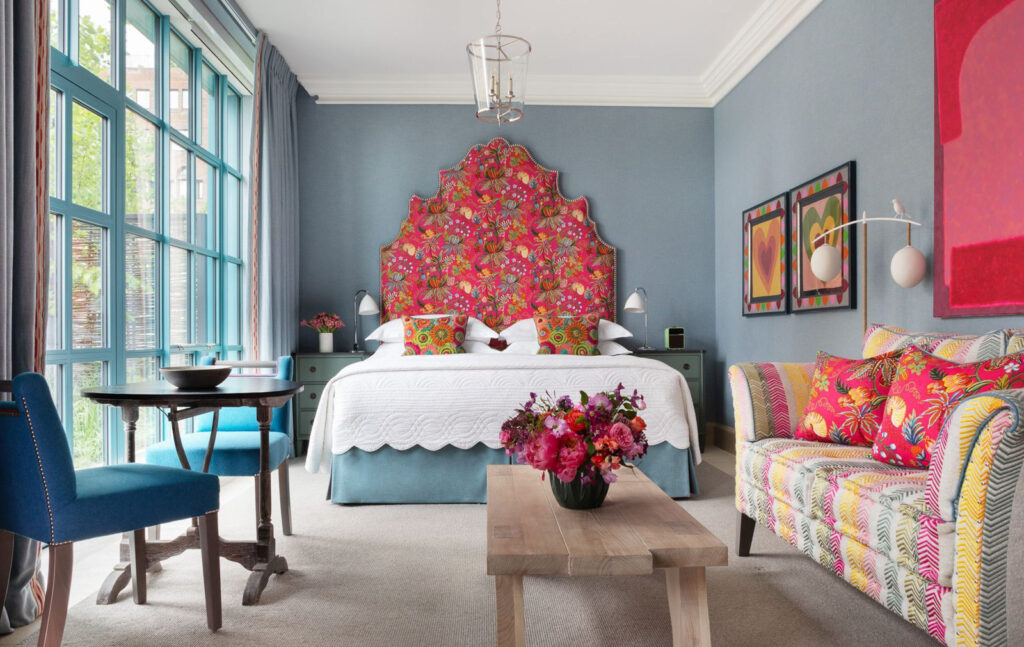
Kit Kemp properties are known for distinctive design, a celebration of color, individuality, and an elaborate blend of fabrics, artwork, and furnishings that feel both welcoming and perfectly balanced. While the result appears effortless, creating the intriguing environments is far from happenstance. “We can be bold, but it has to feel calm and not hectic,” says Willow. “That’s not easy, but that’s the joy of it.” Kit, the creative director for all Firmdale properties, reviews every scheme before it’s implemented in a room. The plans include everything from furniture layout to cornices, paint details, fabric, lighting, and more. If the team can’t find the right pattern or piece, they’ll design it.
A memorable arrival is a Firmdale hallmark. “When you arrive, you’ve had a long journey, and you have to have a sense of arrival when you come into that lobby,” Willow emphasizes. “We want our interiors to speak. They’ve got to have our signature on them, and they must have a point of view.” Large-scale artworks are positioned in public spaces for everyone to enjoy, giving each room a sense of identity. “Oh, and a friendly face behind the desk is very important,” she adds.
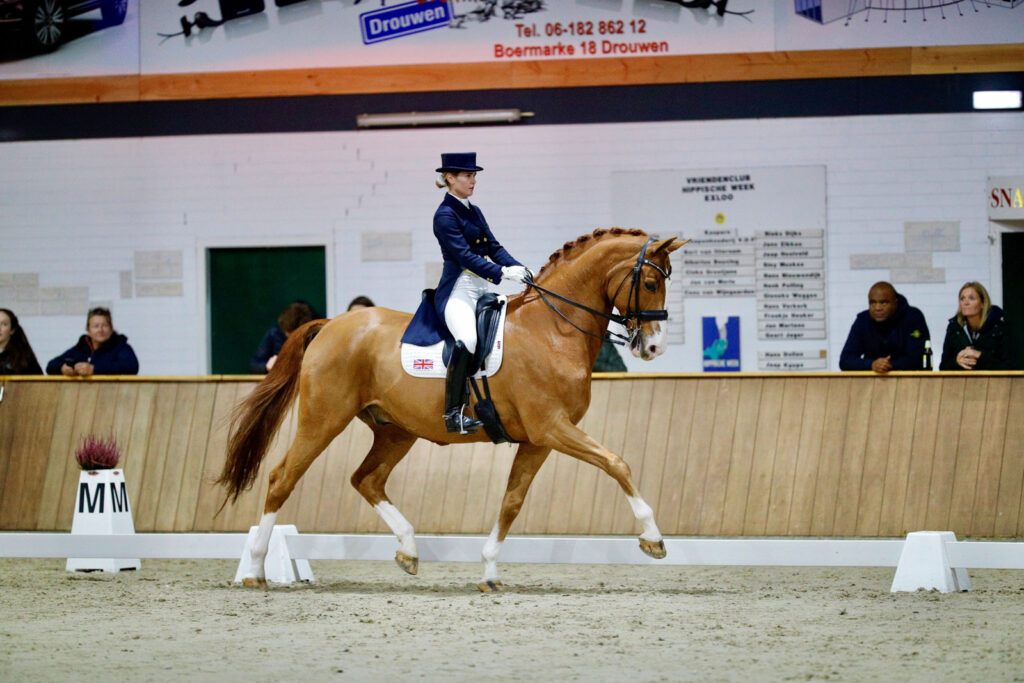

Even with the demands of her job, Willow rides a few mornings a week or schedules time around meetings. “There was a time when I was in the studio thinking I should be training, and then vice versa when I was training,” she notes. “I’d think, ‘oh, I should be back in the studio,’ but now I’ve got a good balance, but it took a while.”
She admits that balance can be tricky. Training a horse to grand prix is all-consuming and a long-term project. “It’s all about decision-making. It’s small aids, it’s a relationship with an animal, and that’s what I love about the sport. It combines everything for me. It’s nature, being outside, artistry, and being creative.”
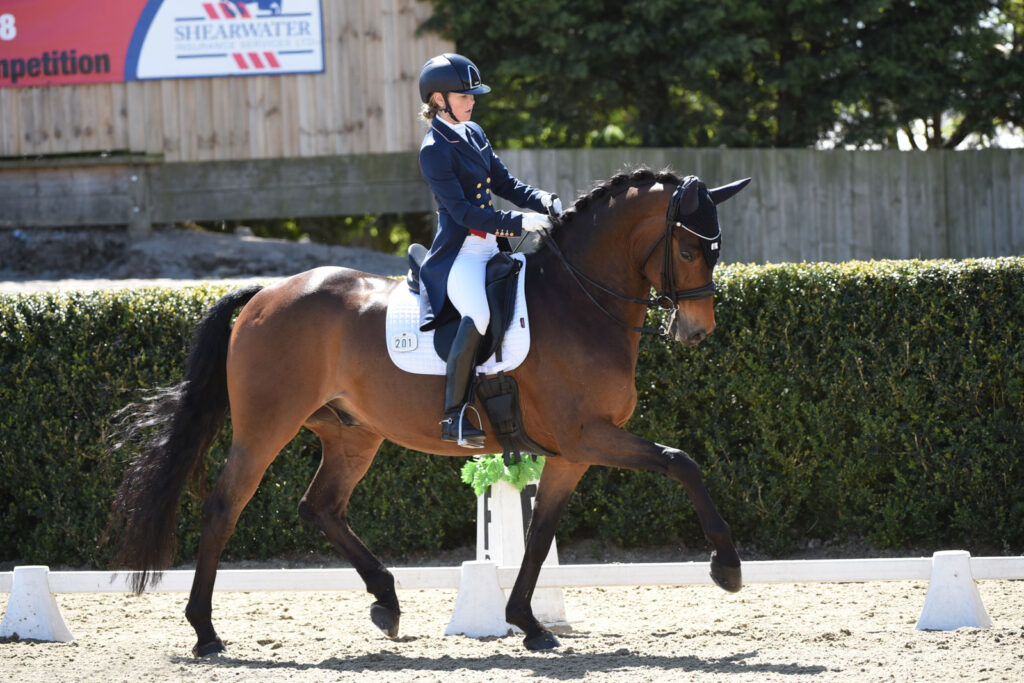
Over the years, she’s trained with notable figures including Sune Hansen, Nicky Barrett, and Peter Storr, one of the dressage world’s best-known judges. She and Dragon Heart also trained with Carl Hester. “Honestly, he is the nicest, funniest, and most generous person with his time and knowledge, and I think that’s so rare. He’s taught me so much,” Willow says.
She draws parallels between progressing with a horse and building a hotel. Both require patience—and a long-term view. “In dressage, you buy a young horse, and you know that they don’t have the strength to cope with their power or movement at the beginning, but you’re preparing them every step of the way. You get to one level and then on to the next, but you can’t skip the process. It’s the same with building a hotel. You’re buying the site a few years in advance, accumulating and storing art and furnishings, and imagining where they’ll go. It’s roughly a three-year project from start to completion.”
In addition to her design role, Willow now leads guided tours of the hotel’s eclectic art collection, sharing the stories behind each piece. From there, guests join her as she meanders to nearby neighborhood galleries or museums featuring artists of note.
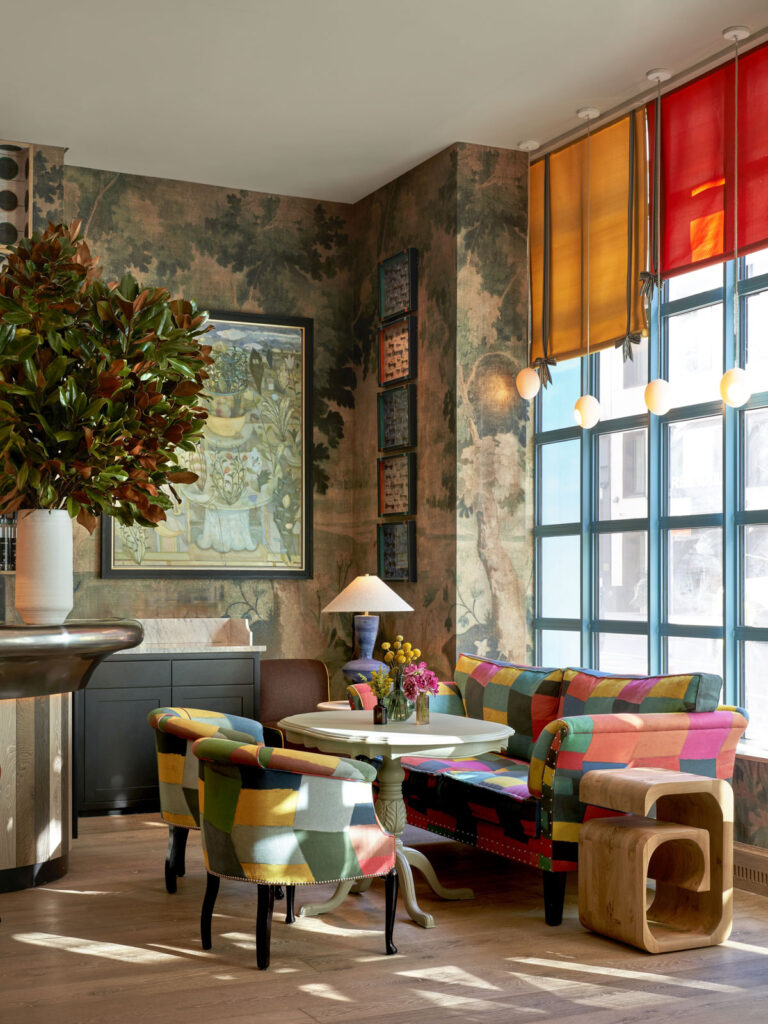
As we wrapped up the interview and started to leave, we turned back to admire Warren Street’s teal turquoise façade with its yellow peak. “We say the building has a yellow hat on top,” laughs Willow. “That was quite a risk, but it’s a real identity for the building, and already it sets the tone of a happy place.”
Happy indeed. The rain had stopped, and sunlight streamed through the hotel’s massive windows, the lobby glowing in full color.