
 Sarah Lessler
THE WORLD-FIRST 3D SCANNING TECHNOLOGY IS TRANSFORMING THE WAY ITS MASTER ARTISANS WORK — MAKING A PERFECT CUSTOM BOOT FIT NOT JUST POSSIBLE, BUT A GIVEN.
Along the concourse at Dickies Arena on the first day of the Longines FEI World Cup Finals in Fort Worth, something unexpected drew a crowd. More than 20 members of the Dallas Police Motorcycle Unit lined up at the LM Boots booth. Sergeant Ira Carter had brought his troop to be measured and scanned; some still wore the worn, sometimes ill-fitting boots they’d inherited with the job. They had seen what LM Boots made for the Dallas Mounted Patrol and wanted the same fit and comfort, tailored to riding Harley-Davidsons. For a motorcycle officer, a good boot can matter in an accident. None of them fully realized they were among the first people in the world to have their feet and legs scanned in 3D for a perfectly fitted pair of custom boots.

Photo by: Winslow Photography
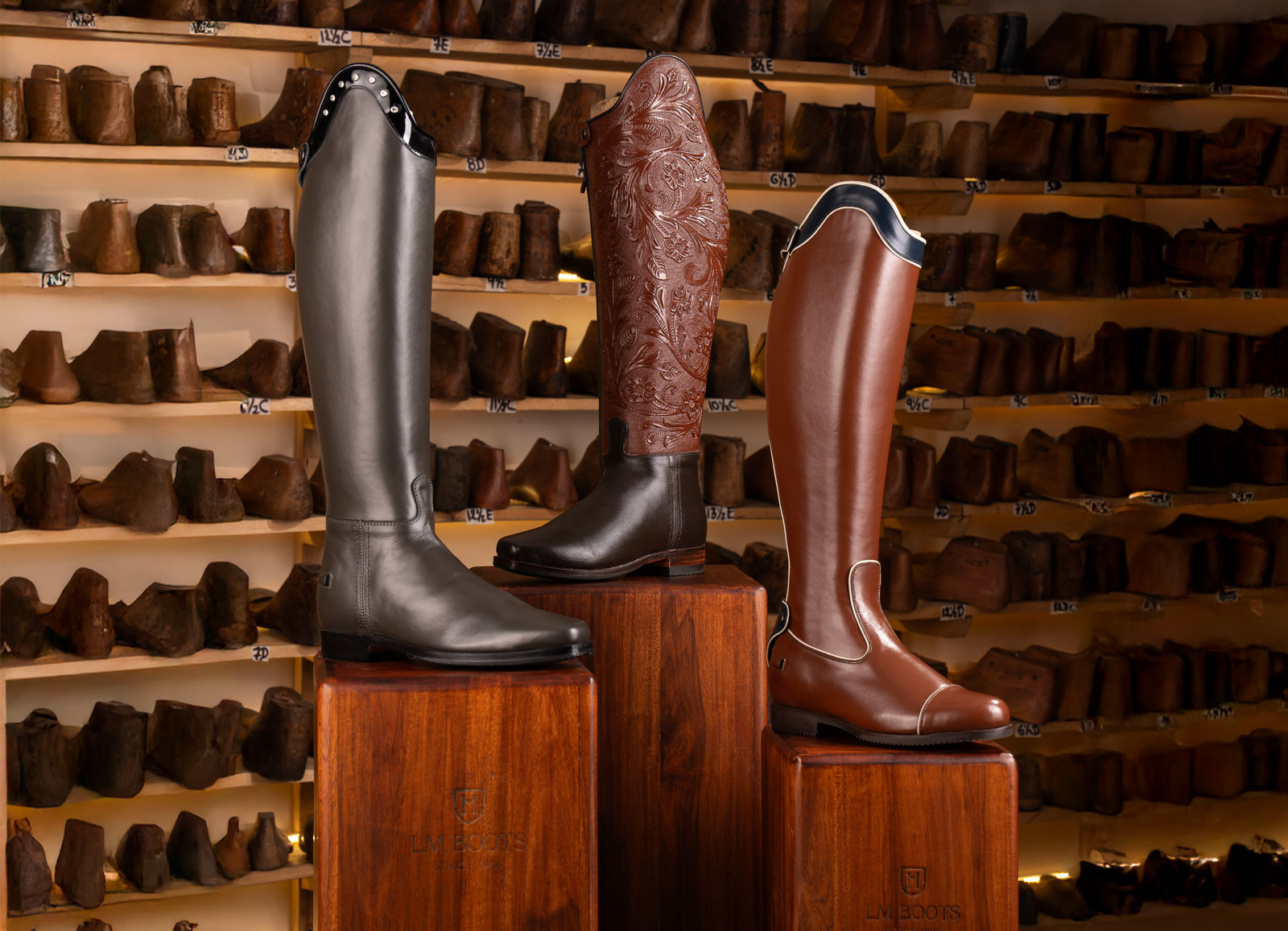
There is a kind of knowledge that lives in the muscle memory of hands. For 120 years, the bootmakers at La Mundial Custom Boots, known as LM Boots, have carried it in theirs. They measure by eye and by touch, reading the geometry of a client’s leg the way an experienced rider reads a horse.

That knowledge now has a new partner. At the 2026 FEI World Cup Finals, LM Boots introduced the LM Master Fit Scan, a digital laser scanner designed for equestrian custom boots, and became the first bootmaker in the sport to add three-dimensional measurement to its fitting process.
A NAME WITH A PLAN
The story begins in 1906, in a workshop in the old center of Quito, Ecuador. Don Francisco Rivas Figueroa was not a romantic, but a craftsman who saw mass production coming and chose the opposite path: A custom boot, he believed, was simply a better boot.
In 1919, Ecuador’s Society of Shoemakers named him the country’s finest bootmaker. He called his company La Mundial, Spanish for “the world,” drawing on Ecuador’s long leatherworking tradition for both material and craft.
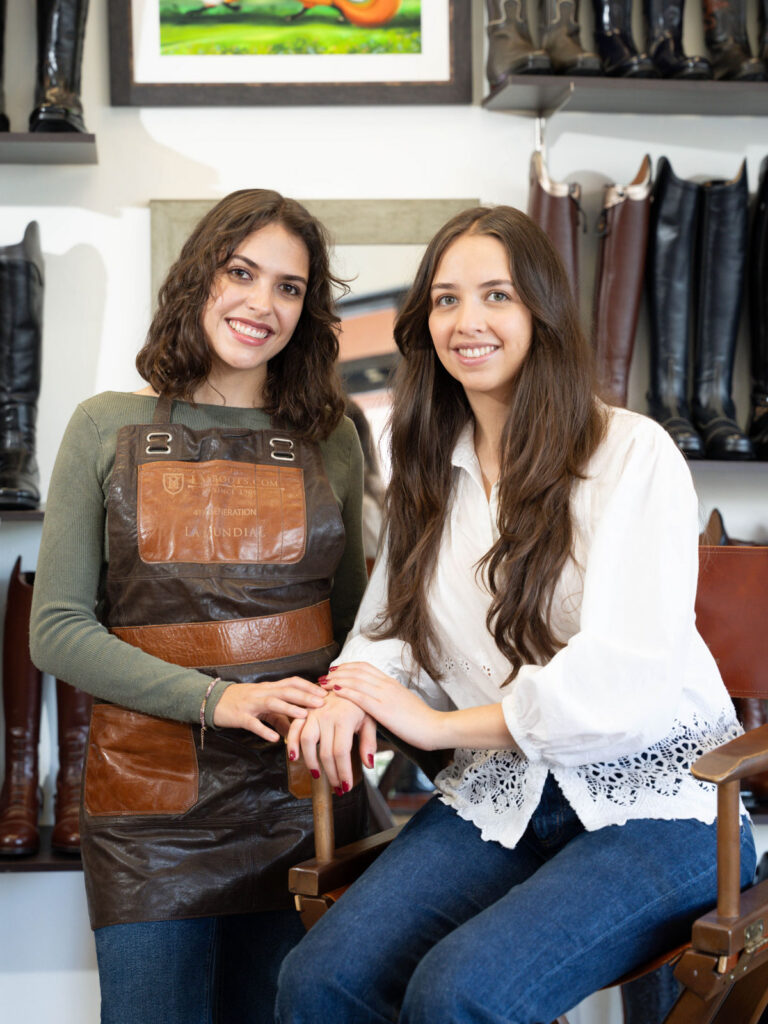
Photo by: Snap Photo and Cinema
Five generations later, the Rivas family still makes boots one pair at a time. Sisters Alejandra and Isabel Rivas are taking over the business as their father, Roberto, steps back. The company keeps two Florida locations, in Wellington and at the World Equestrian Center in Ocala, and manages a busy event schedule. Production stays in Quito, where 20 employees handle manufacturing, administration, and client services, and 30 U.S. sales representatives, trained in fit, style, and measurement, work with equestrians across the country.
THE FIT CHALLENGE
A tall boot that doesn’t fit isn’t just uncomfortable—it’s a distraction. Calves, arches, and toes vary widely in shape, width, height, and length, and riders develop specific, sometimes hard-to-articulate preferences about where a boot should hold and where it should give.
The industry’s standard tools have long been a tape measure, a paper form, and an experienced fitter. It works, mostly. LM Boots had already refined that process with a proprietary strap-tape measurement system that solved the problem of a shifting tape measure. Still, the Rivas family wanted more precision.
CRAFT MEETS CODE
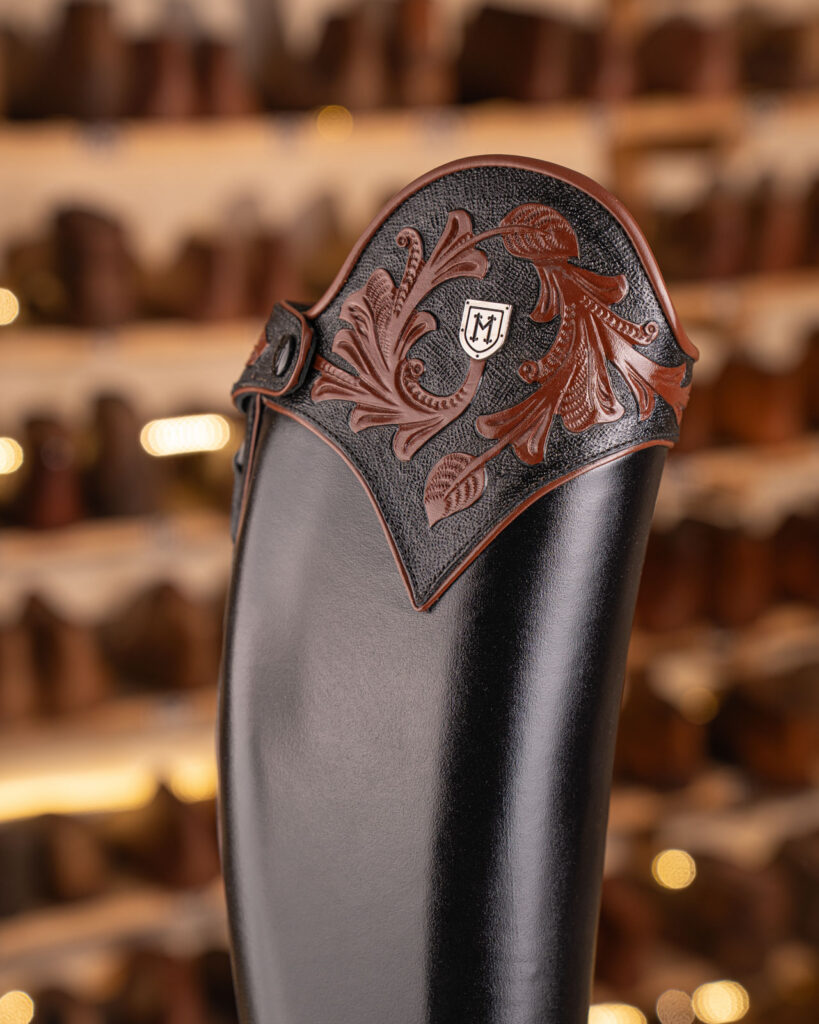
In the early 2000s, LM Boots built a digital customization program that let clients design boots online, choosing leather, color, piping, and finish before a pattern was ever cut. Orders fed directly into manufacturing software, cutting down on error and giving clients more say in what they wore into the ring.
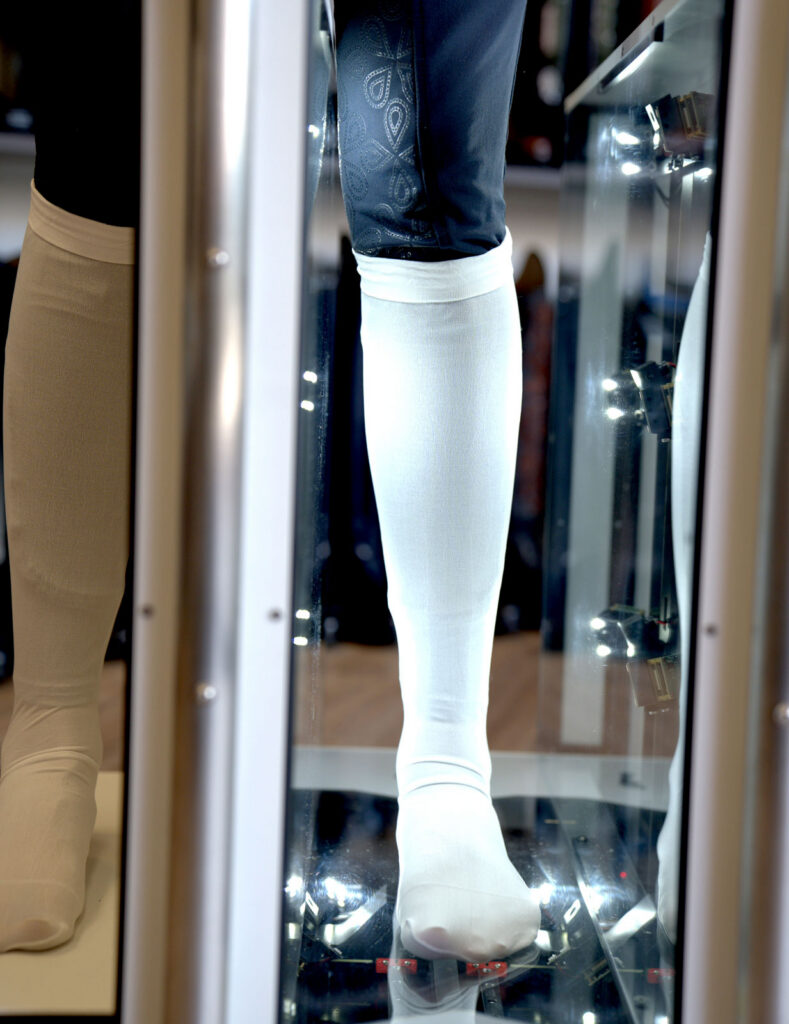
The LM Master Fit Scan extends that approach. The device captures the three-dimensional geometry of a client’s feet and legs and sends the data directly to the production team in Quito. The scan doesn’t replace the bootmaker’s judgment—it sharpens it.
“The scan talks to the factory,” Isabel Rivas said. “It gives our artisans superpowers.”
THE LONG VIEW
LM Boots has never tried to scale into a volume business. In an industry pushing for more, faster and cheaper output, the company has held its line for 120 years: one pair at a time, made for one person, measured precisely, and built by hand.
The Rivas family also invests in its workforce. “We’ve had generations of families working for us,” Roberto Rivas said. In Ecuador, the company is working toward a shared-ownership model that would give employees a stake in its future.
Don Francisco Rivas named his company after the world, then spent his life perfecting a single product. Five generations later, the family still makes the same bet made in 1906, that a boot made for one rider, measured with precision and built by hand, is worth more than anything a factory line can produce.
To read the entire Fall 2026 issue click here. To learn more about LM Boots, visit lmboots.com. To read more of EQ Living’s fashion features click here.