 Sarah Lessler
A TEXAS LEGEND BECOMES TAYLOR SHERIDAN’S LIVING HERITAGE BRAND
A Personal Travel Diary
“Did you see Jimmy?”
“Jimmy’s not real,” I snap.
Every time I mention my recent visit to the storied Four Sixes Ranch in Guthrie, Texas, this is the first thing I hear. Jimmy is one of Yellowstone creator Taylor Sheridan’s most beloved characters, a hapless ranch hand who arrives a bumbling greenhorn, the butt of every bunkhouse joke, then gets shipped off to the Four Sixes to earn his spurs and become an honest-to-God cowboy. That storyline, rather than the ranch’s 150-year history, is how most people beyond the ranching world have come to know the 6666.
Within American ranching, though, few names carry more weight. This West Texas institution ranks among the most respected cattle and Quarter Horse operations in the country. Now owned by a group of investors led by screenwriter, producer, director—and cowboy—Taylor Sheridan, the ranch honors its legacy by marrying the traditional cowboy way of life with cutting-edge breeding technology and progressive cattle management.
A Legacy Dating to 1870
The story begins with Samuel “Burk” Burnett, a Missouri-born cattleman who moved to Denton, Texas, as a child and learned the business at his father’s side. Legend claims he won the ranch with a hand of four sixes in a poker game. The truth is more prosaic: at 19, he bought 100 head of cattle and the rights to the 6666 brand from a local rancher. Among the first cattlemen to buy stock and graze the cattle for market, he secured a lease for 300,000 acres of Comanche land from Comanche Chief Quanah Parker. He never stopped acquiring, folding two more ranches into his growing empire, and in 1917 spent an unheard-of $100,000 to raise the most magnificent ranch house in West Texas at the Guthrie headquarters.
Burnett was no minor figure. He served for years as president of the Fort Worth Stock Show and lent his name to Burnett Park and the Burnett Building in Fort Worth. He cultivated ties with the most influential men of his era, famously hosting President Theodore Roosevelt and Chief Quanah Parker on a weeklong wolf hunting expedition in 1905.
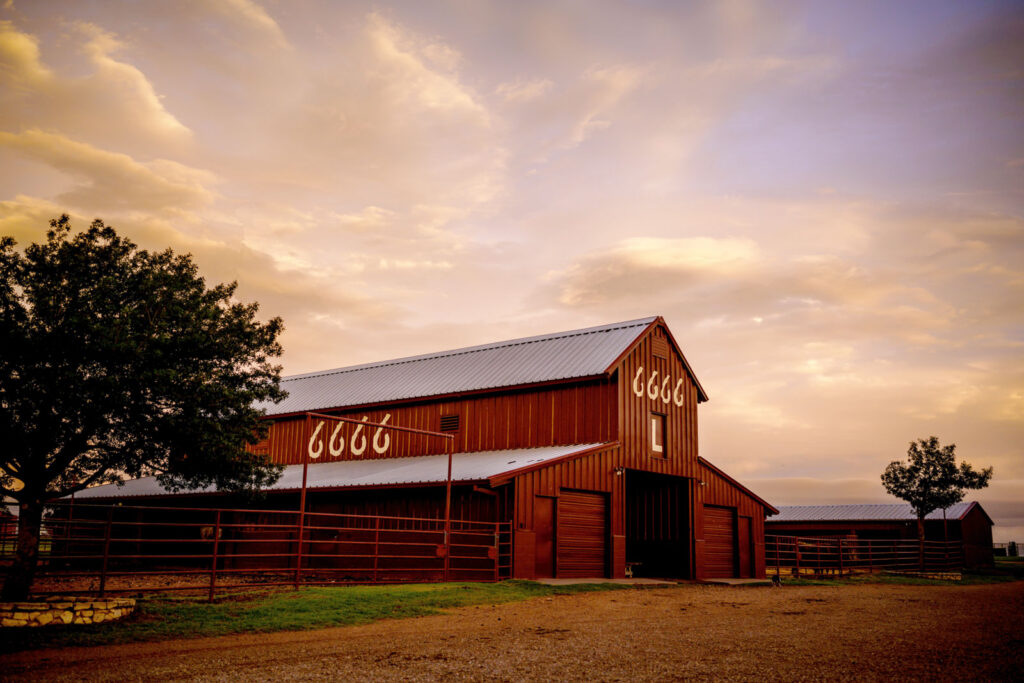
The family’s influence reached far beyond cattle. Burk’s second wife, Mary Couts Burnett, endowed the library that bears her name at Texas Christian University (TCU) with a $3 million gift in 1923. Granddaughter Anne Burnett Tandy became one of the world’s largest landowners, holding more than half a million acres, and was involved with the founding of the American Quarter Horse Association. Great-granddaughter Anne Burnett Marion, the last Burnett to own the Four Sixes, was a celebrated philanthropist and patron of the arts, a driving force behind the Modern Art Museum of Fort Worth, and founder of the Georgia O’Keeffe Museum in Santa Fe. The School of Medicine at TCU carries her name. When Marion died in 2020, her will directed that the ranching operations be sold.
A New Era for the Four Sixes
Sheridan first showcased the Four Sixes in Yellowstone’s third season, which aired in 2020, so when the property came to market, he seized the chance to own one of the most storied spreads in the American West. He assembled a group of investors to meet the roughly $350 million asking price for the Four Sixes and its Dixon Creek and Frisco Creek divisions, more than 266,000 acres in all, and closed the deal in 2022. Soon after, he took a controlling stake. He manages the ranch actively, weighing in on every business decision, guided by a single principle: protect what makes the Four Sixes historically significant while positioning it for profitability.
Technology Meets Tradition in Guthrie
The Four Sixes headquarters may house one of the world’s most advanced horse breeding operations. It is also one of the most remote. Ninety-three miles east of Lubbock and 117 miles west of Wichita Falls, Guthrie sits in the Rolling Plains of northwest Texas, where low hills and endless vistas run to the horizon.
Cell service is spotty, traffic is sparse, and the occasional pickup and stock trailer offer the only reminder that it is the 21st century—until the Four Sixes airstrip appears. Another mile of open road, and the sprawling red barns and outbuildings come into view.
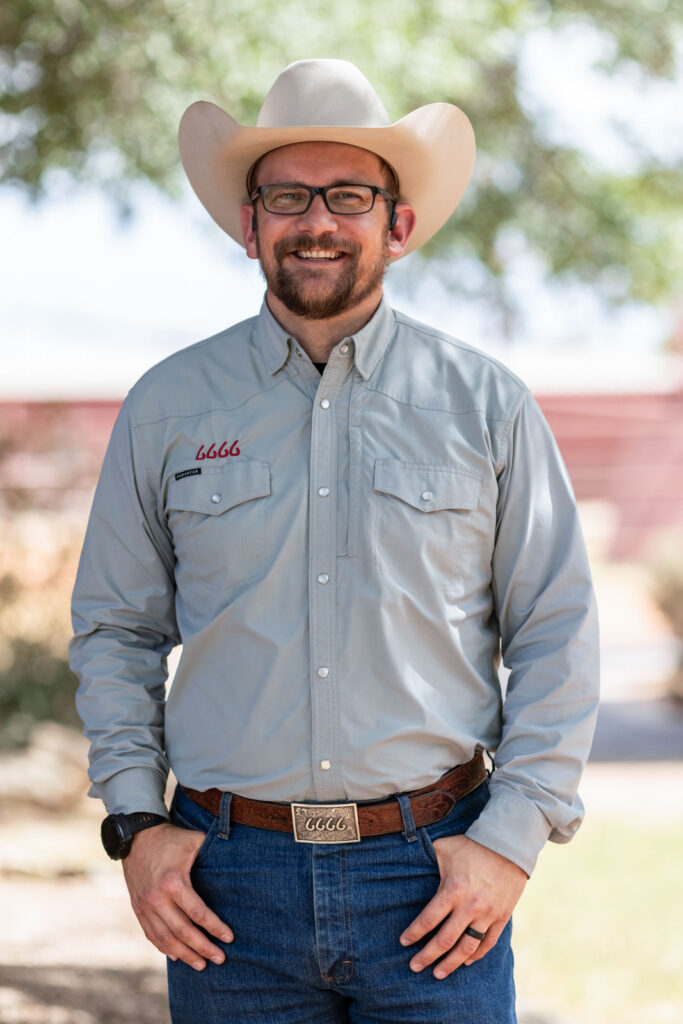
My host is Dr. Nathan Canaday, the ranch’s resident veterinarian and Horse Division Manager. After a brief introduction, he leads me straight into the heart of the breeding operation. I am about to learn more about horse semen than I ever dreamed possible.
The first thing to understand about producing top-tier performance horses is that, unlike in the Thoroughbred industry, live cover is not the standard. The process begins with collection, followed by computer-assisted analysis of stallion fertility. Digital imaging and specialized software track sperm concentration, motility, and morphology, judging each sample on progressive motility (not all sperm swim directly toward the goal, who knew?), along with volume.
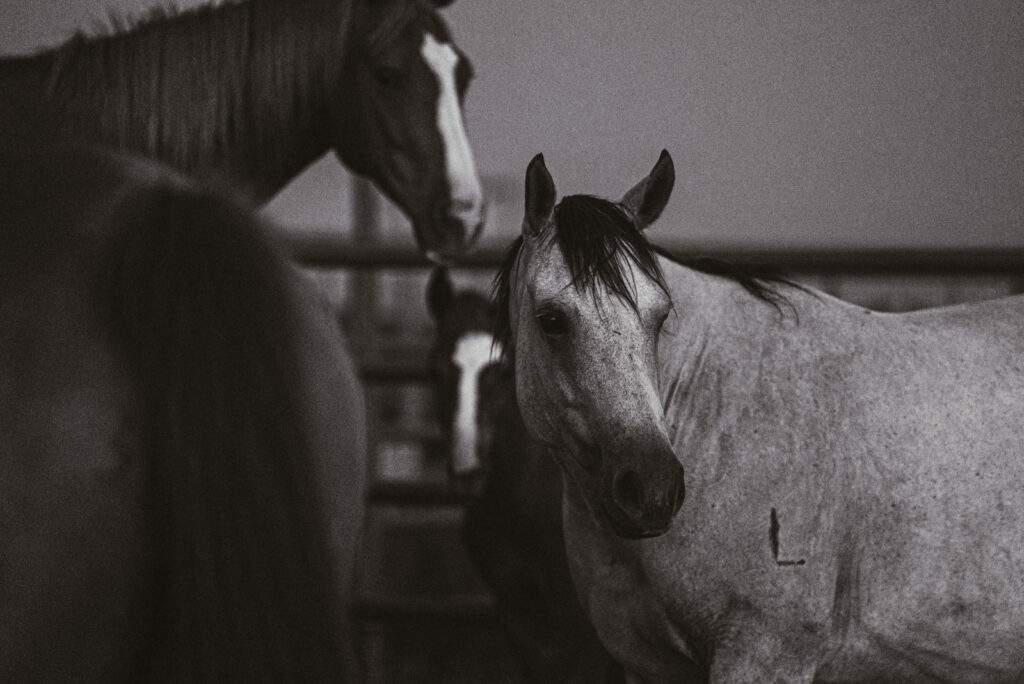
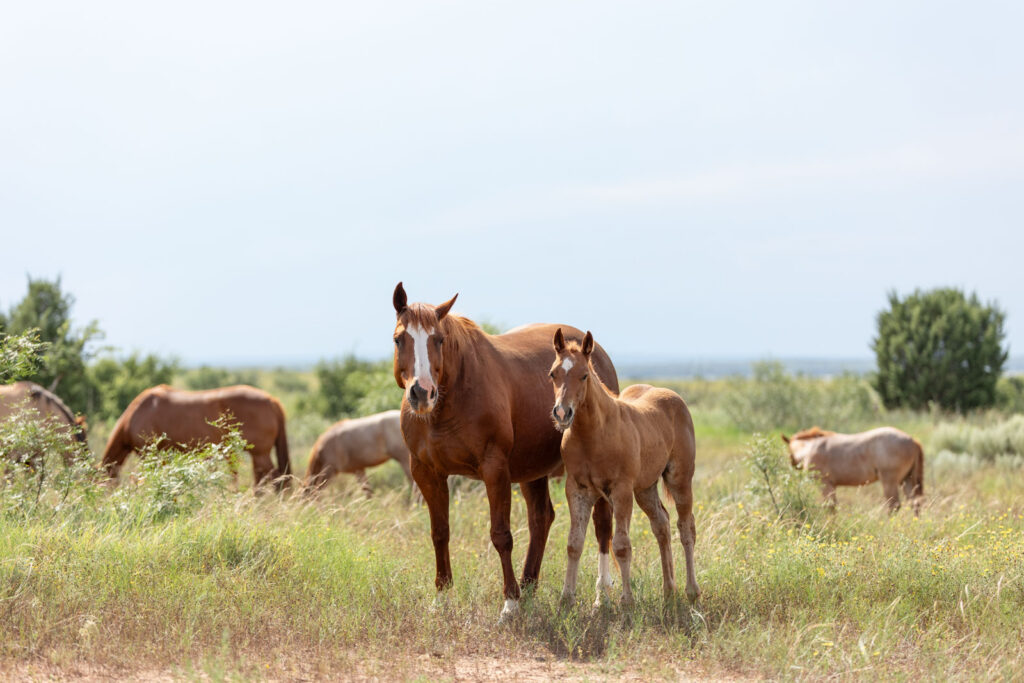
Once approved, the semen is stored in quarter-cc straws (eight is a breeding dose) and frozen in liquid nitrogen. It can be shipped for insemination off-site, or mares may be bred on the ranch. The breeding shed rivals the lab for sophistication: a computerized system tracks each mare’s progress, overhead screens display her status, and both veterinary staff and cowboys monitor updates through a smartphone app. During peak season, 2,000 mares may be in residence. The ranch produces more than 100 foals of its own each year, plus another 150 or so for clients.
A Showcase for Stallions
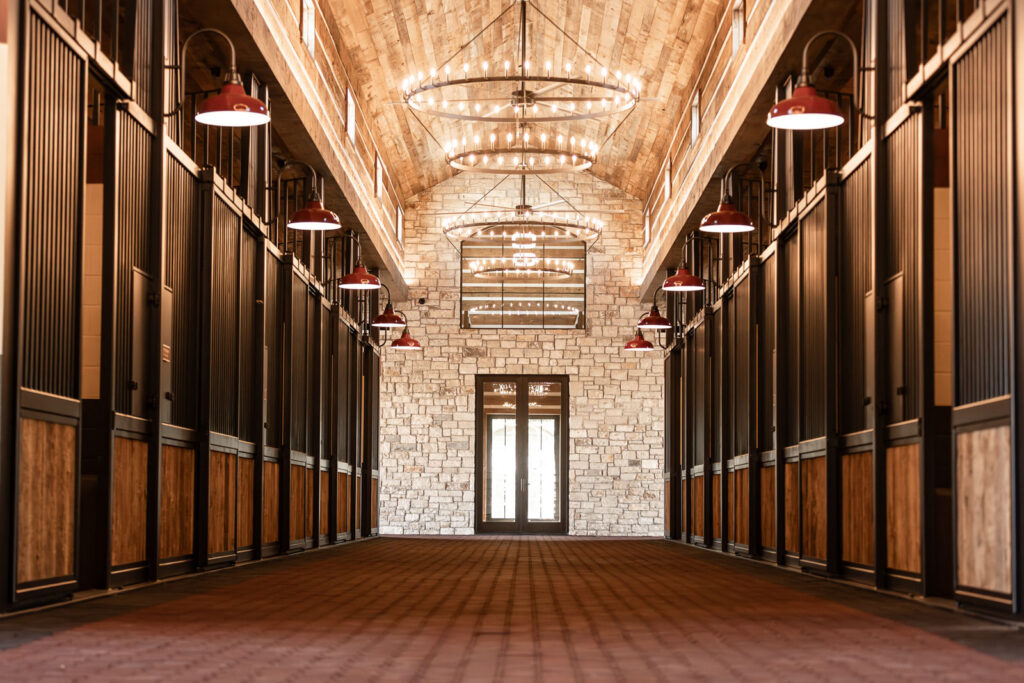
After acquiring the Four Sixes, Sheridan faced a singular challenge: how to take an operation already defined by cutting-edge technology and advanced management to the next level. There seemed to be no worlds left to conquer. His answer was to build a facility that would showcase the ranch’s top studs against a backdrop as luxurious as any of the great Thoroughbred farms of Kentucky. Thus was born the Granbury Stallion Station.
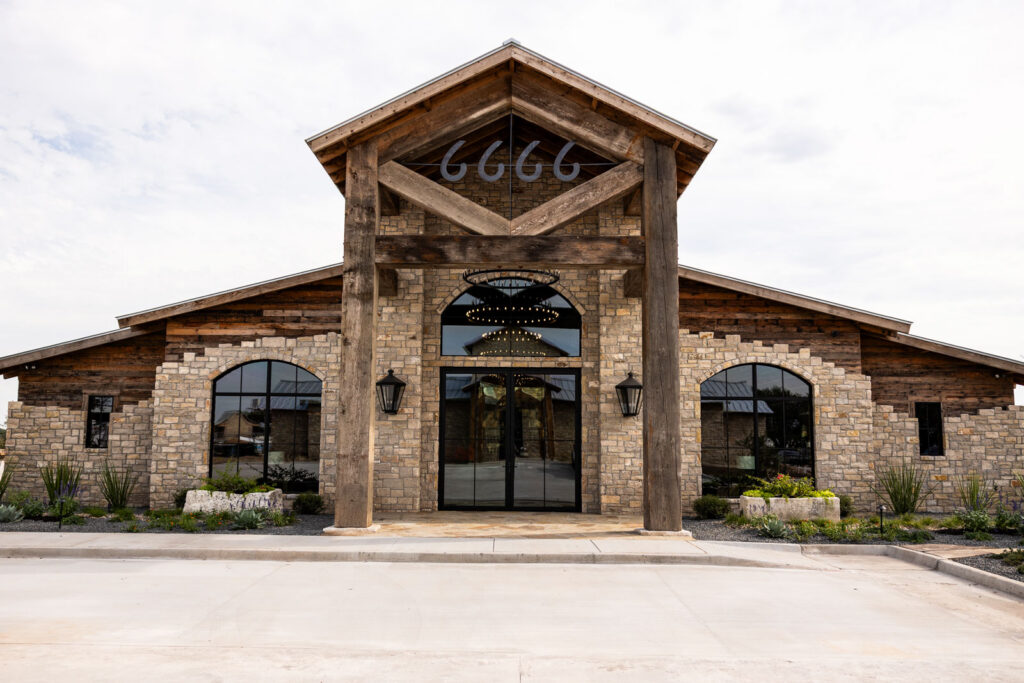
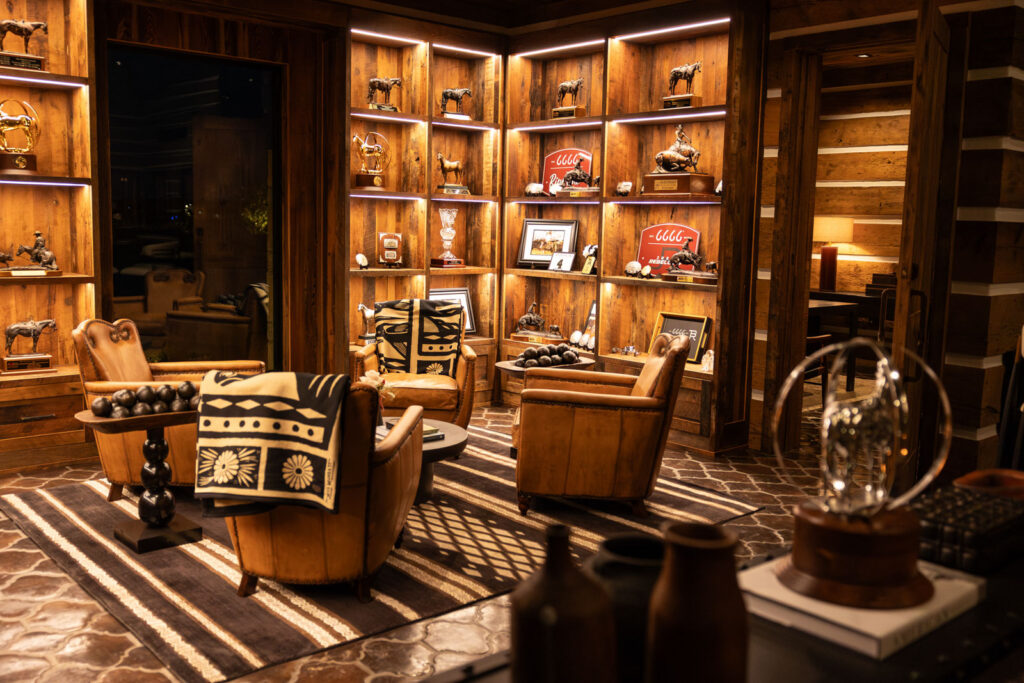
Set outside Weatherford, Texas, at Sheridan’s Bosque Ranch, the Stallion Station offers a level of Western elegance that rivals the finest Lexington has to offer.
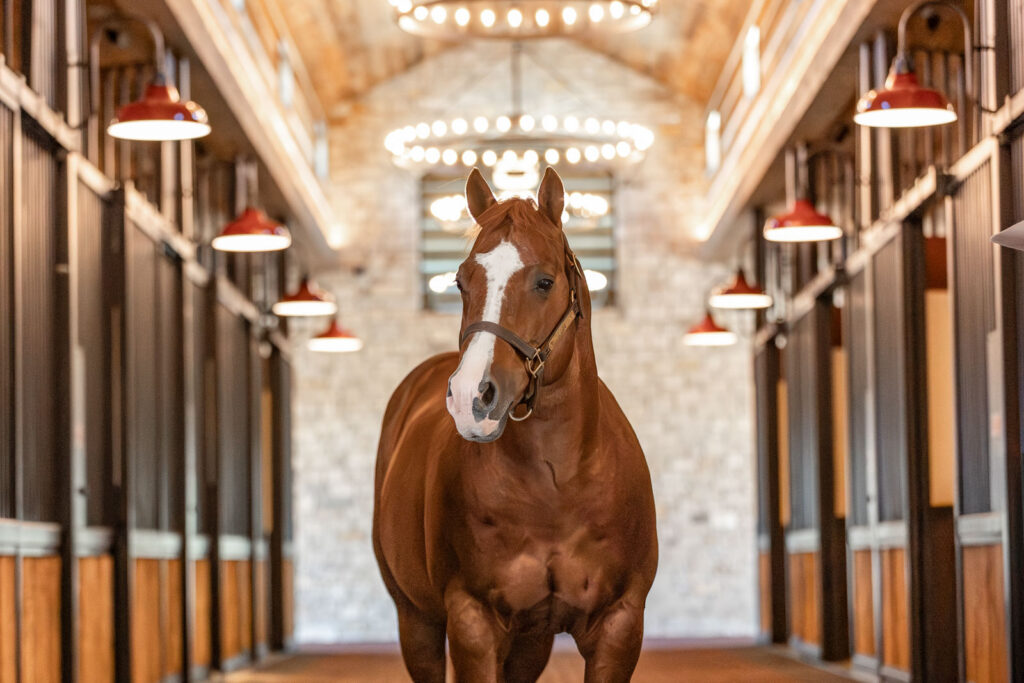
No mares are bred on-site; instead, the station functions purely as a showcase, collection site, and event venue. Resident sires such as Smooth Talkin Style, Fiddle and Steel, Kit Kat Sugar, and Reyzin the Cash enjoy every comfort a horse could desire, including a cold-water spa and an underwater treadmill. All contracts and semen orders are managed through Guthrie, but the strictly by-appointment facility welcomes clients who wish to breed their mares to elite performance stallions.
Where’s the Beef?
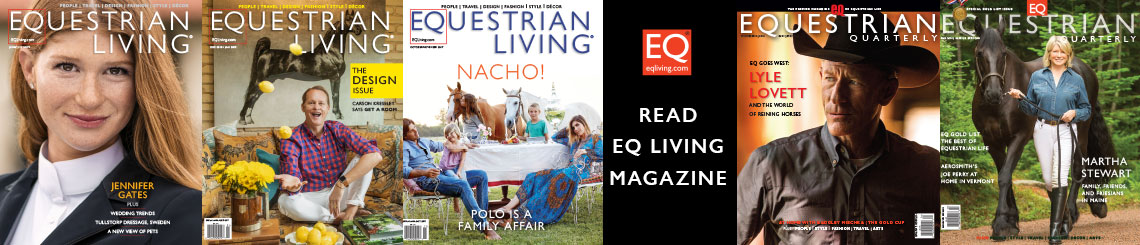
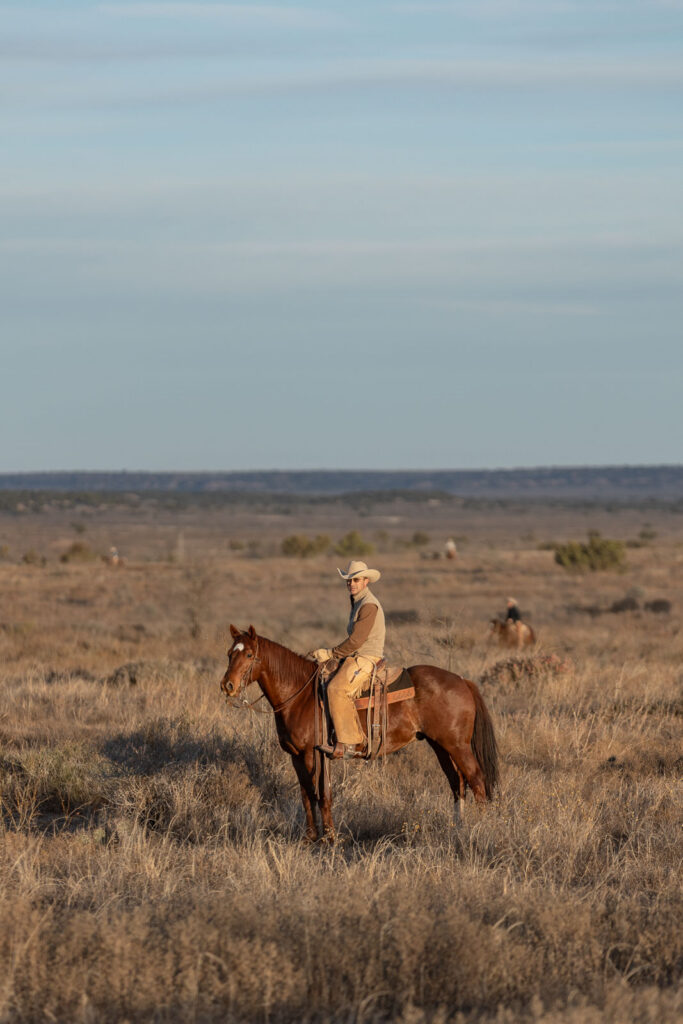
The Four Sixes runs a breeding herd of roughly 7,000 cows across Guthrie, Dixon Creek, and Frisco Creek. Committed to the most progressive cattle management practices while preserving genetics and tradition, the ranch relies on a surprisingly small crew to work both herd and land. With five hands at Guthrie, five at Dixon Creek, and two at Frisco, each cowboy manages 40,000 to 50,000 acres and 800 to 1,000 head. Beyond the health of the animals, they serve as stewards of the range itself. And while they embrace tools like electronic ID and digital recordkeeping, tradition still runs deep. Every cowboy keeps his own string of 7 to 10 horses; you won’t catch a Four Sixes hand riding the range on a four-wheeler.
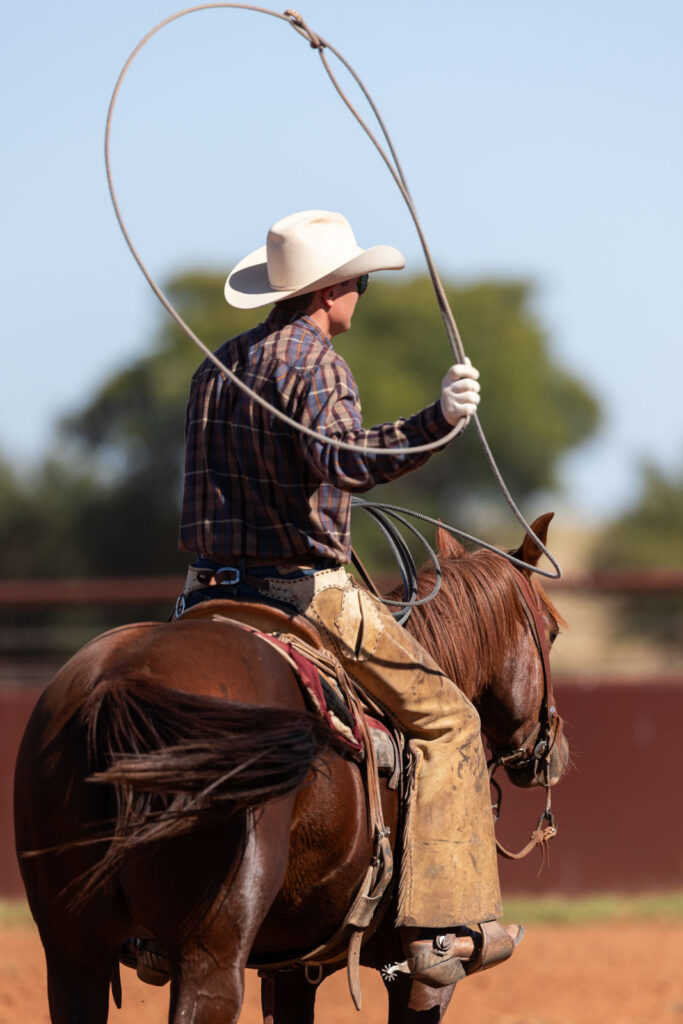
When it comes to the strength of today’s herd, no one deserves greater credit than Joe Leathers, the recently retired president of operations. A lifelong cowboy, Leathers gave 27 years to the Four Sixes and proved indispensable during the drought of 2011, when many ranchers were forced to sell their cattle and surrender irreplaceable genetic lines. Leathers moved all 7,000 head to leased ranches in Nebraska, Nevada, Arizona, South Dakota, Wyoming, and Montana, with a plan to bring the herd home by 2019. His foresight carried the ranch through that punishing stretch without the loss of a single valuable bloodline. While neighboring operations reeled, not one Four Sixes employee lost a job. In 2026, Leathers was appointed to the Four Sixes Board of Directors and inducted into the Texas Cowboy Hall of Fame.
Preserving the Cowboy Way of Life
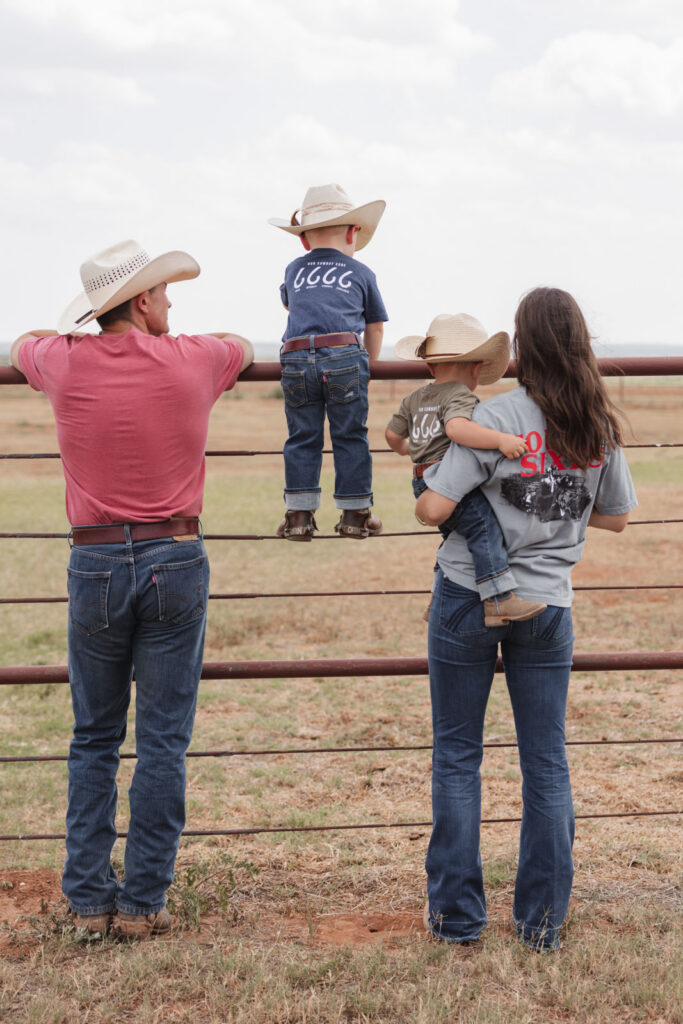
No one has done more to preserve and promote the Western way of life than Taylor Sheridan. Through his storytelling, he has brought ranching and cowboying to a mass audience and single-handedly sparked new enthusiasm for Western culture. But Sheridan does more than portray the West onscreen. He has invested heavily in ranching, performance horses, breeding, and competition infrastructure. With the Four Sixes, he is working to transform a historic ranch identity into a broader heritage lifestyle brand—one built to keep this Texas legend economically viable, culturally visible, and emotionally compelling for generations to come.
Learn more at 6666ranch.com. This story appears in the Fall 2026 issue of Equestrian Living. Read the current issue.