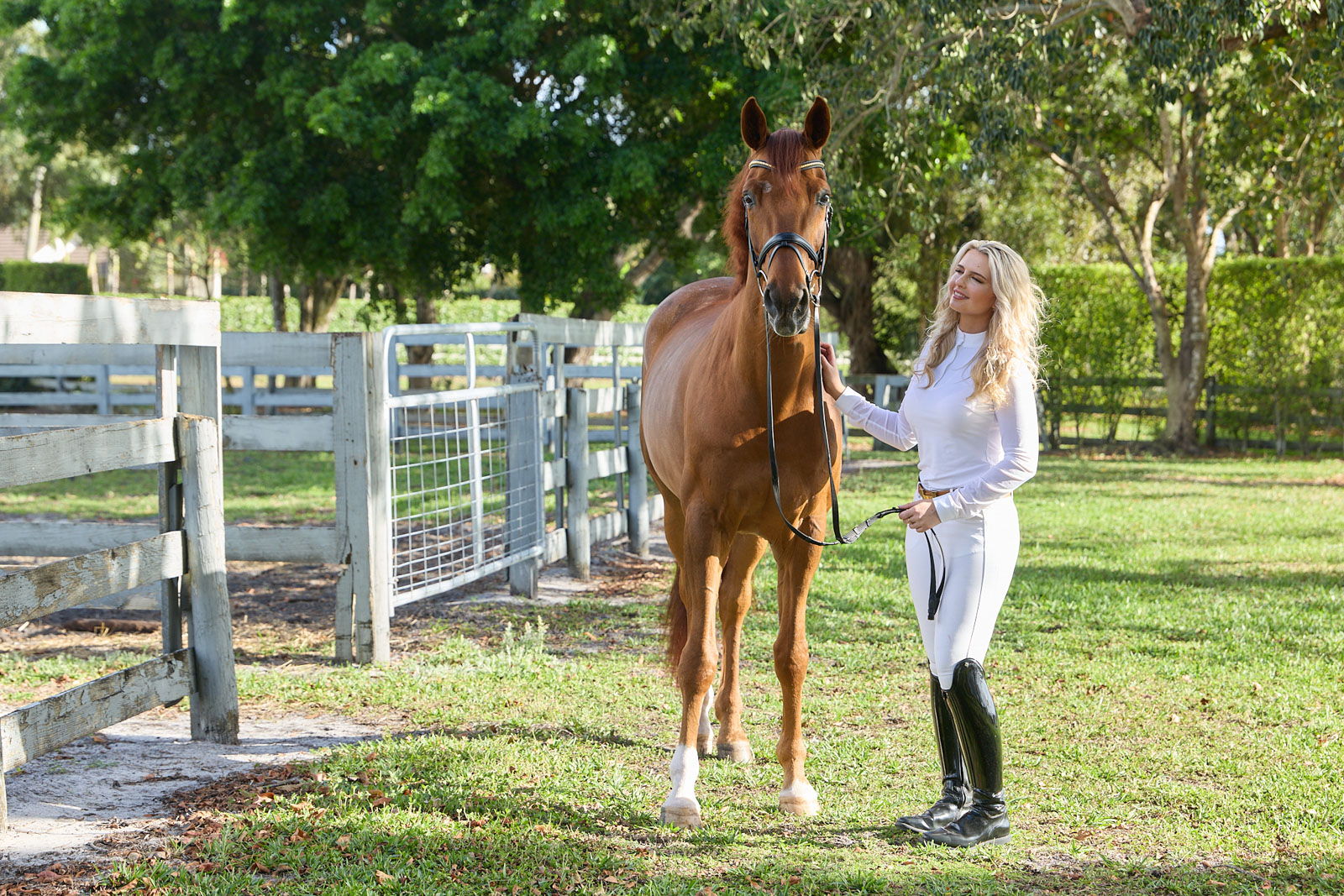
 Sarah Lessler
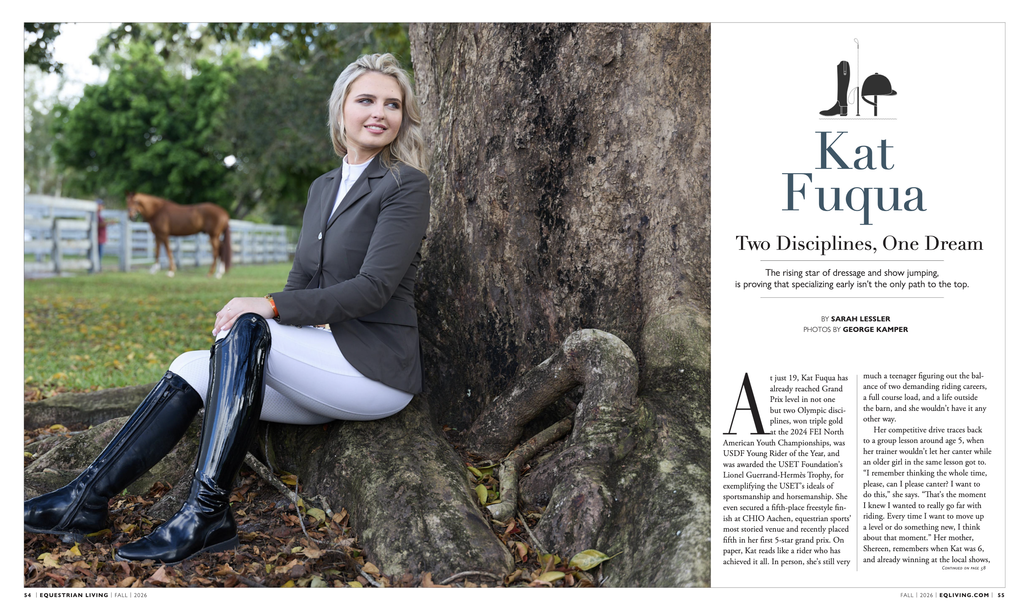
The rising star of dressage and show jumping, is proving that specializing early isn’t the only path to the top.
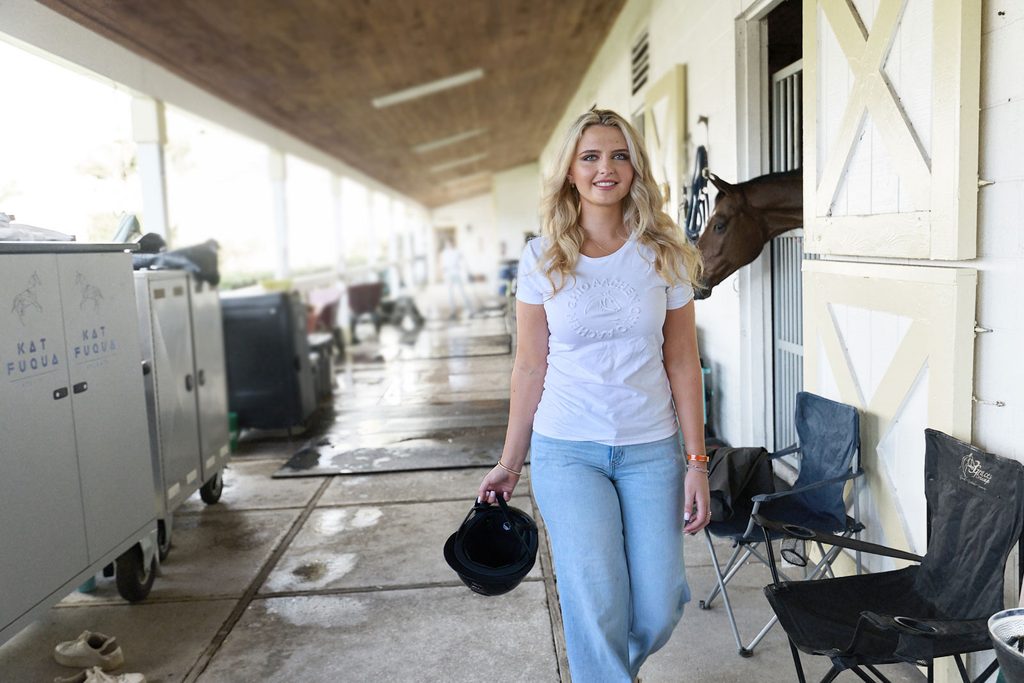
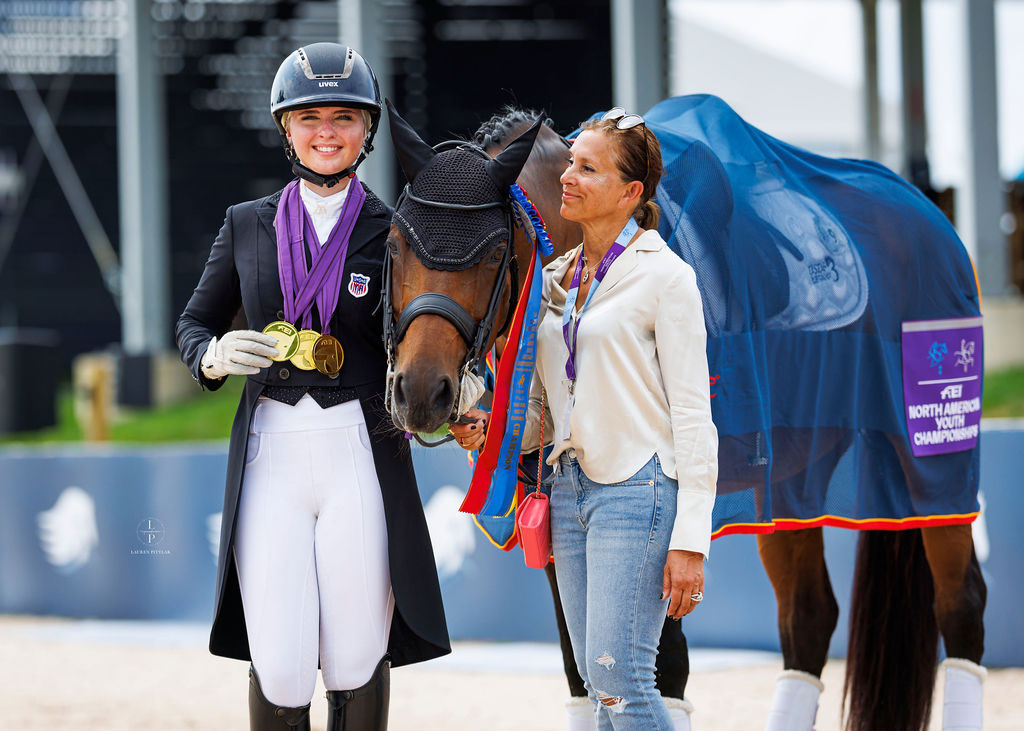
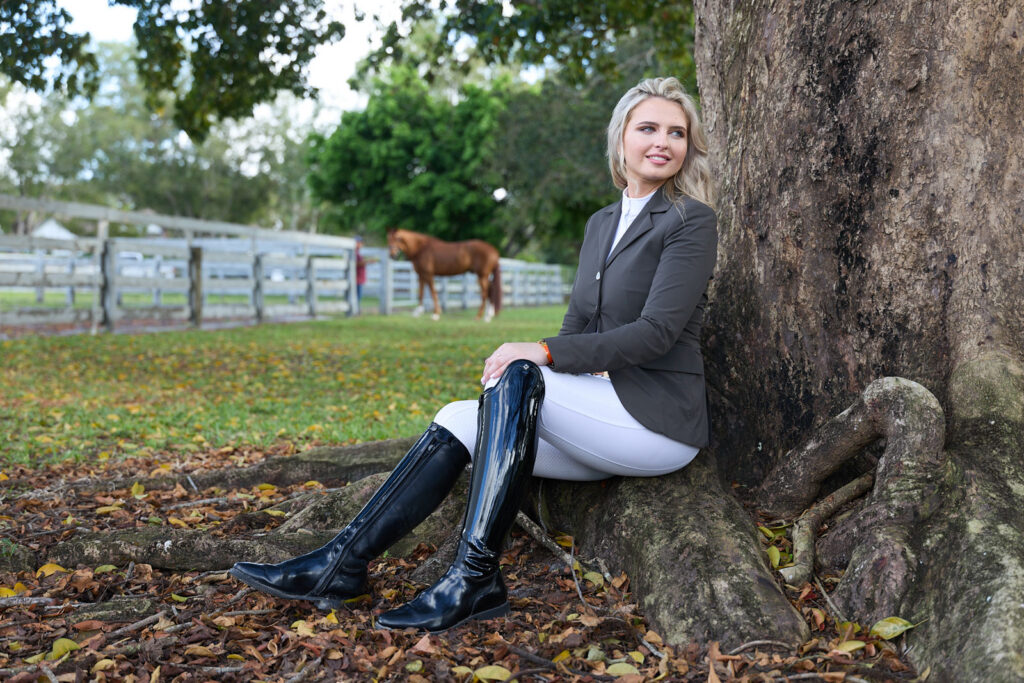
At just 19, Kat Fuqua has already reached Grand Prix level in not one but two Olympic disciplines, won triple gold at the 2024 FEI North American Youth Championships, was USDF Young Rider of the Year, and was awarded the USET Foundation’s Lionel Guerrand-Hermès Trophy, for exemplifying the USET’s ideals of sportsmanship and horsemanship. She even secured a fifth-place freestyle finish at CHIO Aachen, equestrian sports’ most storied venue, and recently placed fifth in her first 5-star grand prix. On paper, Kat reads like a rider who has achieved it all. In person, she’s still very much a teenager figuring out the balance of two demanding riding careers, a full course load, and a life outside the barn, and she wouldn’t have it any other way.
Her competitive drive traces back to a group lesson around age 5, when her trainer wouldn’t let her canter while an older girl in the same lesson got to. “I remember thinking the whole time, please, can I please canter? I want to do this,” she says. “That’s the moment I knew I wanted to really go far with riding. Every time I want to move up a level or do something new, I think about that moment.” Her mother, Shereen, remembers when Kat was 6, and already winning at the local shows, she asked her “do you want to be a big fish in a little pond, or a little fish in a big pond?” Without any hesitation or a blink of her pretty blue eyes, she said, “Oh mommy, I want to be a little fish in a big pond!”
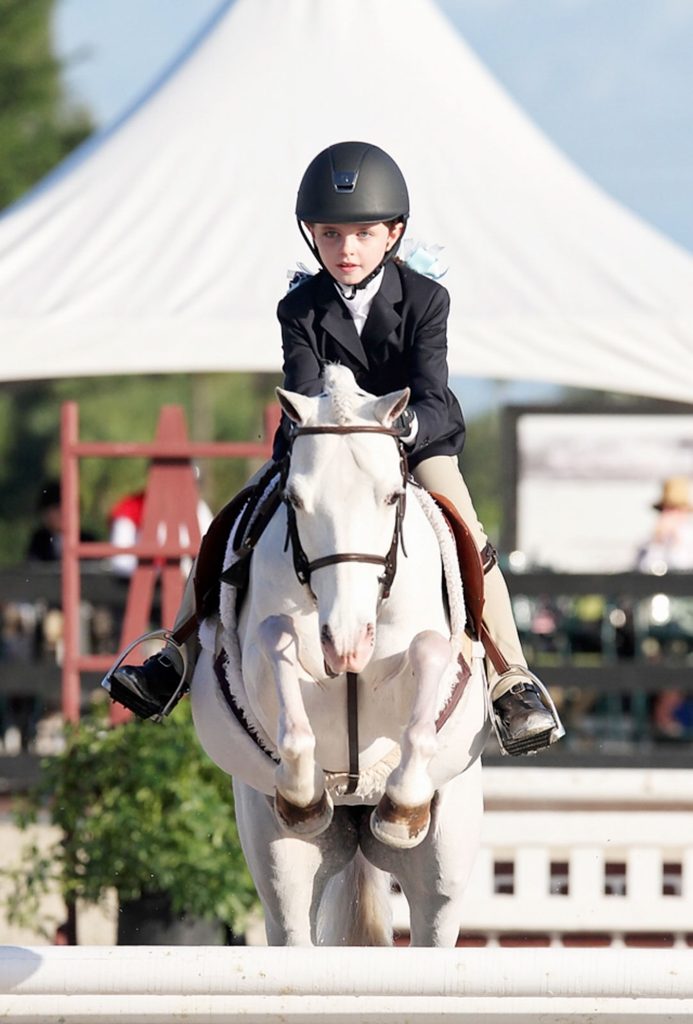
Fuqua came up through ponies and hunters first, a chapter that peaked with Grand Remo, a difficult, testing young horse who matured into her best hunter and carried Kat to three WEF Circuit Championships, multiple Grand Junior Hunter Championships, and helped secure Kat as Best Child Rider more than once. He was also the USEF Horse of the Year in 2020. Kat was working with a dressage trainer on the basics with her hunter horses and told her plainly he wanted her on a real dressage horse.
Enter Dreamgirl, the mare who’d become the most important partner of Kat’s career. From observing her mother, grand prix dressage rider Shereen Fuqua, the transition came more naturally than most. “I kind of already had the basic idea and the basic way of riding dressage, so it wasn’t as big of a change as people would think.” By age 14, Kat won USA Dressage Junior Champion, and earned her USDF Bronze Medal.


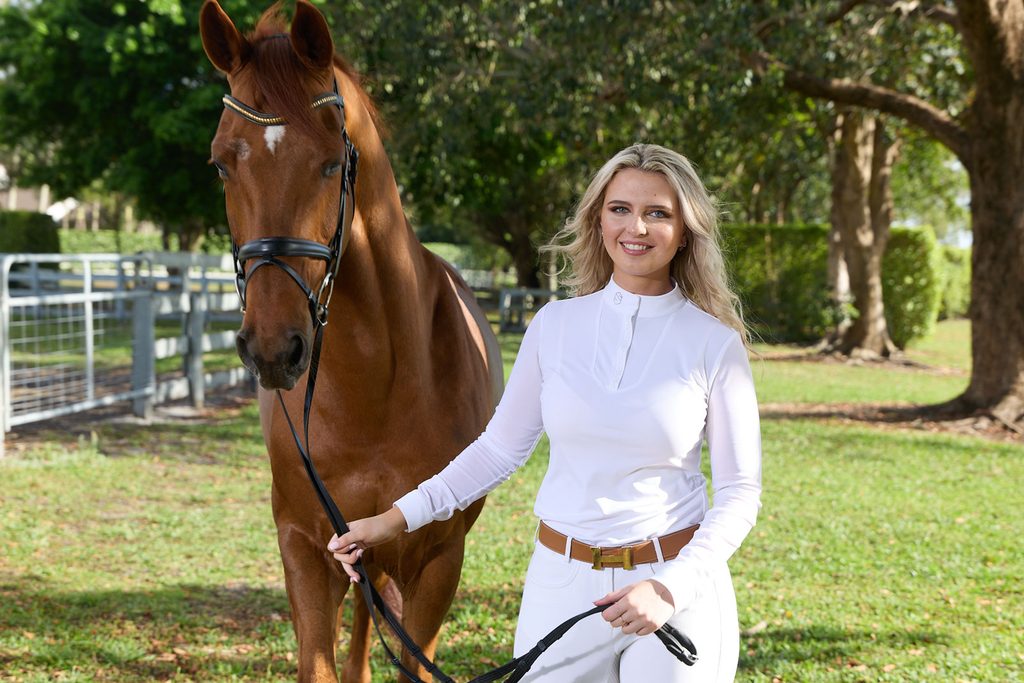
Her current string of horses reflect where she’s headed next: her dressage mount Toto Django, a 9-year-old with what she says has “a lot of talent for the grand prix movements,” and Chanezzo PS, an 8-year-old stallion by Chacco Blue with “a lot of power” and a work ethic to match. “They have the exact same personality,” she says. “They’re both really sweet, and they both always try really hard, even if they’re not really sure what we’re asking.”
Two Disciplines, One Rider
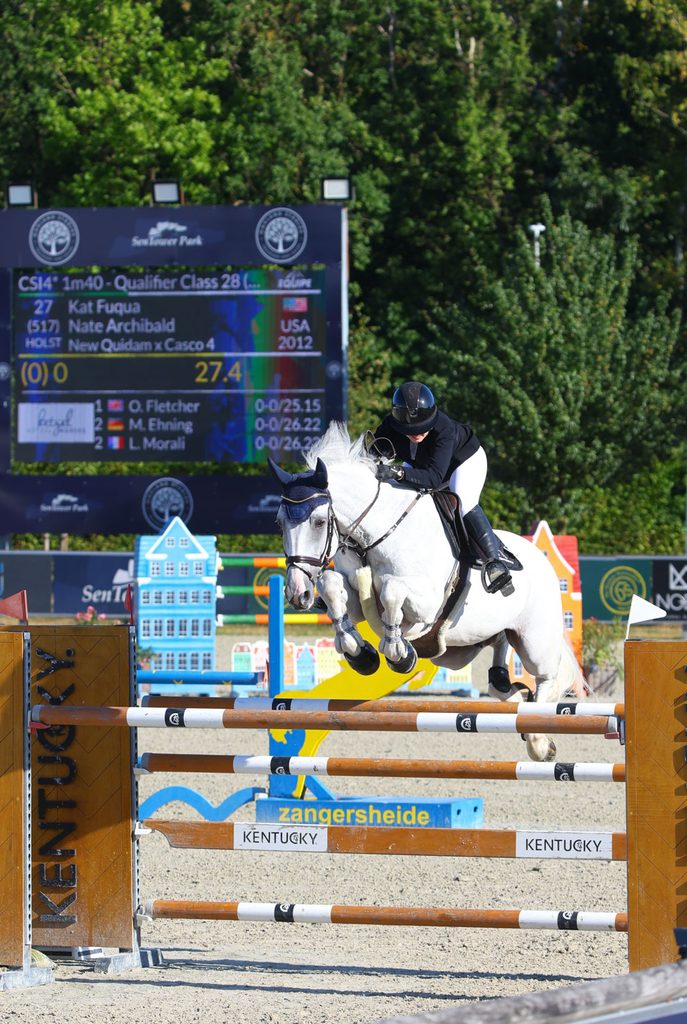

Most riders specialize, but for Kat, being a dressage and show jumping rider is her normal. “I feel like I’ve done both my whole life,” she says. “It doesn’t feel like I could do anything different—it just comes naturally at this point.” She insists the two disciplines make each other better: “Dressage helps so much with the jumping—having your horse on the aids, listening to you. And the jumping makes me a braver dressage rider. I can go for it a little more, for the big points.”
That philosophy is easier to describe than to live. Her jumping horses primarily live in Germany with trainer Schockemöhle CEO and Show Jumper Trainer, Andreas Kreuzer. Her dressage work is anchored at home with her mother and trainers Frederic Wandres and Steffen Peters.
During one Wellington winter circuit, split between the Winter Equestrian Festival and the Global Dressage Festival, she remembers a routine that would exhaust anyone, dashing from one ring to the next and back again. “The dressage starts pretty early in the morning, so I’d show my dressage horses, immediately get off, run to my jumping classes, come back for dressage awards, put the horses away, and run back for another jumping class,” she says, laughing. “It’s a lot of juggling, but it’s fun. I love it.” Kat admits there are times when she’s been mostly riding dressage and then gets back into her jumping saddle, and she can barely walk. “The muscles you use for jumping and dressage are just a lot different.”
My mom always wants me to believe in myself, believe I can be the best, and go in 100 percent.
Being part of USEF’s Emerging Athletes and High Performance Pathways has shaped her not only in riding, but everything around it. “You learn how to work with other people and to be supportive of your teammates. They have seminars on how you need to take care of your body, and what you should be posting on social media—a broad range of things. It’s not just riding. It helps you with everything you need to know.”
Aachen
If one moment captures what Fuqua is chasing, it’s Aachen. At Aachen in 2024, she and Dreamgirl finished fifth in the Dressage Young Rider Freestyle. It was the best show of her life, she says without hesitation. “It’s chills when you enter the arena,” Kat says. “I’d always wanted to show there, and everyone says it’s the best thing. And it really is.” The week closed with the Farewell of Nations ceremony in the main jumping arena, where she found herself waving alongside Steffen Peters and McLain Ward. “It was so much fun. That was the best horse memory I’ve ever had.”
Horsemanship and Balance
Ask Kat what she’s learned beyond the technical side of two disciplines, and the answer keeps circling back to one word: consistency. “My mom always wants me to believe in myself, believe I can be the best, and go in 100 percent,” she says. “My jumping trainer Andreas wants me to stick to the same plan every day, not to stress about what other people are doing, or about one fault. Just stick with the plan.” To her, real horsemanship has little to do with ribbons. “I think it means understanding at all times what your horse is feeling. It also means being able to say, maybe today’s not our day, so we don’t jump today, we don’t go in for the test, if you really don’t think it’ll go well.”
None of it happens alone, she’s quick to add—her mother manages both sides of her career, her trainers are unanimously supportive of the dual path, and some of her closest support comes from outside the industry entirely. “A lot of my best friends don’t have anything to do with horses. They don’t really understand what I’m doing, but they’re cheering for me all the time.”
Outside the barn and the demands of competition, Kat’s life has plenty of room for the things she enjoys simply because they’re fun. A perfect day off might mean going to the beach or getting coffee with friends, exploring somewhere new, doing Pilates, or going out to dinner. Kat likes keeping a to-do list and checking things off to stay organized, but when there’s no show or training session on the calendar, she’s just as happy to slow down and spend time with her horses without the pressure of competition. “That’s my favorite thing to do, just ride my horses bareback,” she says.
Looking Ahead
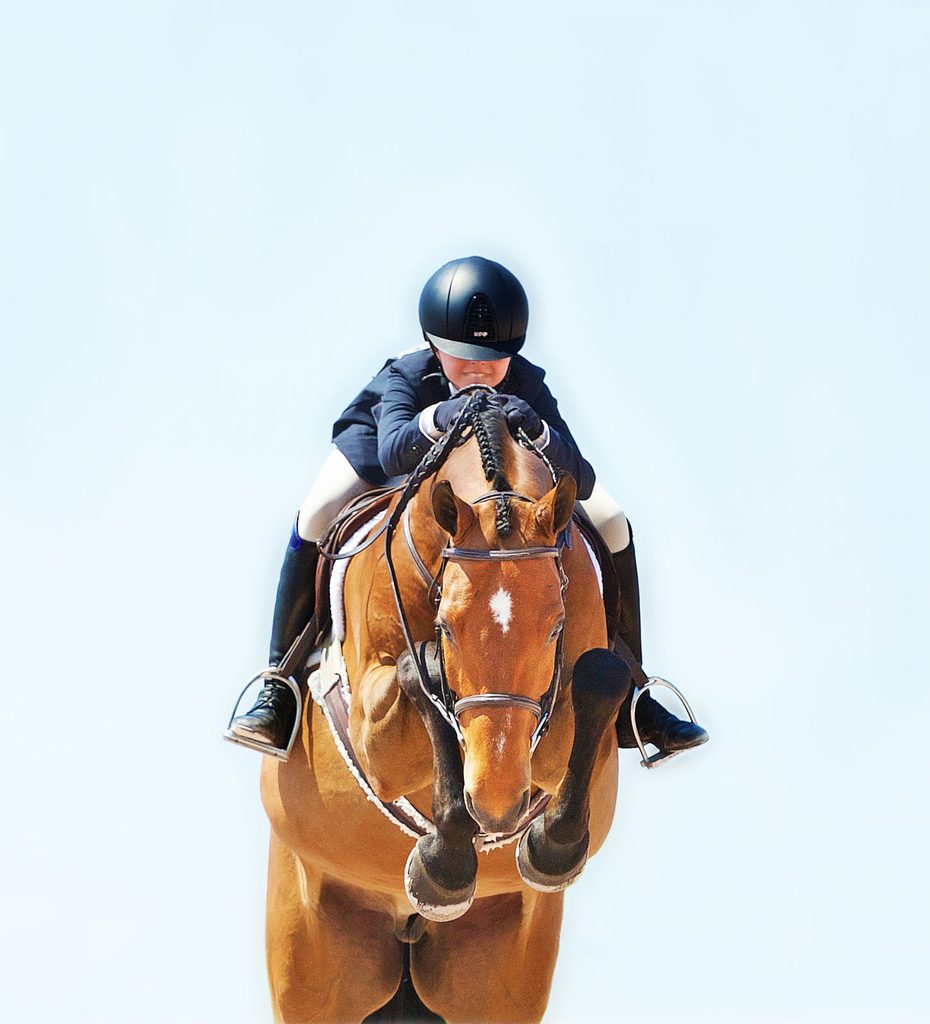
Kat is among a very small number of young riders in the world competing seriously toward Grand Prix in two Olympic disciplines at once. All of it happens alongside her education. This fall, Kat is a freshman at Oglethorpe University in Atlanta, majoring in business. She purposefully chose a smaller school so she can continue riding at home and maintain a more personal relationship with professors who understand her equestrian commitments. Her five-year vision is firmly rooted in both worlds: five-star Grand Prix and senior Nations Cup selection, in dressage and jumping alike. Behind both is the goal she’s carried since she was a 5-year-old begging to canter. “That’s my biggest goal,” she says of the Olympics. “I don’t have a date, 2028 or 2032, but Toto is definitely a prospect. It’s always there. We’re just taking it step by step.”
My favorite thing to do, just ride my horses bareback.
Asked what keeps her going through the exhaustion and early mornings of a life split between two disciplines, she gives a simple answer. “Every time I feel stressed out, like I can’t do this, I take a moment to think about what I’d really rather be doing instead,” she says. “And I’m like—no. I love this. This is what I want to do.”