 Jill Medinger
BY REBECCA BALDRIDGE
An English-riding, polo-playing East Coast city slicker with feverish cowgirl fantasies goes on a CATTLE DRIVE.
Less than 15 minutes in and I’ve fallen at the first hurdle. Around me, would-be wranglers, revoltingly competent one and all, are hard at it, pounding stakes and wrestling tents. A heap of olive-green nylon, my presumed accommodation for the next three days, lies spread out before me. I squint helplessly at the instructions; not one word makes a lick of sense.
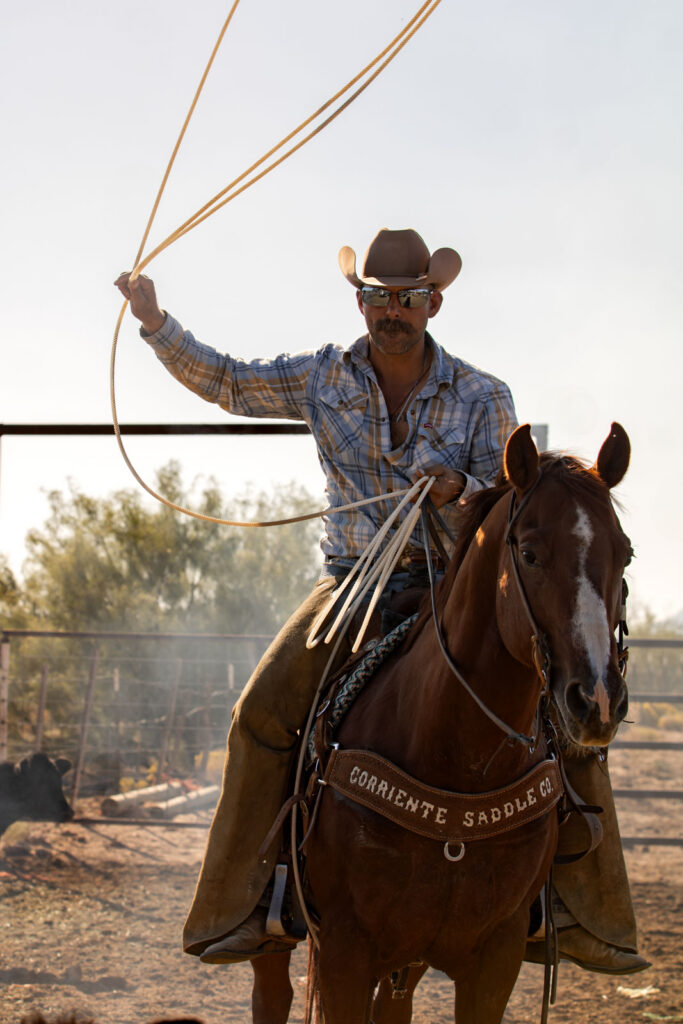

“Want some help with that tent?” A mustachioed cowboy, resplendent in chaps, and a dark-haired girl with the kind of saucer-sized belt buckle money can’t buy, set to work. Ten minutes and my temporary home stands proudly. The cowboy sidles over and whispers, “Your spur straps are on backward.” Clearly, I do not belong here.
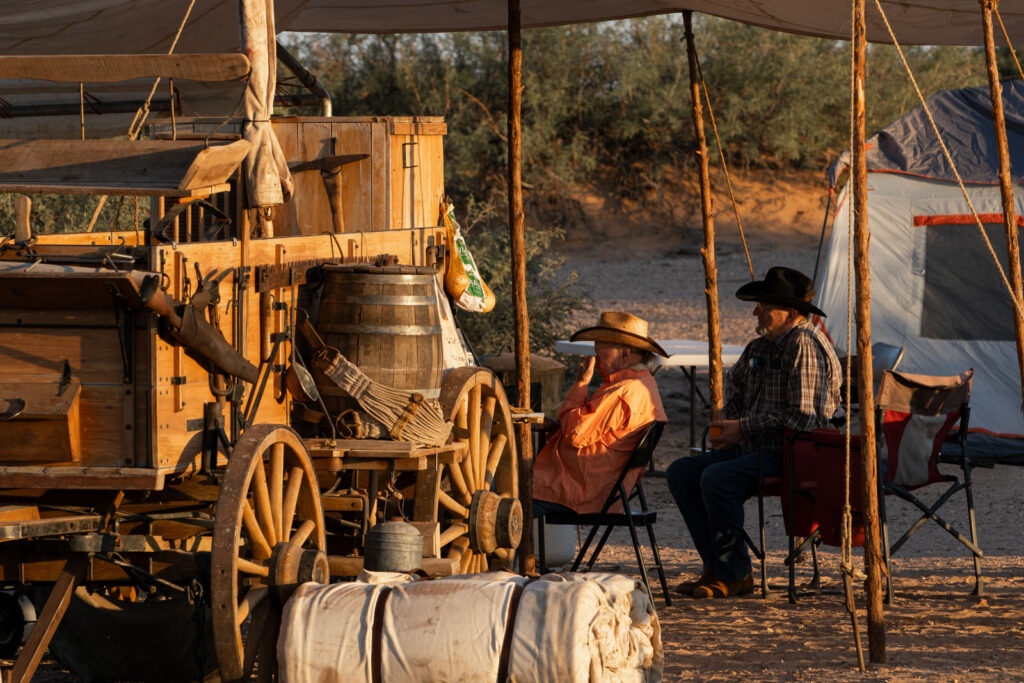
La Union Ranch, which sits in the otherwise inhospitable Chihuahuan Desert in the southeast corner of New Mexico, is a coyote’s saunter from El Paso and the Mexican border, and here I am, about to experience my first-ever cattle drive. As an English-riding, polo-playing East Coast city slicker with feverish cowgirl fantasies, it’s a dream come true. For regular Equestrian Living readers, this predilection of mine is nothing new. But at long last, opportunity’s Lucchese-booted foot has kicked at my door.
It was the start of the summer, and a change of scenery was in order. I headed west to New Mexico to spend a few months learning to ride Western. I’d barely hit Amarillo before the mania took hold, much to the benefit of Cavender’s Boot City. I left with an impressive pair, as well as a chocolate brown Stetson and several colorful shirts of varying Western motifs. By my third day in Las Cruces, I found Armstrong Equine. When it comes to Western riding, they don’t come better than Josh Armstrong.
Armstrong Equine, based in La Mesa, New Mexico, was founded by Josh’s venerable father, Dr. Joseph Armstrong, and focuses on breeding, training, and competing high-quality performance horses—Quarter Horses, of course. Josh has been training horses for his entire adult life and is a fierce competitor, but he also shares his expertise by offering instruction and conducting clinics both in the US and Europe. Watching Josh ride or work cattle is to witness a breathtaking level of communication between horse and rider. Within five minutes of seeing Josh ride, I understand that he’s the cowboy to teach me how it’s done.
With two weeks of lessons under my belt, I’m back in Amarillo watching Josh, his 15-year-old daughter Georgia, and client Judy Ruiz compete in the AQHA Versatility Ranch Horse World Championships. It’s there that I discover Armstrong Equine is to host a cattle drive in the fall. Thus, an obsesssion is born. And so now, after a summer spent training on young Georgia’s spectacular barrel racing horse Ruby (a Quarter Horse obviously), I’m ready to ride the range.
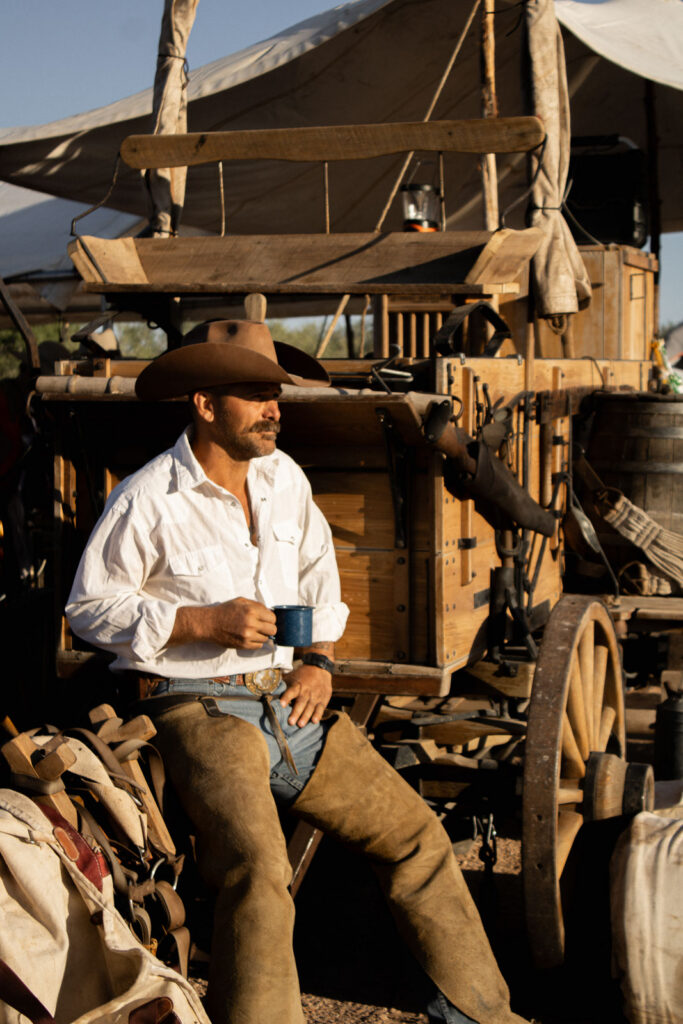
Fast forward to October. Once the intransigent tent was erected, I moseyed (as cowgirls do) over for dinner, served from an honest-to-heavens, 19th-century chuck wagon. That’s where George and Mary Terry prepare the kind of meals that fueled cowboys in the era of thousand-mile cattle drives.
Over bubbling bowls of beef stew, my fellow wranglers and I got acquainted. Riders from all over the country were here to chase Josh Armstrong’s cows, and for more than a few, it’s a repeat visit. The excitement was high at our new home on the range, and everyone turned in early, eager to rest up for the coming adventure.
Each rider was assigned a horse for the duration, and I was delighted to see my regular mount, Ruby. Mind you, I’d only worked her in the ring, but she was always a dream and delightfully responsive. First impressions were good, but I had a lot to learn about Ruby over the next three days, some of it terrifying.
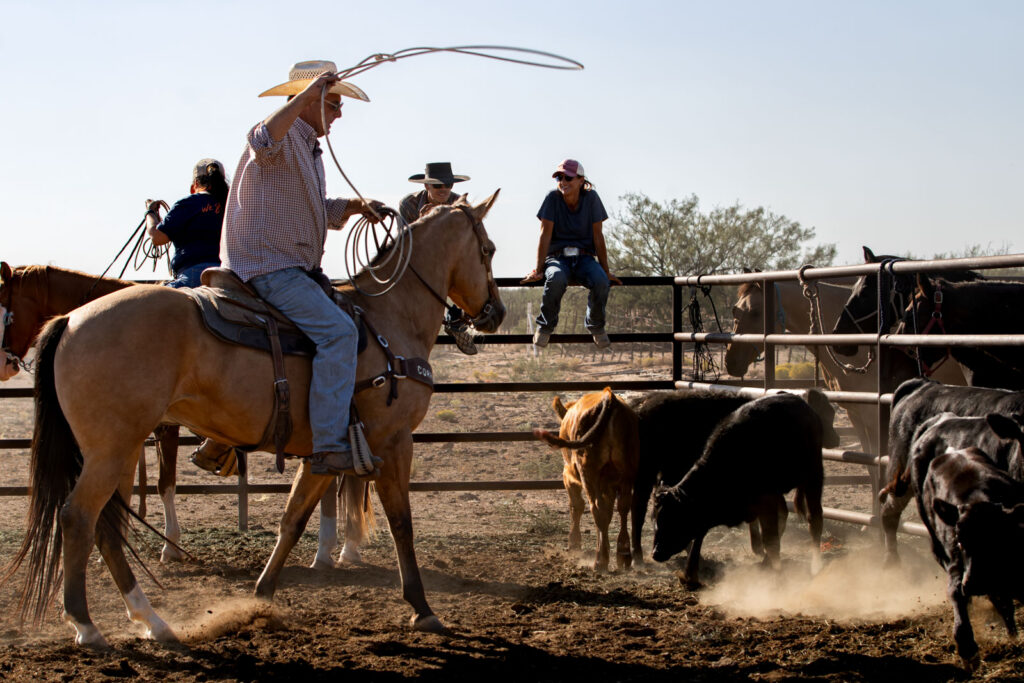
It took a two-hour ride to find the cattle. The desert stretched out endlessly before us—as it does. Sand, blazing sun (if not saddles), scrubby mesquite, a glorious patchwork of sameness. We divided into four groups, two led by 15-year-old Georgia and 13-year-old Eddie Armstrong. Both are as mature as the range; in this environment, they’re the grownups, we riders the children. With no reason to hurry, we spent most of the time walking, but once in a while we’d put on a burst of speed, just for the pure, dusty joy of it.
At the gathering point, Dr. Armstrong and his wife Rusty set out sandwiches and water for a quick lunch. Then, the real work began. First came sorting, Josh patiently explaining how to approach and move cattle. He’s a gifted teacher, in both the riding ring and the wide-open desert.
Once the 25-head herd was assembled, he positioned the riders and explained the fine points of keeping recalcitrant cattle moving as one. I suspect with real hands, you could move such a small herd with maybe three or four riders. There are more than 20 of us.
Driving the cattle back toward the ranch was deceptively easy, at least on this first day. The desert is a curious place, ever ready to remind you who’s boss. Under the bright sky, we occasionally encountered the dearly departed, their bones scorched a brilliant white.
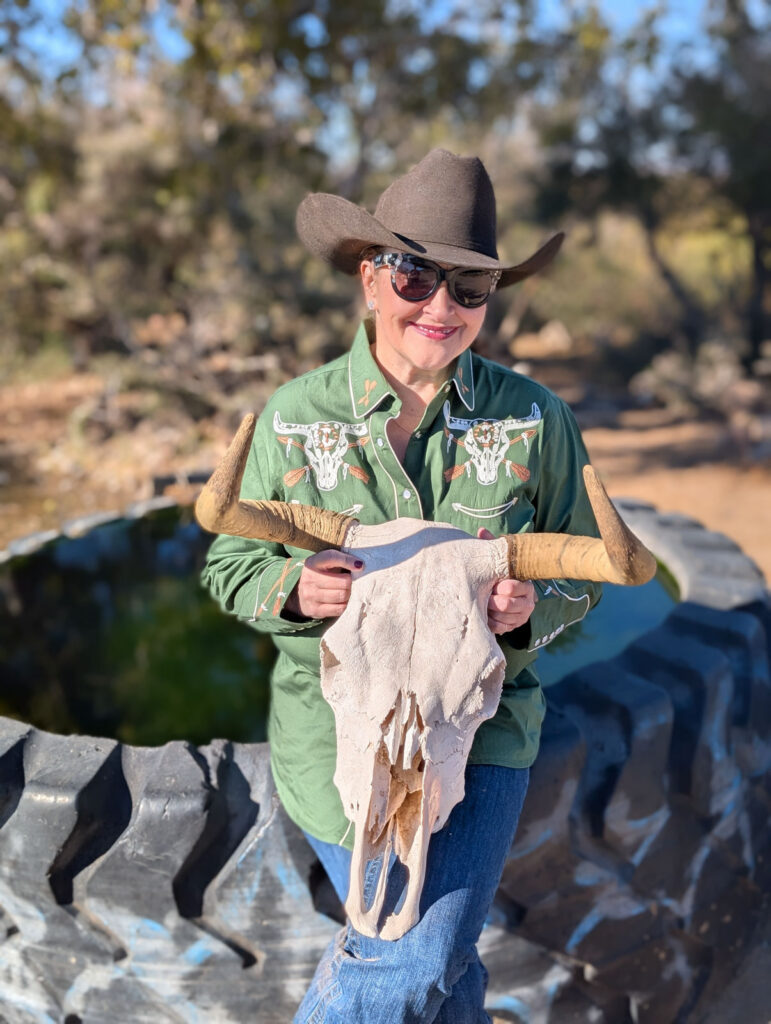
The ultimate symbol of the West, a denuded longhorn skull, lay in my path. I had to have it. It was surprisingly heavy. Ruby was restive, and I needed both hands to keep her from taking off like her tail was on fire. Regretfully, I jettisoned my trophy. Josh said we could retrieve it later. I couldn’t hide my doubt—one small skull in 50,000 acres of mesquite and sand. Oh, me of little faith.
By the grace of the Great Spirit, we got the cattle back to the ranch. It was all fun and games now, as we took turns to move cows between the corrals. Everyone was enjoying themselves, working in tune, even the cows. Then, things turned serious. It was branding time.
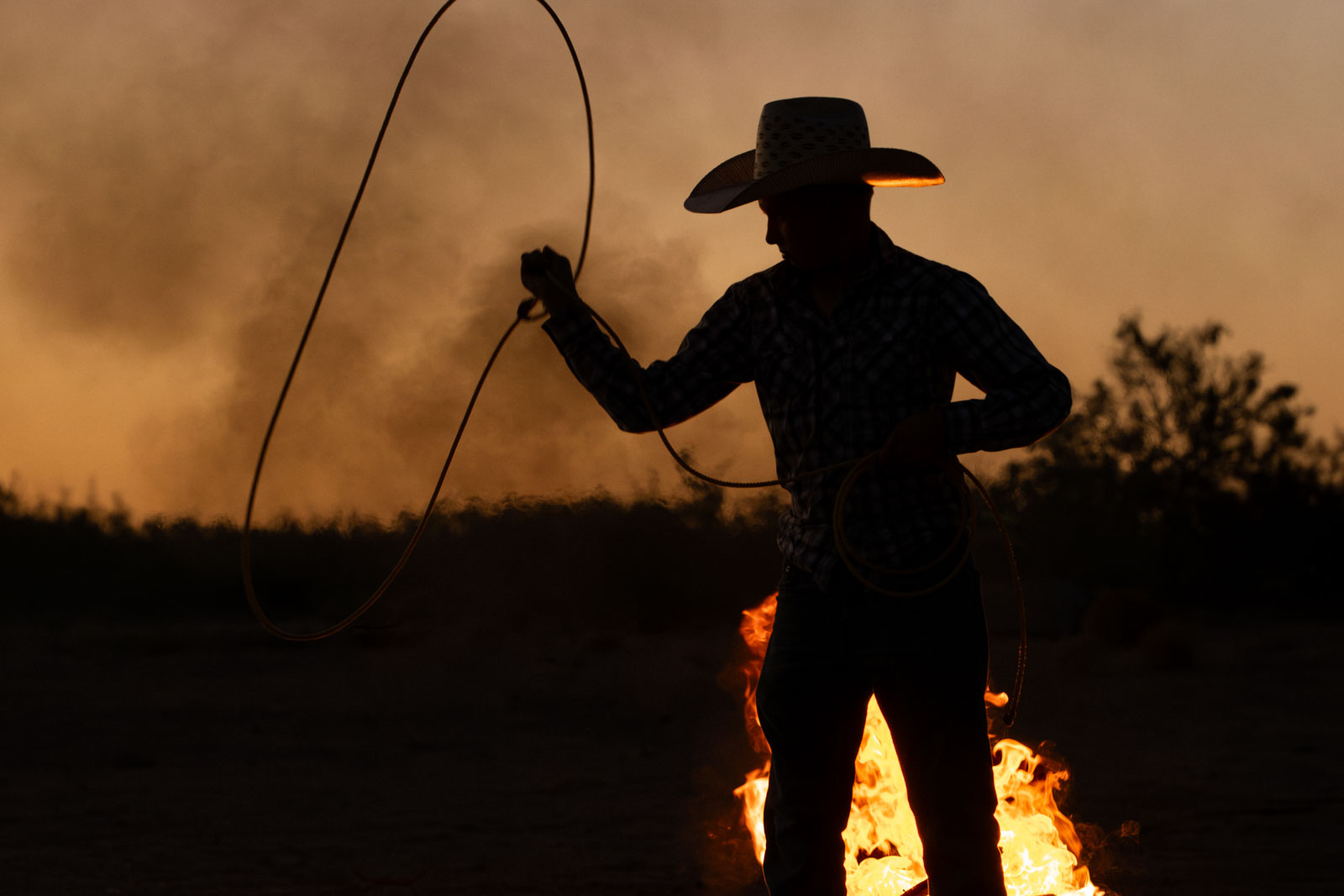
The more experienced hands, including 13-year-old Eddie, stayed in the pen with the calves. A grim fire smoldered nearby. A black bull calf was roped and wrestled to the ground. Two hands pinned him as he bawled his outrage, and his mother bellowed from the neighboring pen. Young Eddie brandished the iron, and smoke rose from the black fur. My fantasy had turned starkly real. “Thank heavens that’s over,” I said to myself.
The black calf struggled to its feet and fled to the herd. I nudged Ruby out of the gate. Playtime was over, and these angry calves are not pets.
Gustatory hypocrite that I am, none of this prevented me from savoring the aroma of our succulent dinner at the chuck wagon. George and Mary had outdone themselves with a fine brisket. And the cobbler was blueberry.
Every night after dinner, we gathered around the campfire to trade yarns about the day’s escapades. It turned out that Josh is not only a gifted horseman but could also play the ukulele, and carry a tune. On Saturday, we were treated to a performance by Burt Ferguson from Truth or Consequences, New Mexico, and Tim Thompson from El Paso, who strummed git-ars and sang cowboy oldies. Everyone joined in on “Mammas, Don’t Let Your Babies Grow Up to Be Cowboys.”
The campfire, the music, the cowboys—were it not for the Ford 150s circled like wagons—we could be back in the 19th century. Bury me not, for Manhattan ever beckons. But for now, I was the cowboy mamma warned me about.
Saturday, we enjoyed a longer ride, but thankfully, there was no branding, just a pleasant afternoon pushing cattle back to the ranch. But Ruby is growing ever more excitable with each ride. Nothing I couldn’t manage. Yet.
Young Eddie mounted his father’s truck, and we set off in search of my cow skull. He was a pretty good driver for a 13-year-old. That’s ranch life for you. But no luck. Eddie headed back to the ranch to haul hay, and Josh took the wheel to continue our search. Once again, like played-out prospectors, we returned empty-handed.
We were told that Sunday would be an easy day. But from the moment I mounted up, Ruby was prancing. I ignored the urge to tighten and kept her on a loose rein, but I stayed close to Georgia. Ruby was her horse; she was a steadying influence, surely. Ruby took it upon herself to break into a lope, and I pulled her back. Suddenly, one hundred yards ahead, several horses broke into a canter.
Remember now: Ruby is a barrel racer and a Quarter Horse. They got their name for a reason. They’re bred for sprinting and are faster than Thoroughbreds over the quarter mile. They can top 55 miles per hour, state limits be damned. Ruby is built for speed.
I believe that I screamed.
The desert passed by in a blur. Yes, yes, I thought, my life insurance is paid up. We were making straight for a mesquite bush. “Oh, bury me not…” Can a cactus break your fall? Do I want to find out? I pulled back hard, and miraculously, Ruby slowed. I guess she didn’t care for the look of those prickly shrubs, either. We sidled up next to Georgia. “I should have mentioned, for barrel horses, pulling back means wait, not stop.” File that for next time.
Dust settled, so to speak. I had an epiphany: I hadn’t fallen off or even been unbalanced (the screaming was all show). Six months ago, this sort of “Mr. Toad’s Wild Ride” would have put me headfirst in the scrub. My time at Armstrong Equine had clearly borne fruit.

Grudgingly, I patted Ruby on the neck; “Goodish girl.” I came to New Mexico unsure of myself, a hapless dudette. Truth be told, I hadn’t changed much. But the West had taken hold of me. Come next October, I’ll be back on the range. Josh Armstrong might make a cowgirl of me yet.
Postscript: Back at camp on Saturday evening, I discovered the skull fairy had left a gift. My macabre longhorn! Only a fool would doubt Josh Armstrong. Overjoyed, I promised that when I next drove down 5th Avenue, the skull would be strapped to the hood of my orange Subaru. How the Manhattanites will stare.