
 Sarah Lessler
MY FIRST FIVE-STAR: A YOUNG RIDER’S EXPERIENCE AT KENTUCKY 2026
As told by Adeline Tullar
EQ Living invited 17-year-old Addie Tullar to represent the magazine in Kentucky, and this is her report. An aspiring eventer herself, Addie grew up on the family farm and ends each school day with barn chores. Her dedication to riding has earned her a spot on the USEF Young Riders Council.
When we first arrived at Kentucky Horse Park, I could hardly believe I was actually there. Walking across the famous bridge past the big pond, seeing the water at the Head of the Lake—I had watched it on YouTube for years, and the reality of finally being there was overwhelming. As we made our way deeper into the park and took in the stands, the iconic Bruce Davidson statue and the crowds filing in, the emotions hit me all at once.

Dressage Day
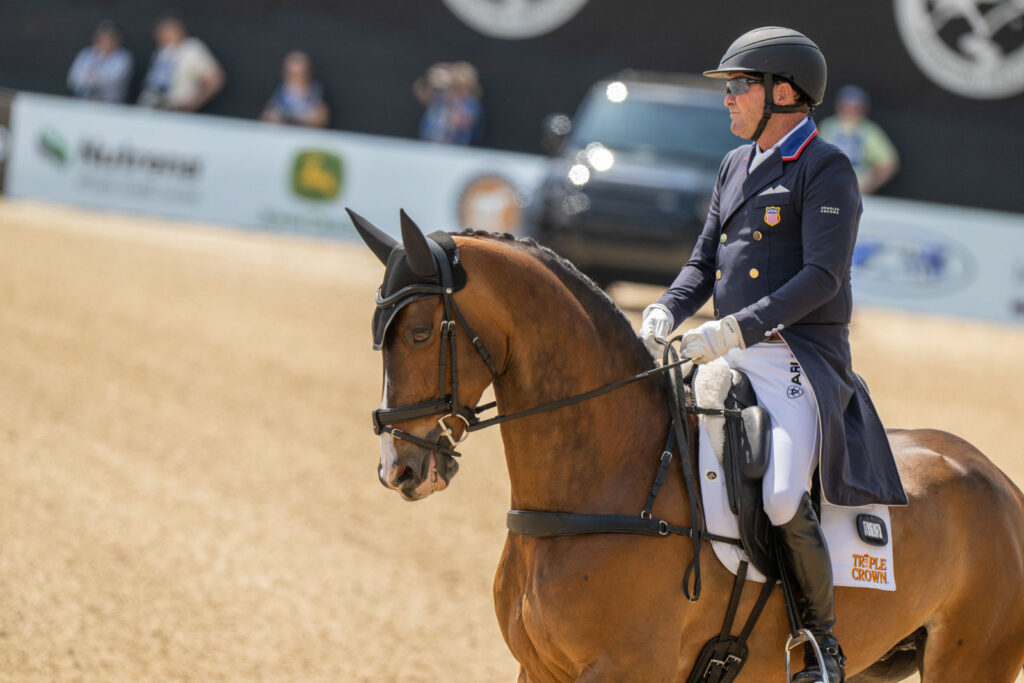
Thursday was dressage day, and I went in determined to absorb everything I could. My trainer, Jane Hamlin, who is also an FEI judge, had given me specific questions to consider—not just while watching the tests, but also in the warm-up areas.
What struck me most was how each rider had developed a routine tailored to their horse’s temperament in that environment. You could tell by the transitions they practiced that riders were focused on keeping their horses’ attention on them, not on the flags or the noise from the stands. Most of the horses were remarkably focused and responsive, and I found myself thinking about how much time and effort had gone into building that partnership—and what an advantage that trust would be on cross-country or in the stadium ring.
Even when a dressage test isn’t perfect or doesn’t earn the best score, the ride sets the tone for the entire weekend. It was remarkable to watch those same disciplined horses the very next day, coiled and ready to bolt from the starting box.
My sister was there working as a professional groom, and it was a treat to help her in the barn early that morning and feel the energy of preparing for the big day. The work involved in getting horses to the competition area is enormous, and I loved seeing how the grooms looked out for one another.
Walking the Course


The night before cross-country, we had the chance to walk the 5-star and most of the 4-star course, following along as riders completed their own walk-throughs. I enjoyed listening to competitors talk through the jumps together—evaluating terrain, measuring strides, and weighing options—because no two horses are going to approach a fence the same way.
Cross-Country Day
Before cross-country began, people were streaming in from every direction. By the time we left the barn area, the field was already packed. Looking down from the tailgating area, the open spectator sections were completely full, with chairs and picnics set up around the Jumbotron. The energy from the crowd and the announcers’ enthusiasm made it electric.
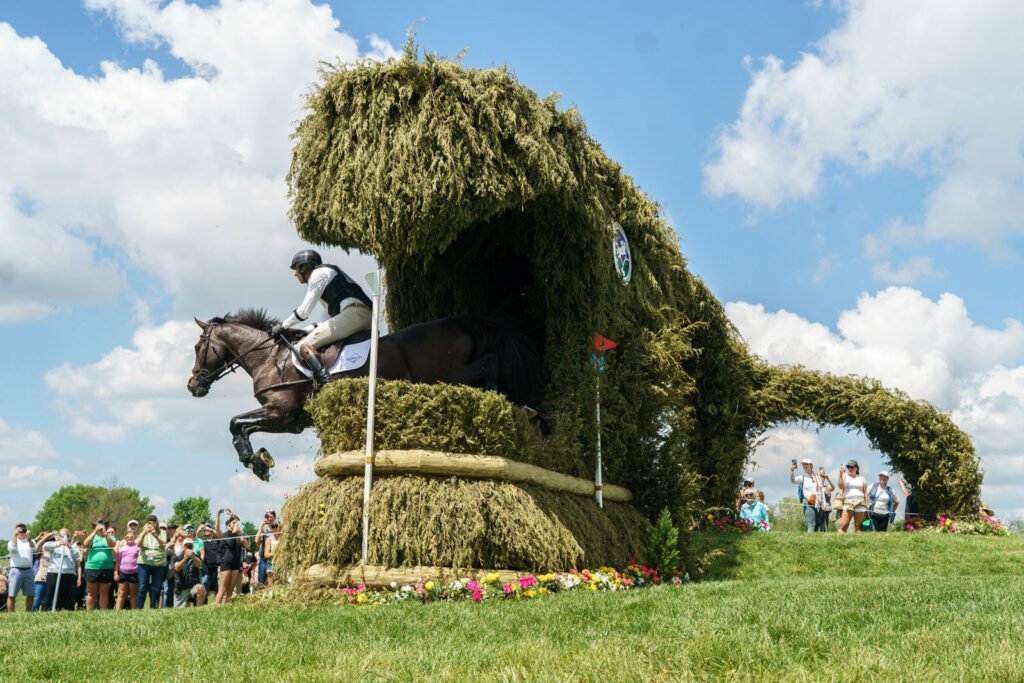
We moved from jump to jump to track different riders on course. For about an hour, we stayed in one spot where we could watch a combination leading to a huge table, then a long gallop stretch into a water combination. Beyond the jumps themselves, it was fascinating to study rider position and how differently horses carry themselves at the gallop.
Eventually we made our way to the famous Head of the Lake and stayed through several riders. Having walked the course the night before, we had tried to puzzle out the options—and it was satisfying to see how they actually played out. Two houses set at an angle in the water left room to circle between them, and watching riders choose their own answers to the question was one of the highlights of the weekend. It was where you saw the real nitty-gritty.


The eventual winner, Will Coleman, was the smoothest through it. Others looked like they were simply riding to survive.
I couldn’t help imagining what it would feel like to be out there—and how much trust I would have to place in my horse. I wondered if I could do it someday.
The Teams Behind the Horses
One of the things that stayed with me all weekend was how large a team surrounds each horse. You see it at the out-gates for dressage and stadium, but especially at the cross-country finish line, where grooms immediately swing into action. It was interesting to observe how differently riders came through the finish flags—some walked, some hopped off immediately, some kept cantering out into the back field. Others had their whole crew waiting; others took a quiet moment alone before the team moved in.
I spent much of the final stretch of the 5-star division sitting with my sister at the vet box, watching horses finish and benefiting from her running commentary. The horses looked genuinely happy—some appeared ready to keep going—and it was reassuring to sense that they loved their job.
It was also simply fun to be with my sister. I got to hear the ins and outs of barn life, and I felt proud watching people recognize her. One evening she received a text from a friend asking her to braid a horse because the friend had fallen behind. That kind of community among the grooms was something I won’t forget, especially as I’m still figuring out what I want to do with my future.
Show Jumping


By the end of cross-country day, exhaustion was visible on everyone—and yet they would all be back in the ring the next day. Watching riders who competed on multiple horses, I found myself wondering how they manage it, and what kind of conditioning and mental toughness it takes to compete at the 5-star level. It is a genuine test of stamina for both horse and rider.
The tension of the final day was palpable. The leaderboard could shift at any moment, and when the leaders entered the ring, the packed stands went completely silent—then erupted for every clear round. The climax of the weekend came with the top 10 finishers galloping around the arena, award ribbons streaming in the breeze while the crowd roared.

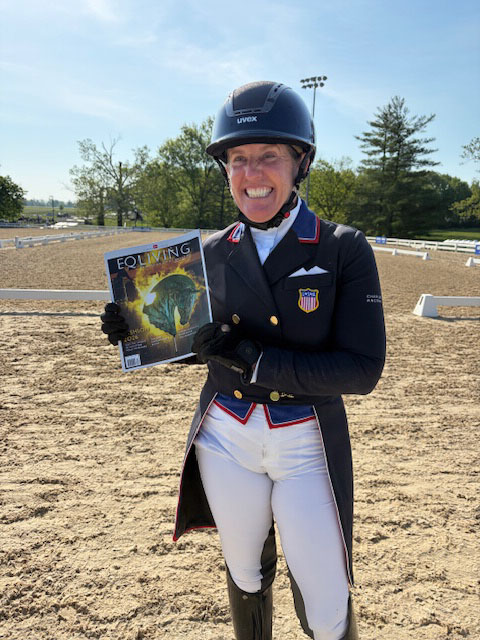
Isabelle Cook and Sharon White with the Spring 2026 issue of EQ Living.
To read more EQ articles about Kentucky, click here.