
 Sarah Lessler
Yash Balasaria of American Stalls
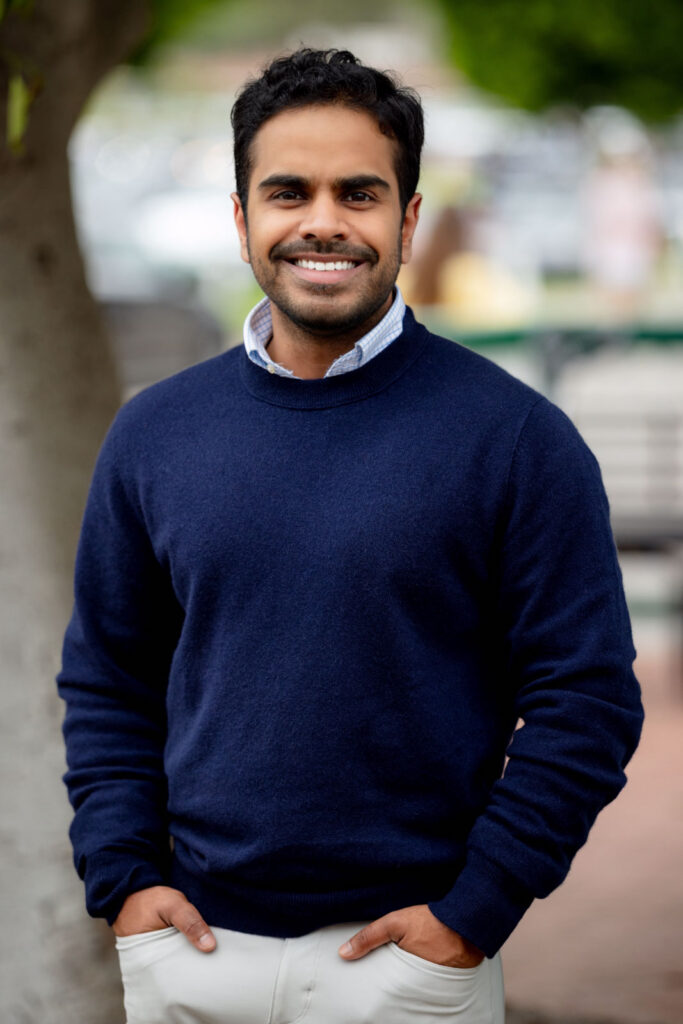
For equestrian design enthusiasts, American Stalls’ CEO Yash Balasaria has turned tack room hardware into a form of architectural craft.
At American Stalls, patina, longevity, and honest materials aren’t finishing touches—they’re the whole point. In 2005, a steel fabrication family, the Balasarias, drove up to a sprawling show venue in Saugerties, New York, and got to work building 1,500 horse stalls for one of the country’s most prominent equestrian facilities. It was the kind of project that could have been just another job. Instead, it became the founding philosophy of an entire company.
That company is American Stalls, and more than 20 years later, Yash is its CEO and chief enthusiast. What started as a singular project at HITS Horse Shows has grown into a luxury brand supplying custom-built stalls, barn doors, windows, flooring, and architectural hardware to high-net-worth clients, builders, and architects worldwide. But the animating idea has never changed: that safety and beauty are not in conflict, and that the environments where exceptional horses live deserve to be built with the same intention as the homes of the people who own them.
Yash came to horses through manufacturing. His background was in steel fabrication—materials expertise, structural performance, and an understanding of how things behave under real conditions over long periods of time. It was the right foundation for an industry where the gap between how something looks and how something performs can mean the difference between a horse’s safety and a catastrophic failure.
“Horse stalls are deceptively complex,” he says. “You need to understand steel fabrication, raw material selection, how a barn’s environment behaves over time, and equine psychology. Get any of those wrong, and you’ve built something that looks fine on paper but fails the horse.”

The equestrian equipment market, Yash will tell you plainly, had long operated with a comfortable tolerance for cutting corners. Suppliers either engineered for function and ignored aesthetics, or dressed up mediocre construction with expensive finishes. American Stalls was built on the belief that a barn stall could be both structurally honest and genuinely beautiful.
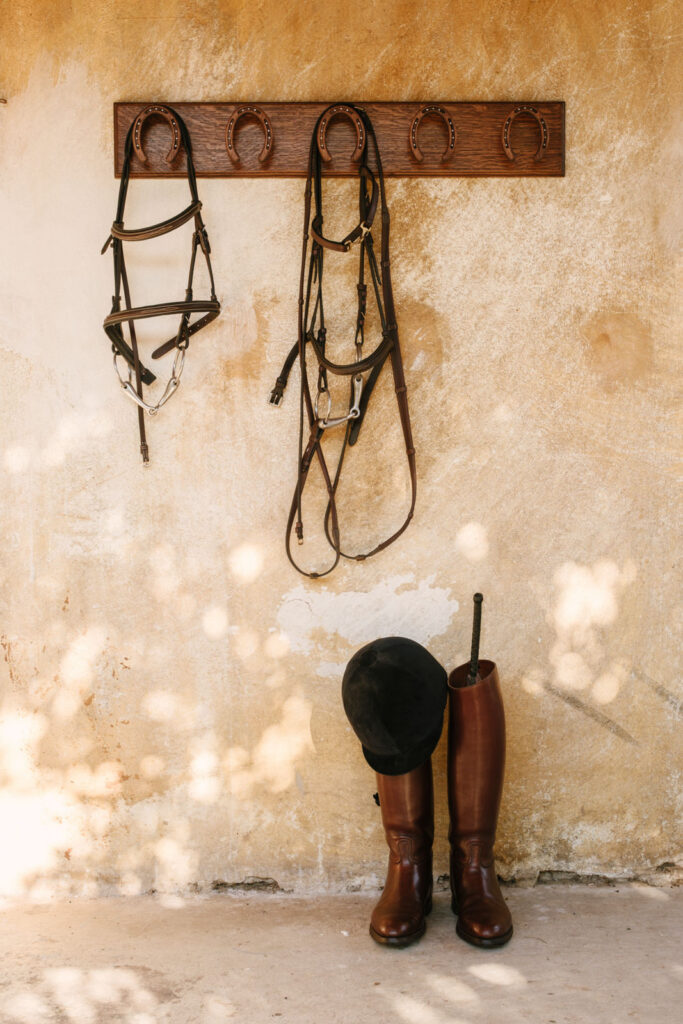
The customer Yash builds for, commonly in her 40s or 50s, owns horses, rides with purpose, and has made considerable decisions about every aspect of her property. She is not buying something because it is expensive. She is buying it because she can tell it is worth building.
“They care,” Yash says. “They care about safety, about longevity, about the experience of walking into a barn that was built with intention.”
Over two decades in the equestrian world, Yash found himself drawn to the tack room as something more than a functional space.


“The tack room is where the day begins,” he explains. “Where the leather gets cleaned and hung, where the work of caring for exceptional horses gets done with intention. Once you see it that way, the standard you hold yourself to changes.”
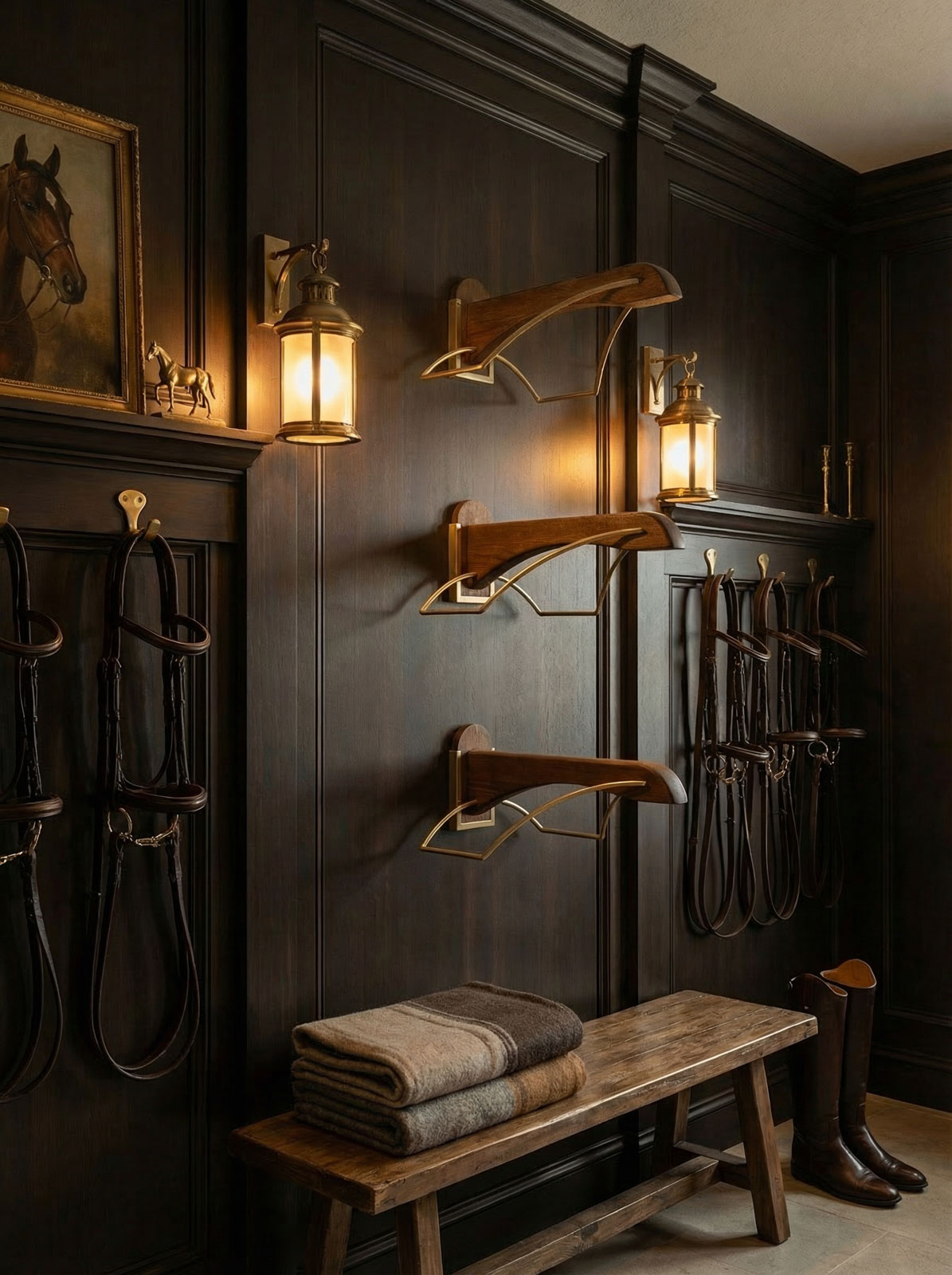
That realization became the seed of the Jefferson Collection, American Stalls’ most ambitious hardware launch and its most personal statement about craft. The question driving it: why had tack room hardware never been approached the way fine architectural cabinetry had? Why had the bridle rack, the saddle rack, the hardware riders touch every day, been treated as utilitarian afterthoughts?
Yash named the collection after Thomas Jefferson—architect, farmer, and artisan-philosopher—because Jefferson had built his life around the same conviction: that the spaces around us shape how we live, and that an artisan’s hand produces something a machine cannot replicate.

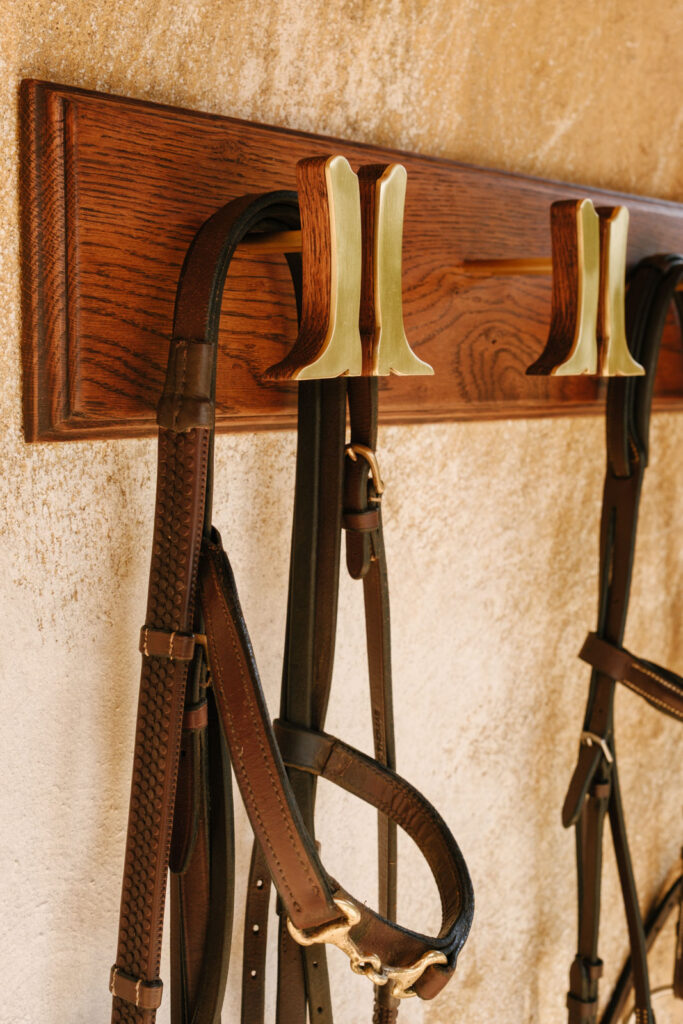
To build it, Yash went to Athens, where Greek walnut and oak are shaped by hand in a workshop, carved from solid blocks by artisans using traditional tools. The hand-formed hardware is solid brass. No veneers, no shortcuts.
“Walnut and oak are dense, stable woods that improve with age,” Yash says. “Brass develops a patina that makes a piece look more itself over time. For something used every day in a working barn, that durability isn’t a luxury detail. It’s the point.”
What Yash has built is something rarer than a successful company. It’s a coherent argument about what a barn should be: not infrastructure, but environment. Not a place horses are kept, but a place where people who love horses express what that love looks like made physical.
The Jefferson Collection is the fullest expression of that argument to date. But knowing Yash, it is not the last.