 Jill Medinger
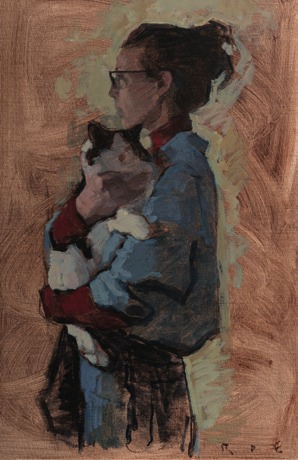
Through layered texture and nuanced light, the artist captures the character beneath the coat.
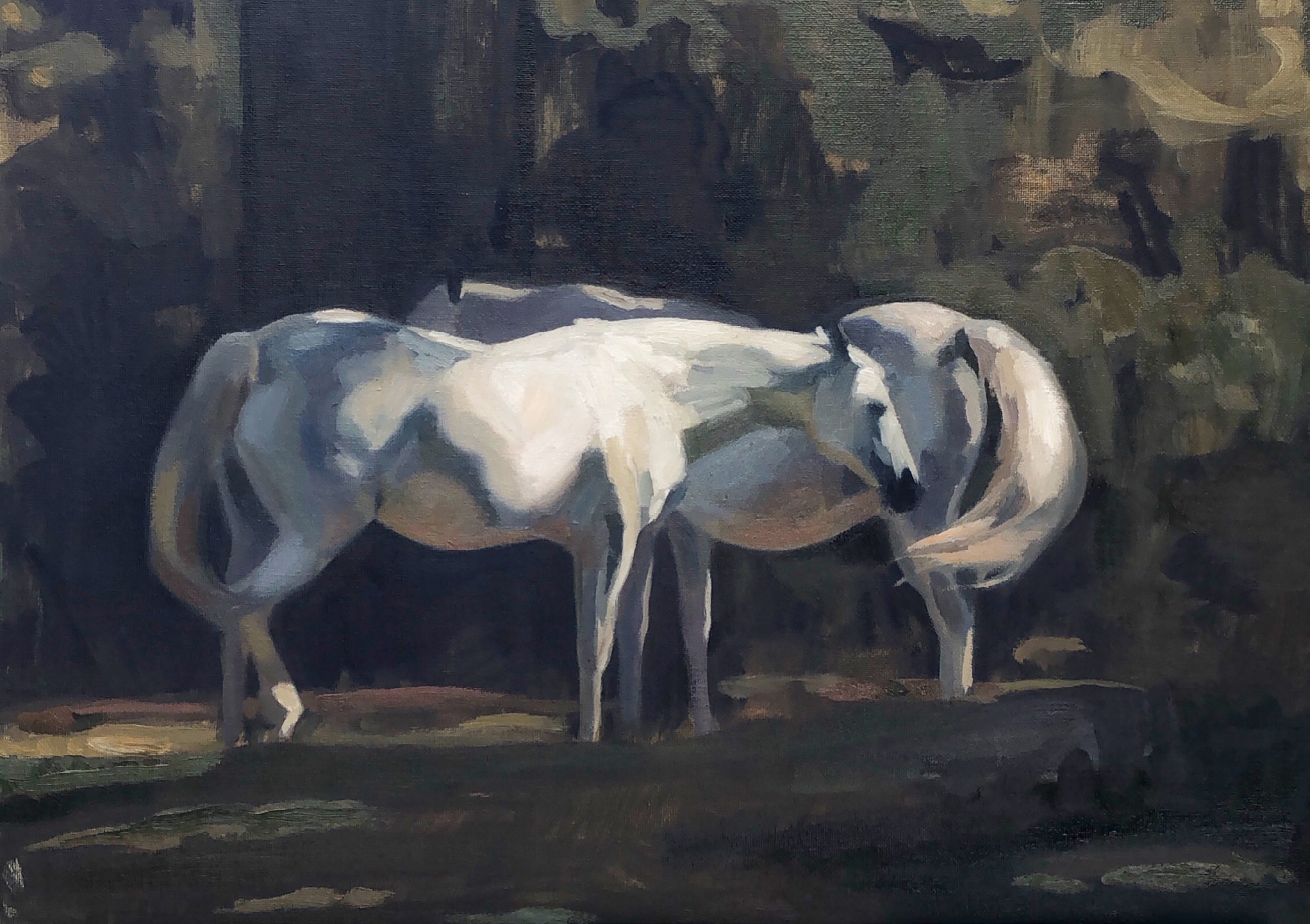
ALL ARTWORK COURTESY OF Romy ElliottLondon-based artist Romy Elliott studied sculpture, drawing, and painting at the Florence Academy of Art from 2013 to 2016. Fascinated by anatomy and physiology, she explores the connection between humans, dogs, and horses, developing recent motifs of handlers and their animals through gestural paintings with contrasting light and shadow.
Since returning to the UK, Elliott has taught fine art while producing commissions and personal work on varying scales. Her paintings favor atmosphere, energy, and impression, a departure from the stillness of her portraiture. After numerous group exhibitions, Elliott made her solo debut at London’s Portland Gallery in February 2026.
EQ: Your painting techniques, all marvelous, vary significantly. Do you sense, from the outset, which style will best serve an image?
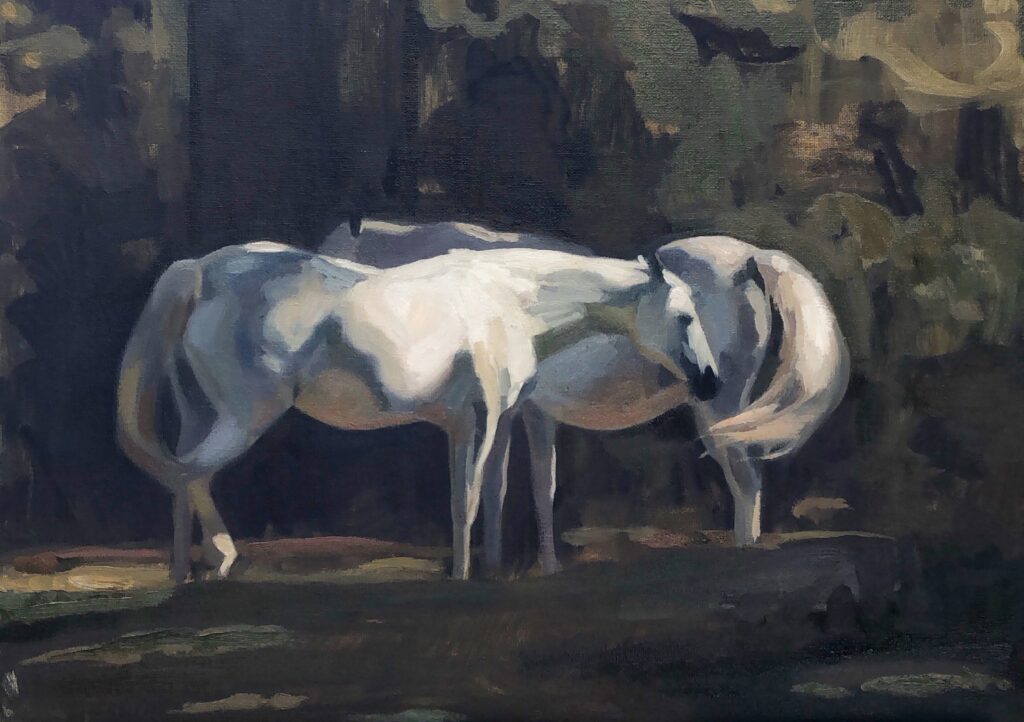
Romy Elliott: Yes, absolutely. When I get an idea for a painting, I quickly sketch it in charcoal to see whether the composition feels interesting, to understand the figures’ gestures, and to think carefully about how I want to approach it.
My work is quite varied in style, and the way I paint really depends on the subject. Sometimes I’m trying to distill something down to its essence, so the work becomes bolder and more simplified. Other times, I feel a subject needs to be approached more realistically, with a greater focus on light and direct representation.
It’s important to have a fairly clear idea of my approach before I begin, but I also like to leave room for the painting to evolve. Once I start working, I want to respond to what is happening on the canvas and see where it takes me.
EQ: Classically trained at the Florence Academy of Art, did you initially feel bound to a more traditional approach, drawing and painting your subjects with close attention to anatomy and physiology? If so, when did you begin to shift toward your looser, more atmospheric style?
RE: I studied sculpture for three years at the Florence Academy of Art, which was a fantastic starting point for my art career. When you go to a place like the Florence Academy, you learn the alphabet, and once you leave, you have to use those skills—those letters, if you will—to write your own book.
It certainly takes time to find your own voice when you’ve been trained in such a classical way, as I was. After leaving Florence, I spent 10 years doing animal portraiture. The drawings and paintings were much more traditional in style, but they were invaluable in developing my draftsmanship.
It took several years and a lot of experimentation to move away from the very traditional approach I had spent so long learning to master. Gradually changing my materials and thinking differently about how I work allowed me to break away from that and develop something that feels more instinctive. I hope that, as a result, my work now has a distinctive voice that is recognizably my own.
EQ: In your more abstracted works, how do you know when a painting has kept enough of the horse or the dog, and when you’ve pushed too far?
RE: It’s a really careful line to walk when I’m abstracting my work but still want to retain a sense of realism, which is why I’m so grateful for my roots in drawing.
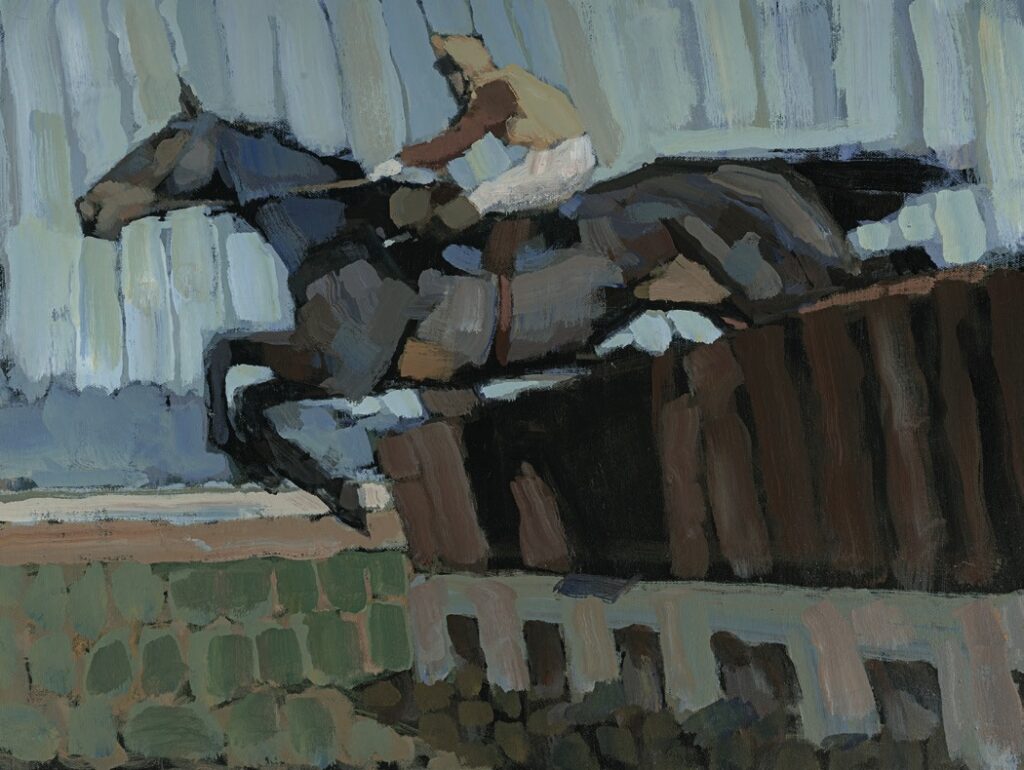
Ultimately, if you want to push something in a more contemporary direction while keeping it familiar, you need a strong understanding of anatomy underneath it. Sometimes I do push things too far, but it’s important to me—and to the success of the work—that I paint quickly and keep my brushstrokes loose and instinctive.
That way of working relies on a solid foundation in drawing because I need to get the lines right the first time. If I overwork a piece, it can quickly start to feel static, particularly when I’m trying to suggest movement. For me, keeping things fast, loose, and responsive is key.
EQ: You’ve written about your lifetime love of horses and dogs, the enduring subjects of your work. What matters most to you when depicting them?
RE: I paint dogs and horses simply because I feel such a deep fondness for them. I’m incredibly lucky to have spent my whole life surrounded by them, and I suppose that familiarity is a big part of what draws me to them as subjects.
When I paint them, I’m interested in something honest and recognizable—the little moments and expressions that people who have lived with animals will immediately understand. Making something that makes you feel something is integral to my practice.
Rather than creating a direct representation of a particular animal or encounter, I’m more interested in distilling it down to something universal. I hope that means the work can resonate with anyone who has loved a dog or a horse, rather than belonging to one person or one specific moment.
I’m interested in maintaining anatomical accuracy while still pushing things a little, keeping the work painterly, playful, and expressive.
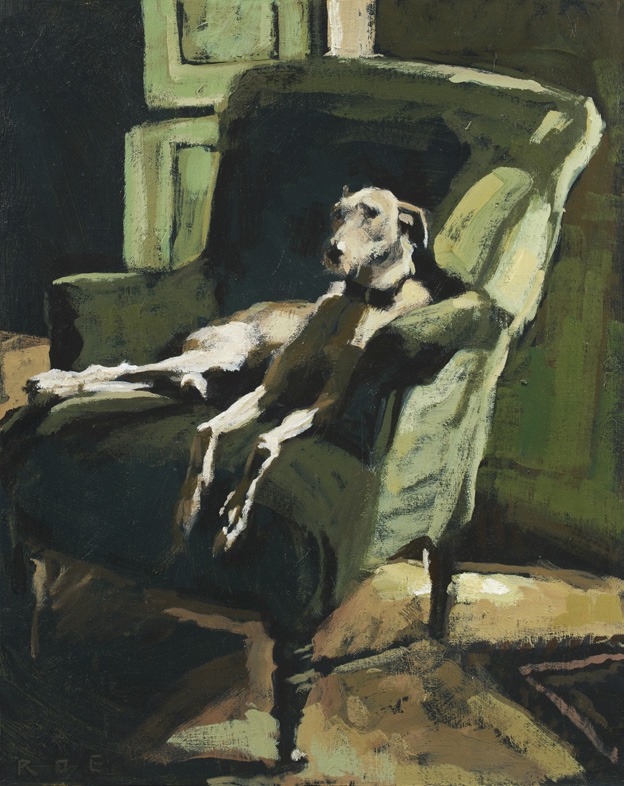
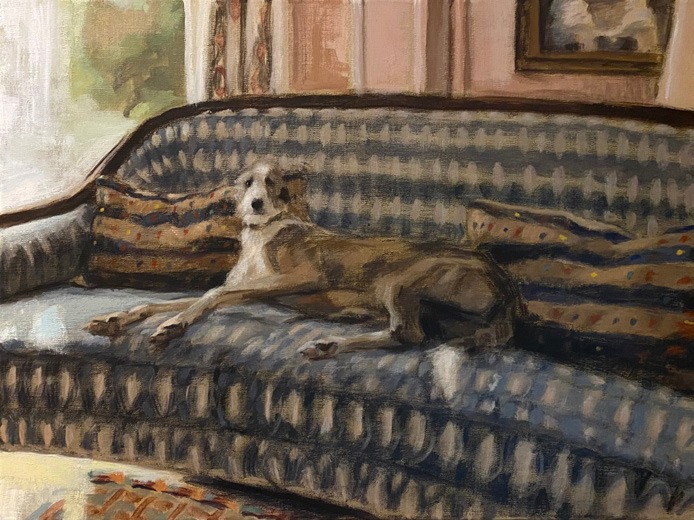
EQ: Many of your dog portraits are set in environments rich with patterns—in fabrics, artwork, and floor coverings. Are these true to the portrait settings, or do you take artistic liberties for effect?
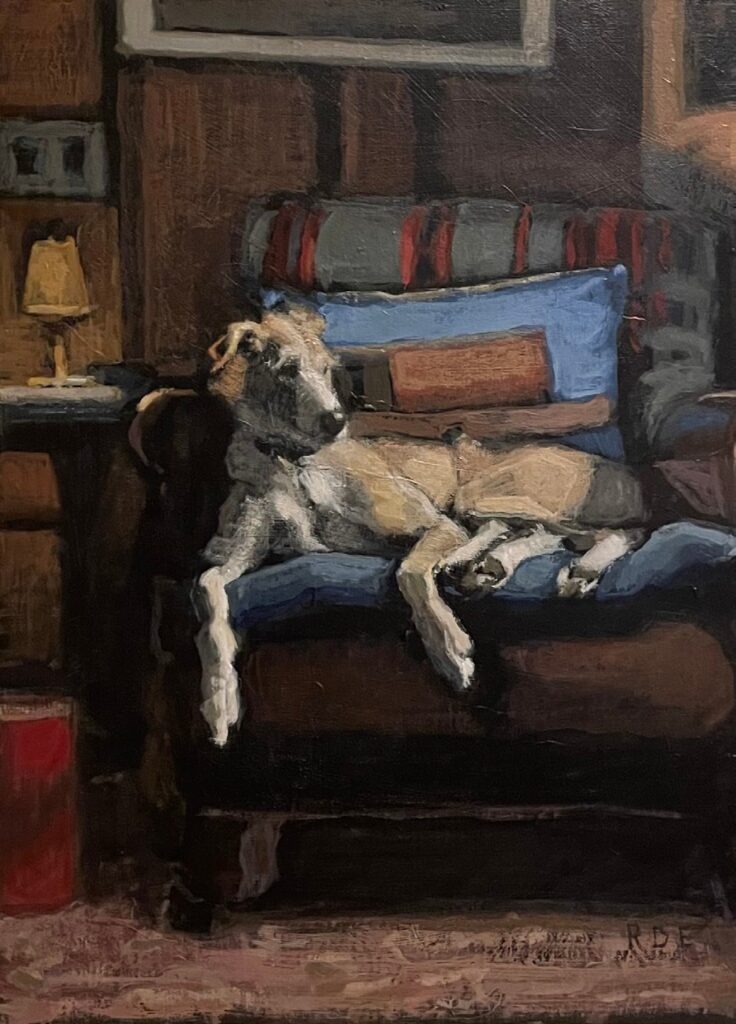
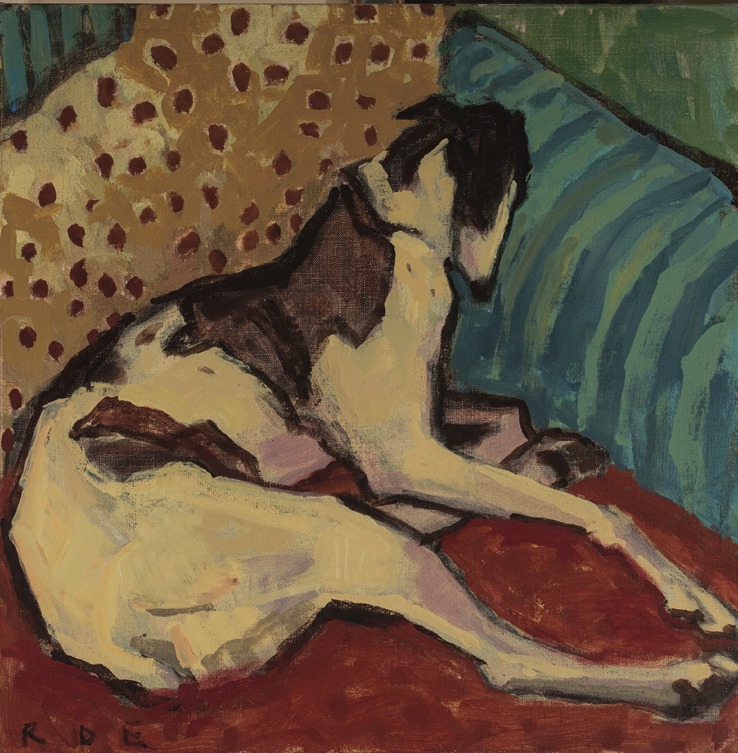
RE: Having painted portraits for many years, I feel lucky that I can now choose my own subjects. So, while some of my paintings might initially look like portraits, I’ve often deliberately sought out a particular animal, setting, or piece of patterned textile because I think they will make an interesting painting together.
I’m really inspired by artists such as Édouard Vuillard and Pierre Bonnard, particularly by the way they use pattern to flatten, abstract, and play with the design of a composition.
I often come across an interesting fabric or piece of furniture and think about how I could use it in a painting. I might encourage a dog onto a particular sofa, for example, simply because I like the combination of the animal, the pattern, and the setting. Sometimes the environment is almost as important as the subject itself.
EQ: As a lifetime equestrian, is there something you notice in a horse’s movement or anatomy that a non-rider might miss on canvas?
RE: Horses are difficult to paint because there’s so much anatomy visible beneath their fine skin. When I studied from life models, we would often work with very thin models because you could see more of the underlying anatomy, which posed a greater challenge from a drawing perspective. If the anatomy is wrong, it really shows.
Having spent my life around horses, I think it helps me understand how their bodies work and move, and which poses feel familiar and characterful. But it also means I can spot the problems very easily.
I’m not trying to create a perfect anatomical representation. I want the horse to feel grounded and believable, with an intelligent understanding of its structure, without taking it so far that the painting becomes stiff or overworked.
Sometimes I’ll deliberately leave a leg slightly wrong rather than sacrifice the work’s freedom. For me, there has to be a balance between knowing the anatomy and knowing when to let go of it.
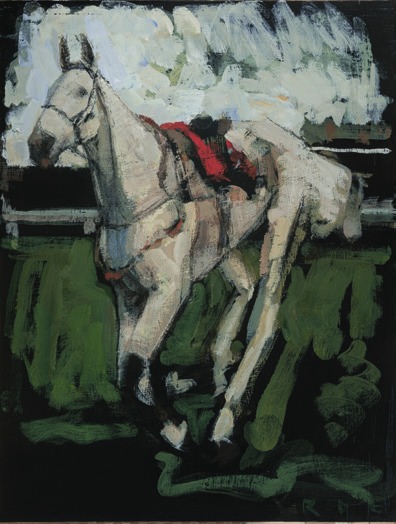
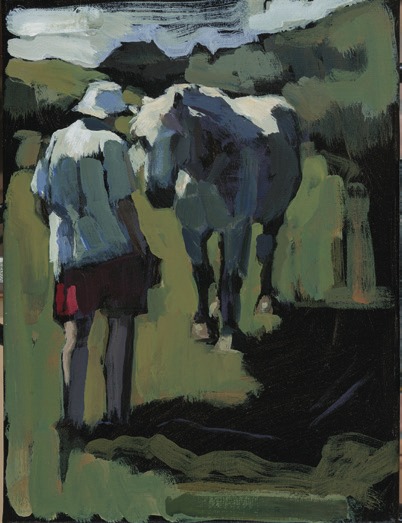
EQ: Can you describe what you like about capturing horses in a working or cultural setting, rather than a studio or arena? Is it their interactions with their handlers or owners?
RE: Horses have been represented by artists for centuries, but certainly within Western art they have traditionally been portrayed in a more formal and conventional way—perhaps celebrating the pomp and ceremony of a racehorse in profile after winning a grand race.
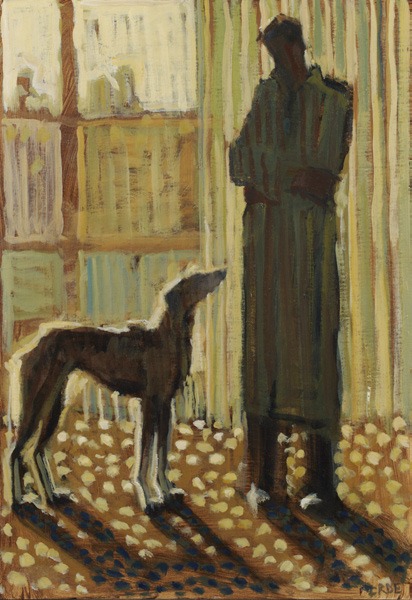
My hope is to approach the horse in a more subtle, contemporary way, focusing on the intimate moments of connection people experience when working with horses day to day.
I’m drawn to small, familiar moments that might otherwise go unnoticed—a particular expression, a gesture, or the way a horse interacts with the person around it. I’m interested in the character of the horse and the feeling of the encounter, rather than striving for perfect anatomical or representational accuracy.
For me, allowing the work to remain painterly and expressive is an important part of that. I want the brushwork to retain a sense of freedom and movement, so the painting captures not just what the horse looks like, but something of what it feels like to be around them.
To see more of Romy Elliott’s work, visit romyelliott.com.