
 Sarah Lessler
SIX DISCIPLINES, COUNTLESS STORIES, AND THE FINEST HORSE-AND-RIDER PARTNERSHIPS IN THE WORLD.
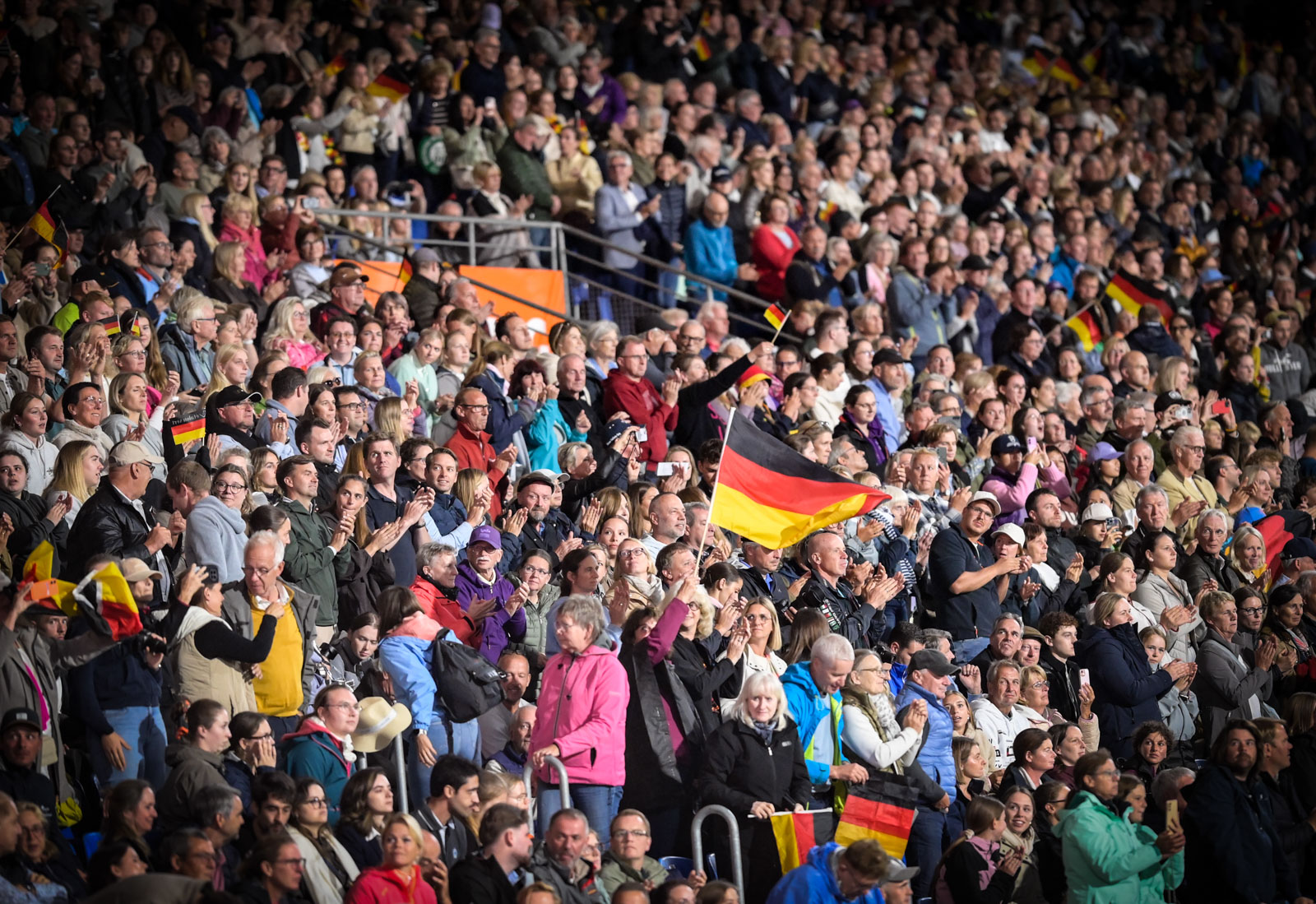
Photo by: Alden Corrigan
For two weeks in August, the Soers showgrounds once again became the center of the equestrian world as Aachen, Germany, hosted the 2026 FEI World Championships. The world’s best horse-and-rider combinations gathered to contest world titles across six disciplines: dressage, eventing, jumping, driving, vaulting, and para dressage. Additionally, seven Olympic qualification places for the 2028 Los Angeles Olympic Games were on the line.

In 2006, Aachen hosted the FEI World Equestrian Games, drawing 576,000 spectators and cementing its place in the sport’s history. Twenty years later, the venue again delivered what Aachen is famous for: packed grandstands of knowledgeable and passionate crowds and an electric atmosphere where every rail, percentage point, and second mattered.
WELCOME HOME
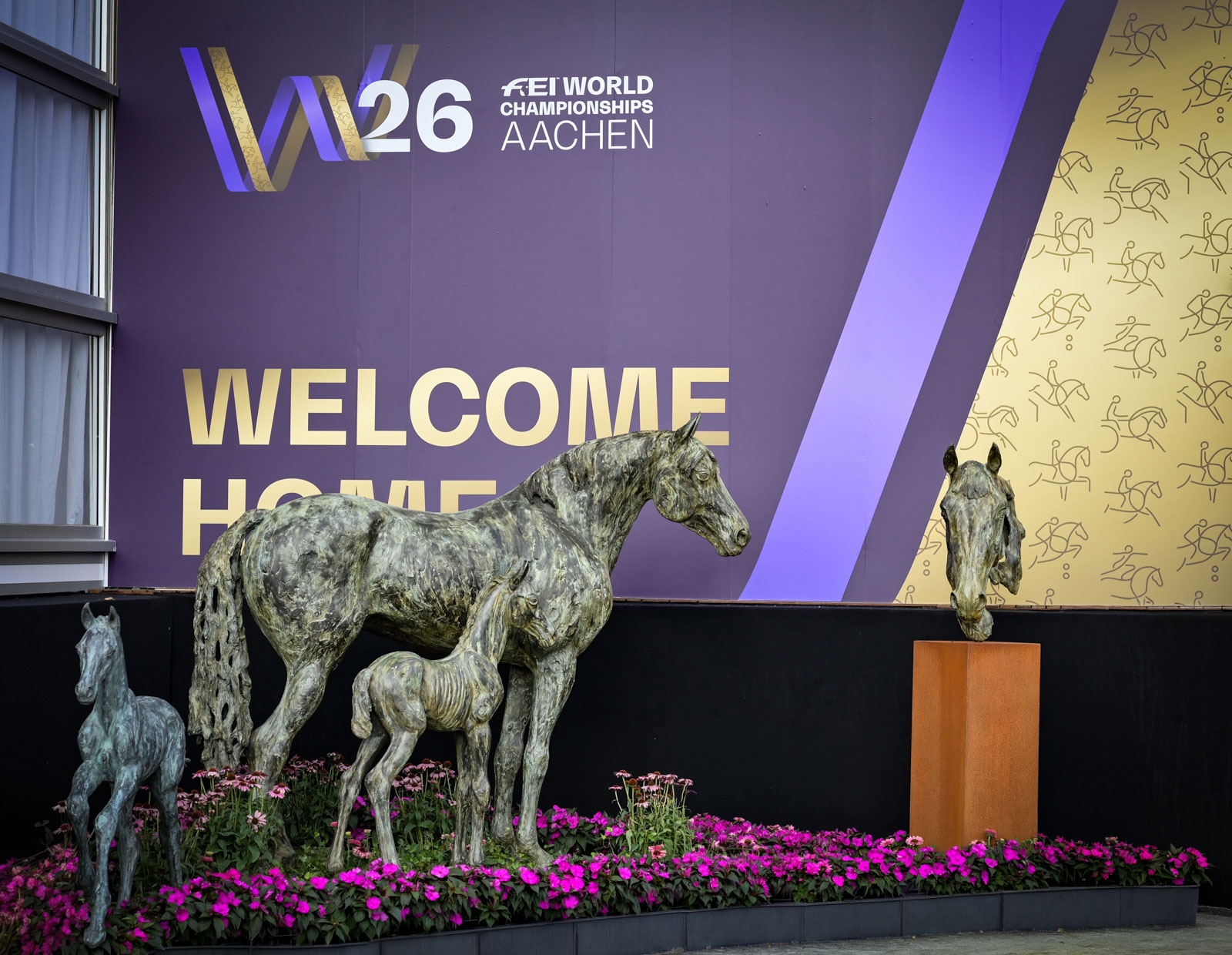
Photo by: Alden Corrigan
The World Championships opened with a celebration that reflected the breadth and tradition of Aachen itself. More than 250 horses took part in equestrian performances alongside dancers, musicians, and a parade of historic carriages from royal stables in Britain, Denmark, and the Netherlands. Athletes from nations around the world entered the stadium together under the “Welcome Home” banner. German rider Lisa Röckener and her horse Valoo then jumped through the arch bridleless, a fitting opening to two weeks of top-level sport centered on the partnership between horse and rider.
THE NATION TO BEAT
Germany quickly established itself as the nation to beat. In dressage, the home team of Katharina Hemmer, Raphael Netz, Frederic Wandres, and Isabell Werth captured team gold. Great Britain’s Charlotte Fry and Glamourdale then successfully defended their individual World Championship titles, winning both the Grand Prix Special and Freestyle.
Eventing brought the drama that only a championship cross-country day can provide. The demanding Aachen course tested even the most experienced combinations, with 20 of the 85 starters failing to complete the competition. Great Britain captured team gold, while Germany’s Michael Jung added another individual World Championship title to his extraordinary collection. The United States earned team bronze, with Will Coleman and Diabolo finishing fourth individually.
GOLD ON HOME SOIL
Then came show jumping, with Germany securing team gold on home soil. Marcus Ehning, Sophie Hinners, Daniel Deusser, and Richard Vogel delivered the consistency needed to withstand the pressure, while Belgium took silver and Great Britain bronze. Team USA just missed the podium, finishing fourth with outstanding rounds from icons Laura Kraut and McLain Ward.
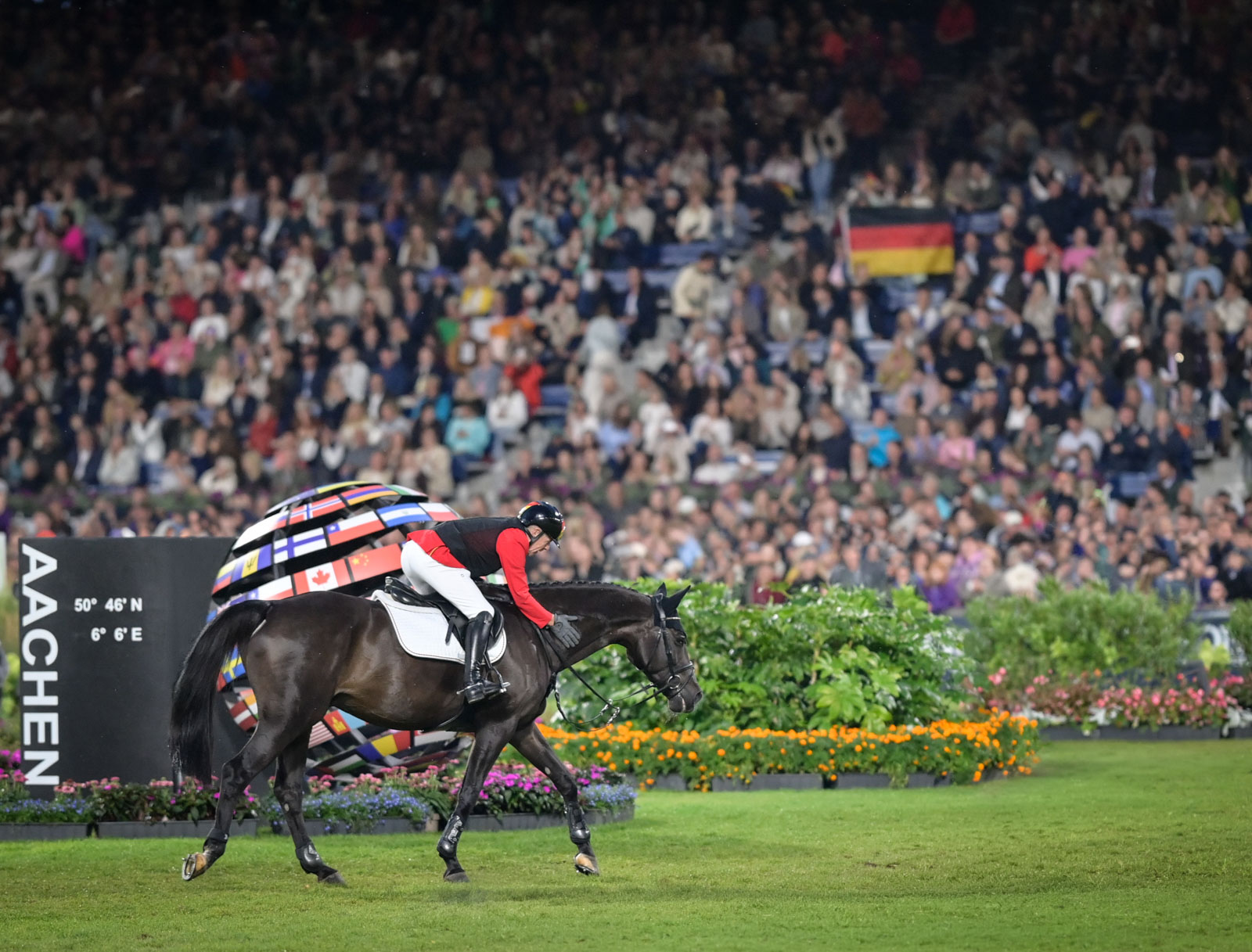
Photo by: Alden Corrigan
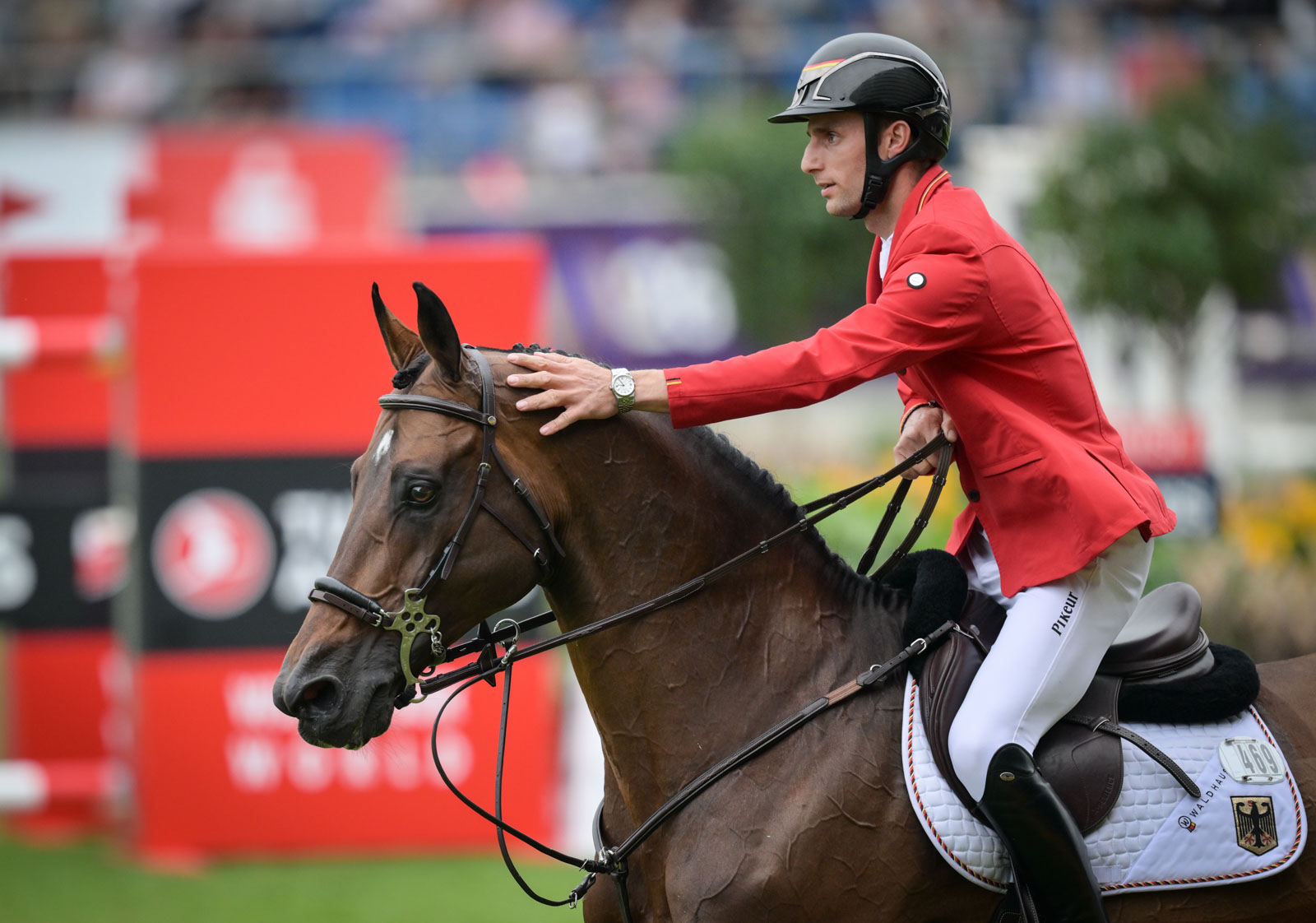
Photo by: Alden Corrigan
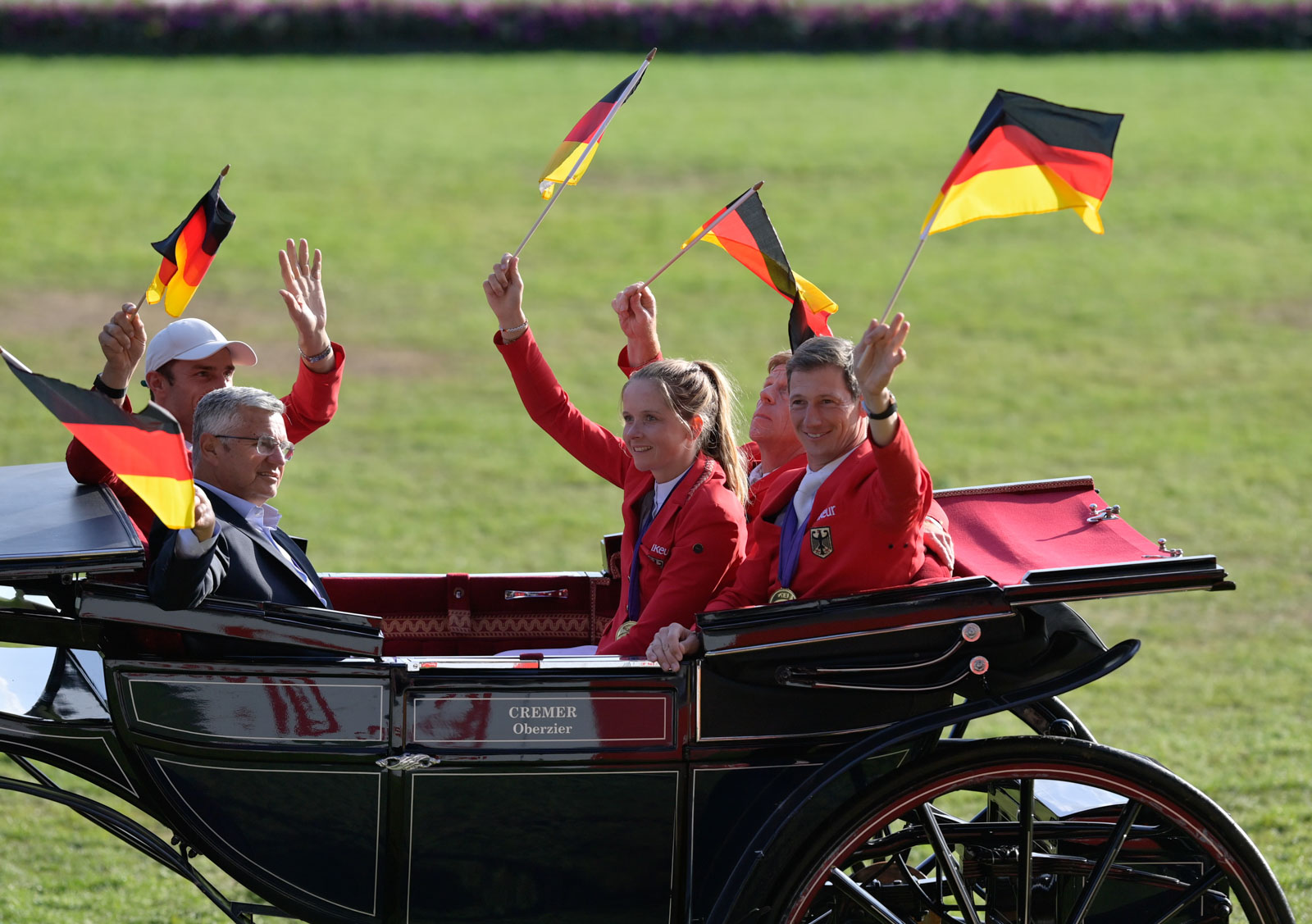
Photo by: Alden Corrigan
THE MISSING PIECE
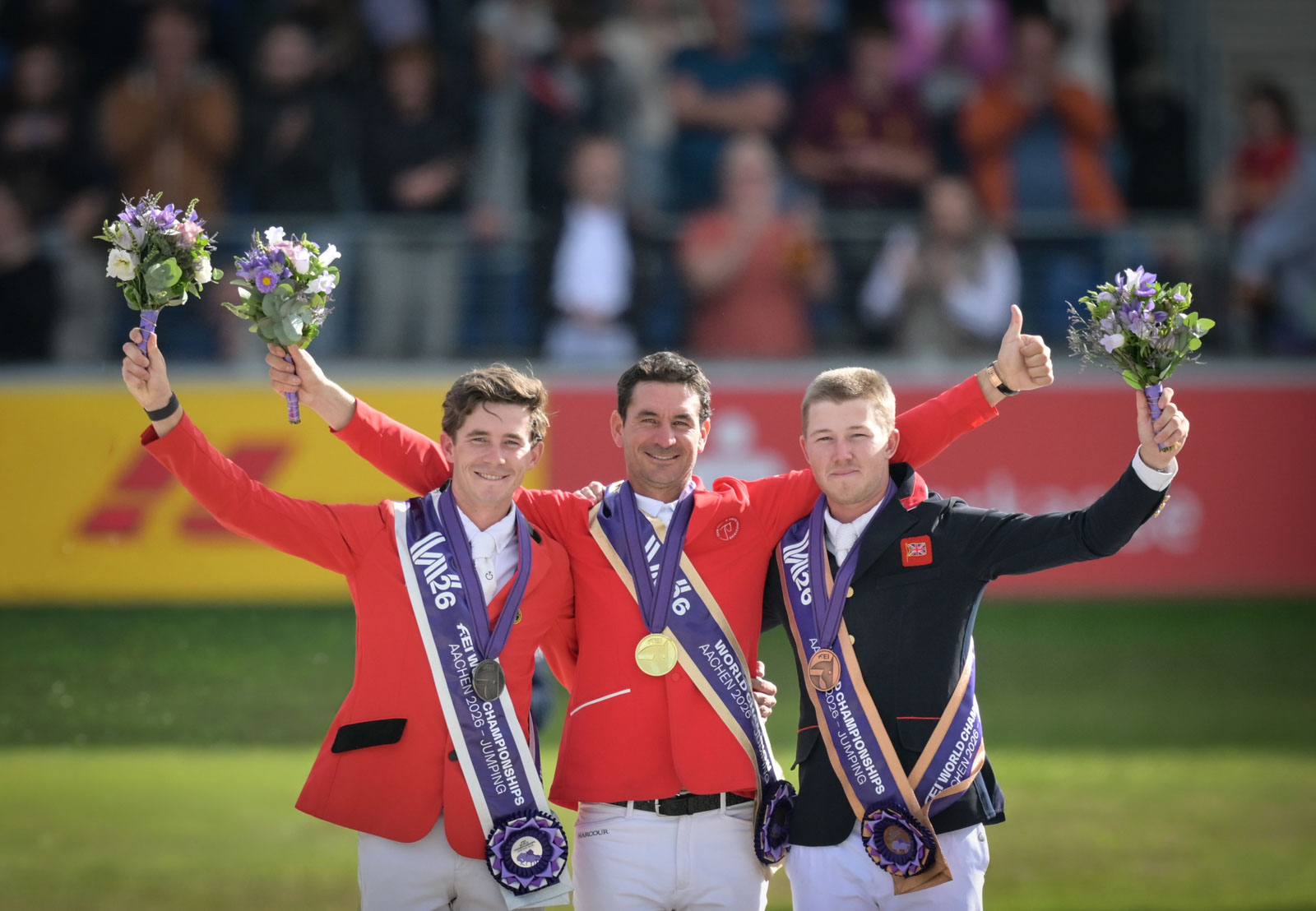
Individually, Switzerland’s Steve Guerdat and Dynamix de Belheme delivered the performance of the championship. The 44-year-old rider already had Olympic and European gold medals and three World Cup Final titles, but an individual World Championship title had remained the missing piece in an extraordinary career. At Aachen, he and the 13-year-old Selle Français mare never touched a rail across five rounds of jumping, carrying a score of just 0.86 penalties into the final.
The pressure was immense. Guerdat entered the final tied for the lead with Germany’s Daniel Deusser, and when Deusser dropped a rail early in round one, Guerdat suddenly had the advantage. However, he still had to produce one more clear round over a demanding final course.
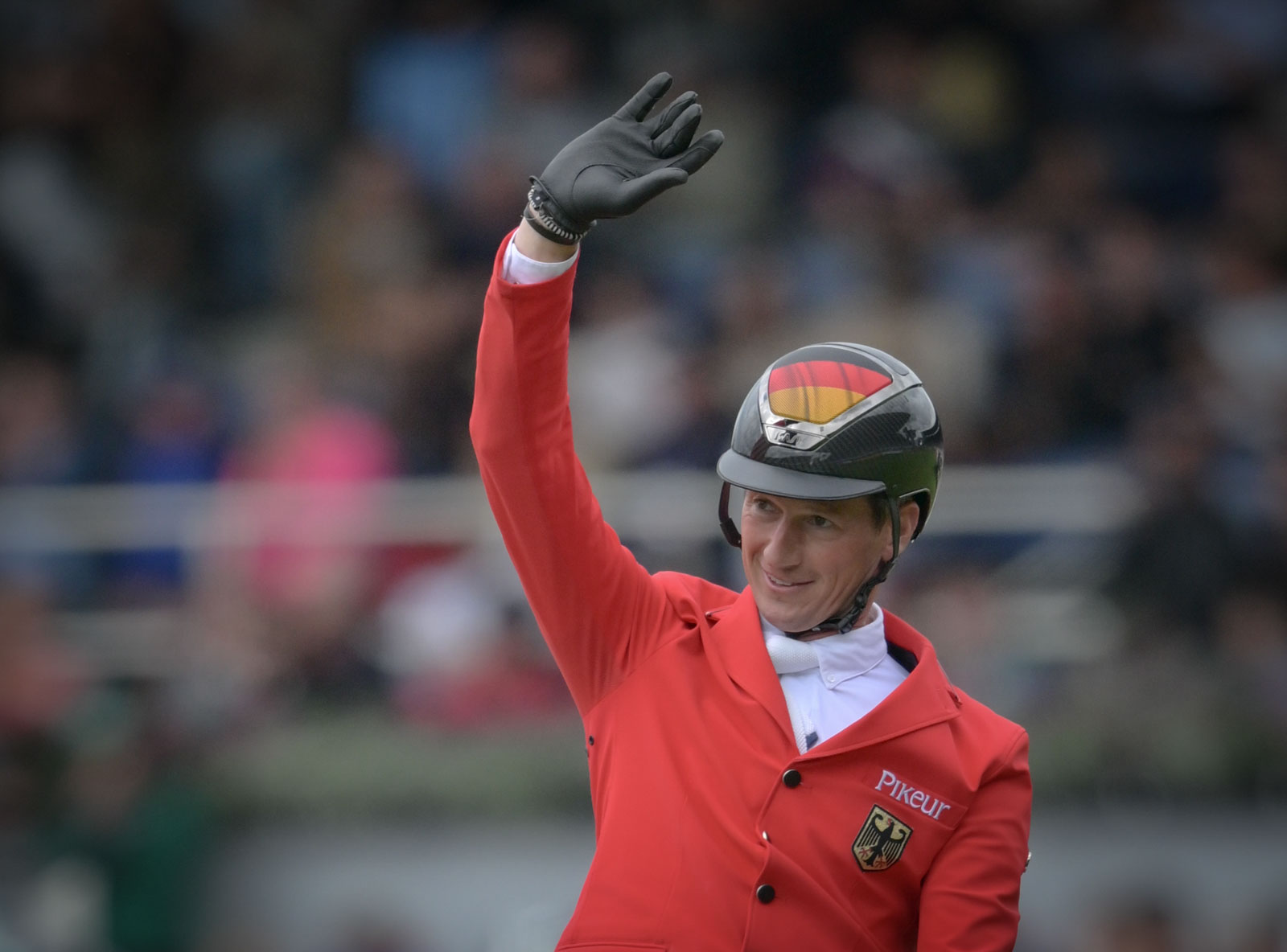
Photo by: Alden Corrigan
The crowd fell silent as Dynamix, athletic, careful, and seemingly effortless over massive fences, carried Guerdat through another faultless round. As they cleared the final fence, the silence gave way to a roar. Guerdat had not only won the World Championship; he had become the first Swiss rider to claim the individual title.
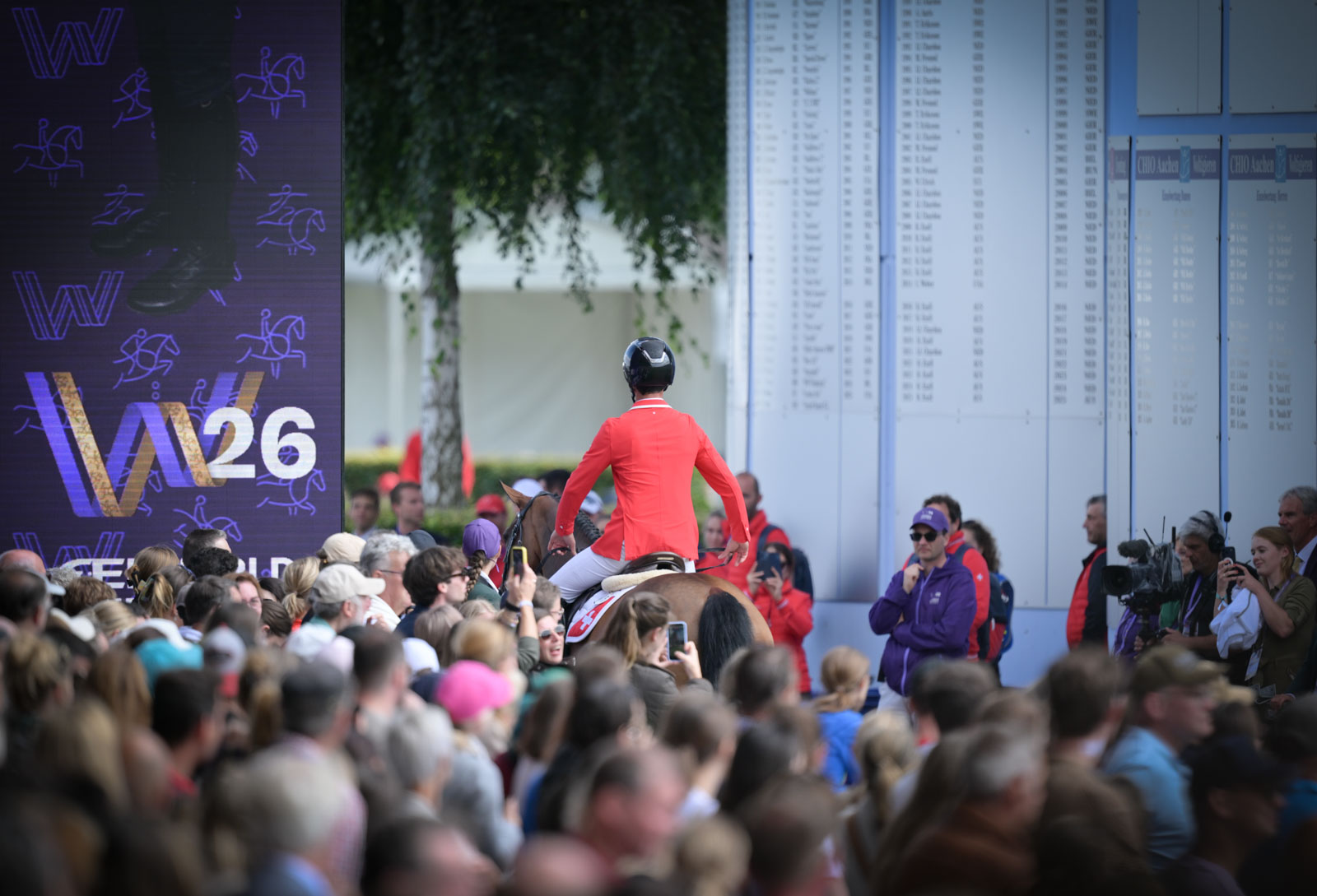
Photo by: Alden Corrigan
As they cleared the final fence, the silence gave way to a roar.
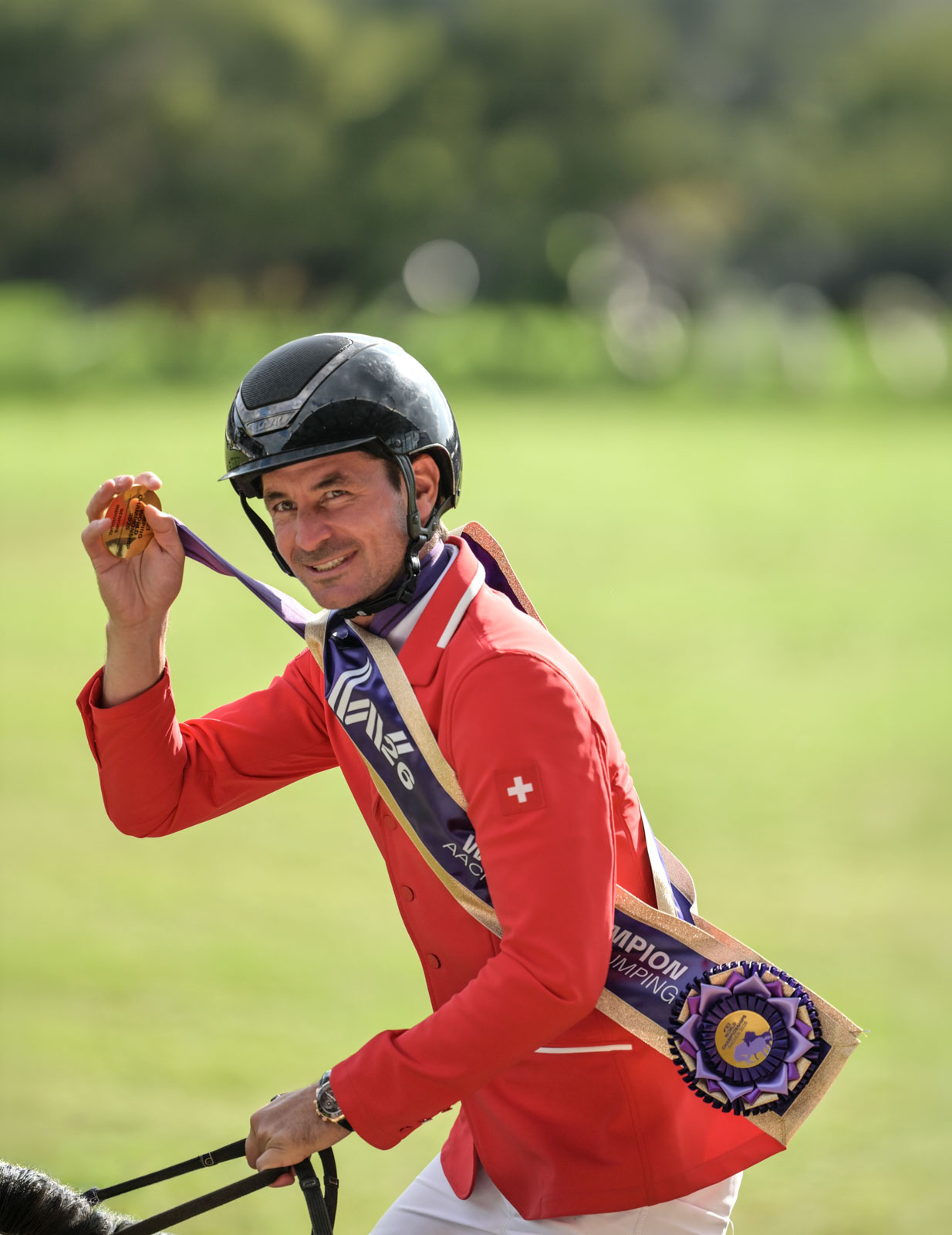
Photo by: Alden Corrigan
As the emotion of the moment washed over him, Guerdat reached both hands out to Dynamix, in a gesture of sheer gratitude. After years of chasing the title, he was quick to credit the horse who had carried him there. Dynamix was the only horse not to have a fence down throughout the championship, a remarkable testament to the mare and the partnership.
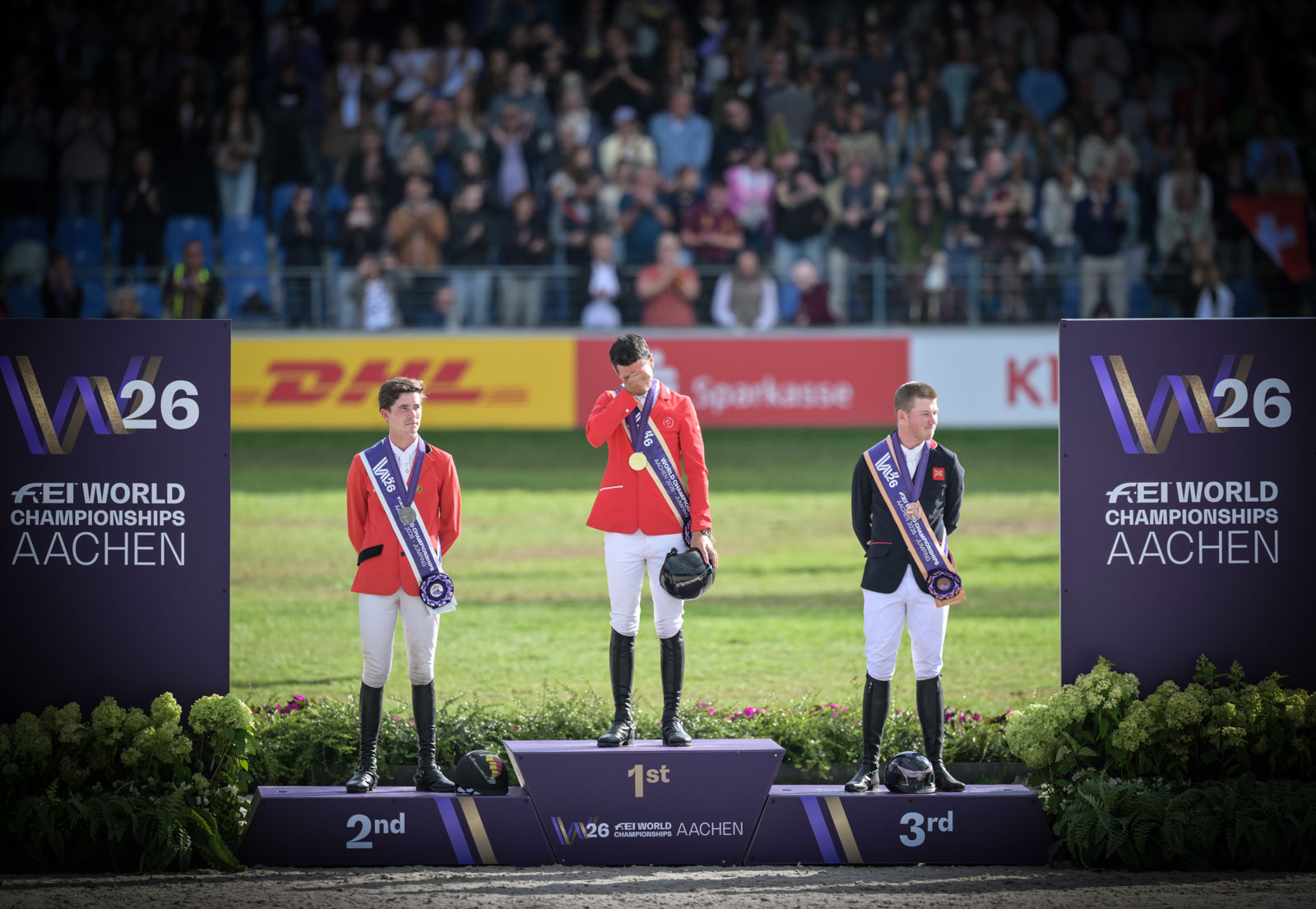
Photo by: Alden Corrigan
THE COMEBACK
Belgium’s Thibeau Spits earned silver, while Great Britain’s Harry Charles produced perhaps the championship’s biggest comeback story, climbing from 23rd going into the final to win bronze with his mount LT Holst Freda, a mare he had partnered with for only three months.
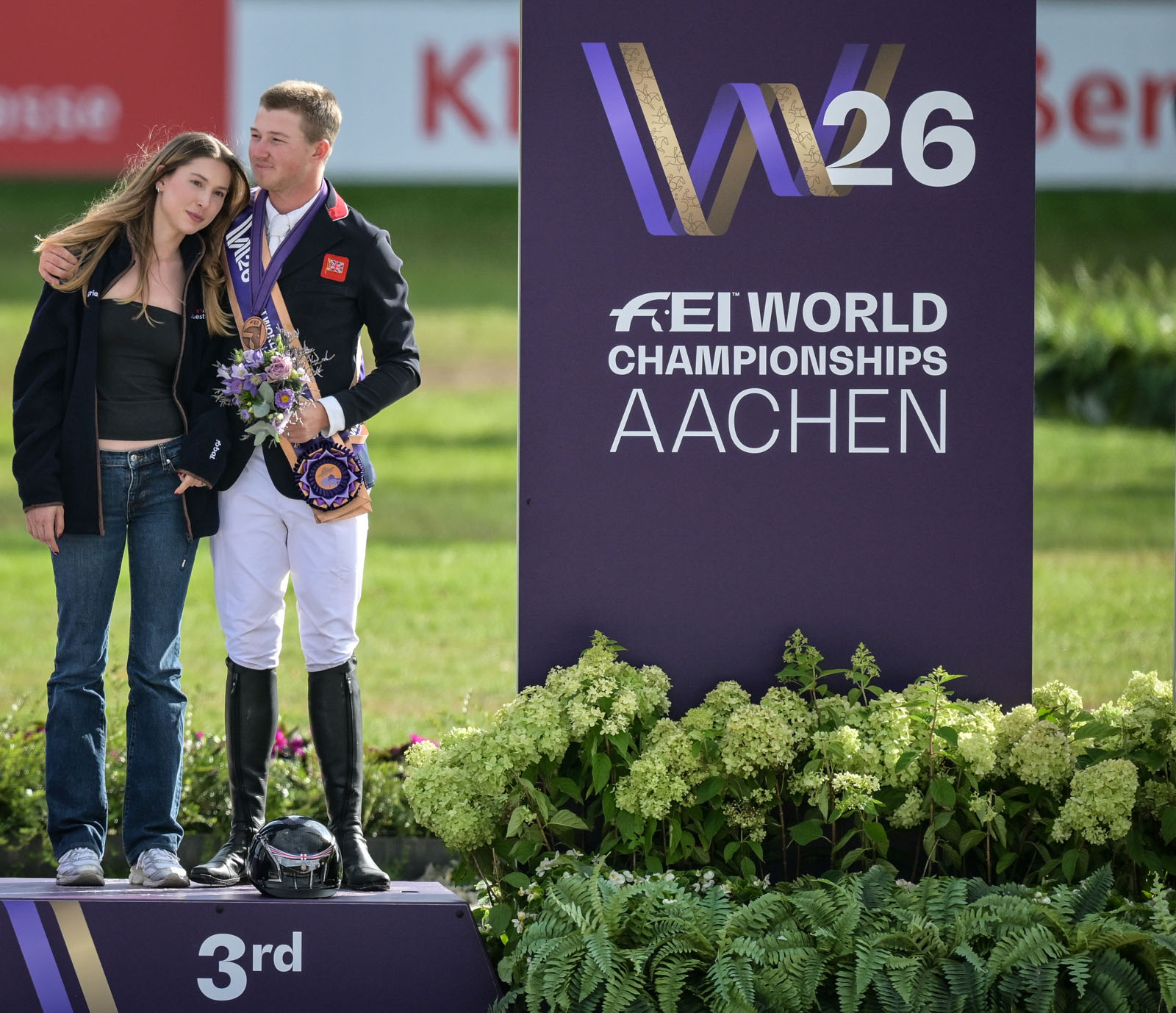
Photo by: Alden Corrigan
Photo by: Alden Corrigan
FAREWELL OF NATIONS
As the final competition came to a close, Aachen returned to one of its most beloved traditions: the Farewell of Nations. Riders from the competing countries paraded into the stadium as spectators waved white handkerchiefs in farewell, a tradition dating to 1953. It was a fitting final image for a championship that had delivered the very essence of elite show jumping.
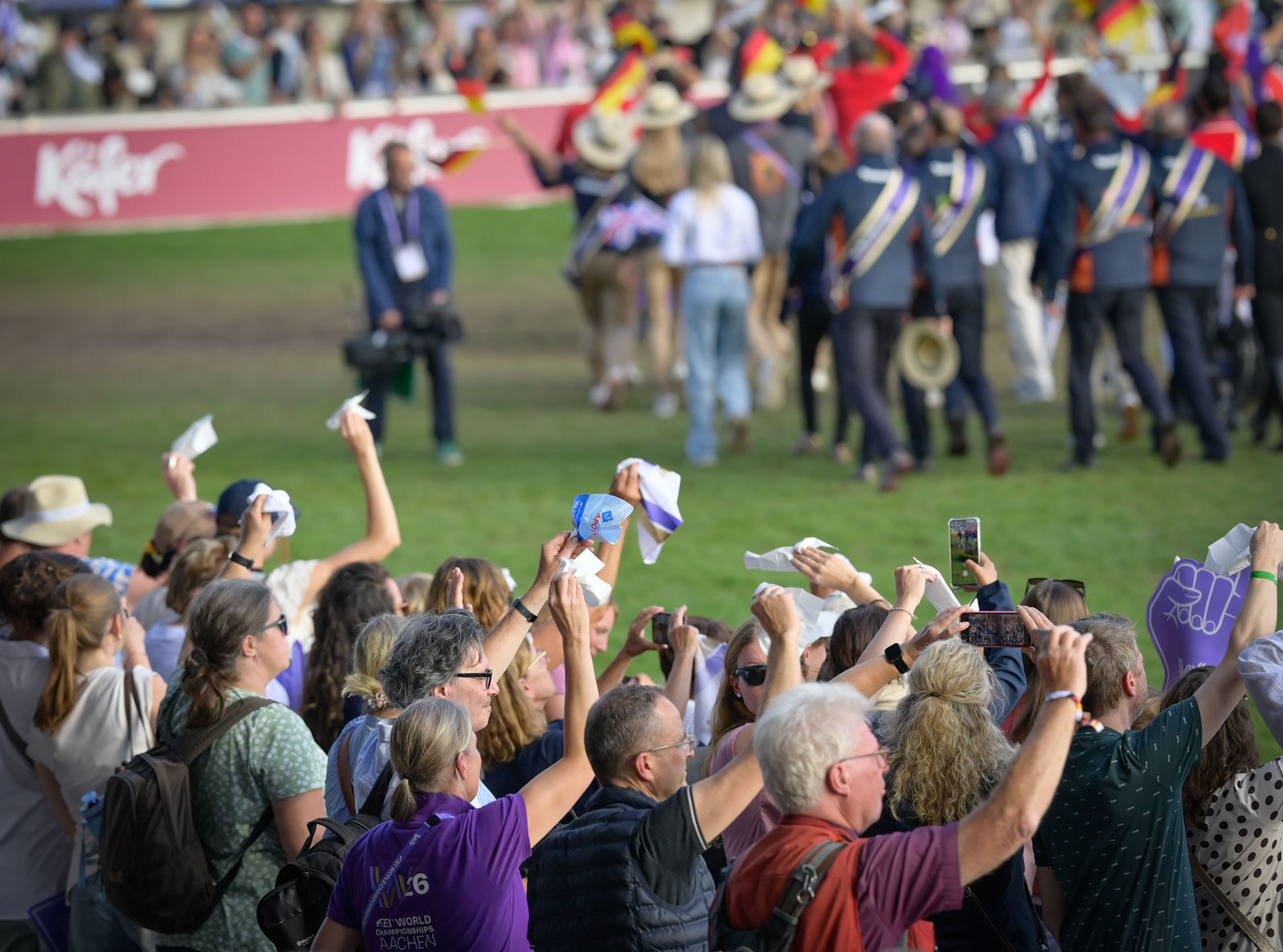
Photo by: Alden Corrigan
At Aachen, nothing is decided until the last horse has jumped the last fence, where heartbreak can turn to triumph in a matter of seconds, and where true athleticism demands everything from both horse and rider, proving why it occupies such a rare place in equestrian sport.
The championships were about medals and Olympic qualification, certainly, but also about something harder to quantify: the electricity of a great horse show, the weight of history, and the feeling that when the world’s best horses walk into the Aachen arena, something important is about to happen.
This story appears in the Fall 2026 issue of Equestrian Living. Photos by Alden Corrigan Media.